



Mistral has opened the public preview of Mistral Large 4, nicknamed “Le Chonk”, and plans to release its weights by the end of the month.[1] This European model targets agentic use cases in particular, as well as cybersecurity, finance and industry. For businesses, the issue goes beyond its size: which use cases could it improve, and under what conditions will it be possible to deploy and control it?
A preview available before the weights are released
Public access is currently via an API. Mistral also says it offers private access to selected partners, with additional cybersecurity capabilities and the preview weights.[1] Neither of these access modes should be confused with general availability of the weights.
This distinction changes how a project should be prepared. Testing a remote service makes it possible to evaluate its answers, but does not validate an installation within the company’s infrastructure. A future self-hosted deployment will have to be examined in light of the licence terms, compatible tools and resources required.
1.05 trillion parameters, but 49 billion active
The documentation describes a Mixture-of-Experts architecture, with 1.05 trillion parameters in total and 49 billion active. It also announces a one-million-token context window and a vision encoder.[2] Parameters are the values learnt during training; tokens are the units in which the model processes content.
In an expert-based architecture, a subset of components is selected for each token processed. The number of active parameters therefore sheds light on the compute involved, but does not sum up the system’s storage, memory or communication requirements. On its own, it does not allow the operating cost to be inferred.
Likewise, a large context window indicates how much content the model can take in. It does not guarantee that it will retrieve every relevant piece of information or correctly interpret every contradiction in a large file. These capabilities must be tested on the documents actually used.
Capabilities to translate into qualification criteria
This grid links the announced features to the checks worth carrying out before a business pilot.
| Component | Expected operational effect | Control question |
|---|---|---|
| Extended context | Analyse more documents in a single request. | Do the answers retrieve the right sources without omissions? |
| Multimodality | Cross-reference textual and visual elements. | Are errors on tables, diagrams or images detected? |
| Tool calling | Integrate the model into multi-step tasks.[2] | Which access rights and actions require validation? |
| Announced weights | Consider a deployment under the organisation’s control.[1] | Under what licence, on what infrastructure and at what total cost? |
Announced performance must match real-world use
Mistral claims top-tier results among open-weight models, notably in cybersecurity, finance and industrial manufacturing.[1] This positioning remains a vendor claim. It is not enough to demonstrate superiority on every task or to guarantee the results of a particular project.
A business must define its own criteria: accuracy of answers, quality of references, processing time and the ability to recognise missing information. For an agent, it is also necessary to observe the actions carried out, errors along the way and the situations in which human intervention becomes necessary.
For SMEs, start with a verifiable task
A first pilot could focus on analysing a set of technical procedures in order to prepare answers backed by their sources. The team would compare the proposals with the reference documents and measure the time saved after verification. This is an evaluation scenario, not an announced customer result.
API access can be used for this qualification, subject to internal rules on the data transmitted. Any later decision to host the model must factor in memory, compute, operations and available skills. A smaller model may still be preferable if it handles the task well enough at a lower cost and with less complexity.
Professionals must know how to evaluate before integrating
This announcement illustrates the importance of Artificial Intelligence as an operational skill. Understanding context, multimodal capabilities and tool use helps in choosing a suitable approach, instead of selecting a model solely on its size or ranking.
The work then consists of building a representative evaluation: common examples, ambiguous cases, expected errors and success criteria. Professionals must distinguish a convincing answer from an accurate one, then document the limitations observed before connecting the model to applications.
Finally, this skill involves linking AI to how the organisation operates. Access rights, cost tracking and human takeover must be defined with the teams concerned. The quality of the system depends as much on this integration as on the capabilities of the model itself.
A European alternative whose control has yet to be organised
The forthcoming release of the weights may broaden the scope for technical control. It does not automatically make a deployment sovereign: hosting, licences, dependencies and access remain decisive. The value of Large 4 will be measured in tasks successfully completed, at a sustainable cost and with clearly assigned responsibilities.
Further reading
Four CCCLX reads on model evaluation, cybersecurity and agent control.
Two months, 1.1 billion dollars: River AI already has investors in a frenzy
Project Glasswing: Anthropic goes on the offensive against software vulnerabilities
GitHub Copilot bulks up for business: code agents come under IT control
AI voice agents: Oracle details a LiveKit architecture on OCI
Sources
- 01
Mistral (6 October 2026). “Introducing Mistral Large 4”. Presentation of the public preview, the announced use cases and the release of the weights planned for the end of the month.
- 02
Mistral Docs (6 October 2026). “Mistral Large 4”. Public preview model card: architecture, parameters, context, vision encoder and features.
Editorial check as of 14 October 2026. Mistral has announced the release of the weights by the end of the month, without giving a precise date in its public presentation. The performance figures mentioned are vendor claims; the table and pilot criteria are editorial analysis.

ServiceNow wants to turn process improvement into a continuous AI-driven loop
With AI Workflow Factory, ServiceNow aims to link the identification of inefficient processes with building and running their improvements. The announcement notably includes Autonomous Engineer, a tool designed to automate more of the implementation work.[1] For...
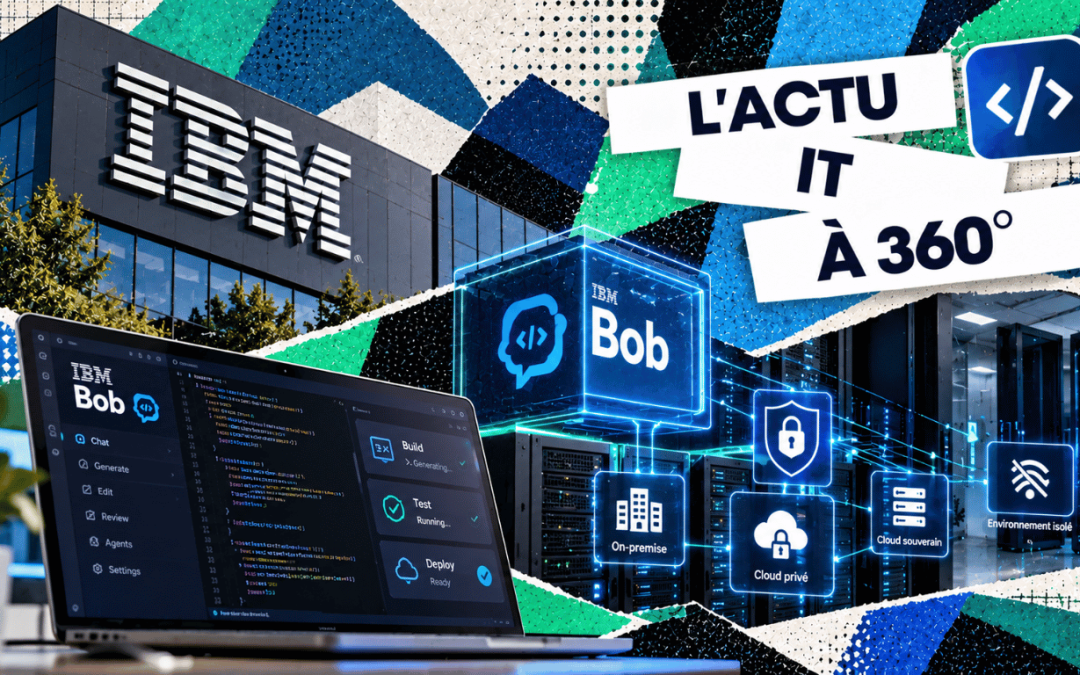
IBM Bob: developing with AI without your code leaving the company
IIBM has announced a self-hosted version of Bob, its agentic development platform, for internal infrastructure, private or sovereign clouds and environments isolated from the internet.[1] This option addresses a concrete obstacle: some applications contain code, data...

HPE is preparing a network that anticipates incidents and automates certain interventions
HPE plans to deploy a Self-Driving Network for the 2027 Ryder Cup, with Wi-Fi 7 and an operations centre bringing together data and AI tools.[1] The stated aim is to monitor usage, adapt the network and move towards autonomous interventions. For businesses, the...
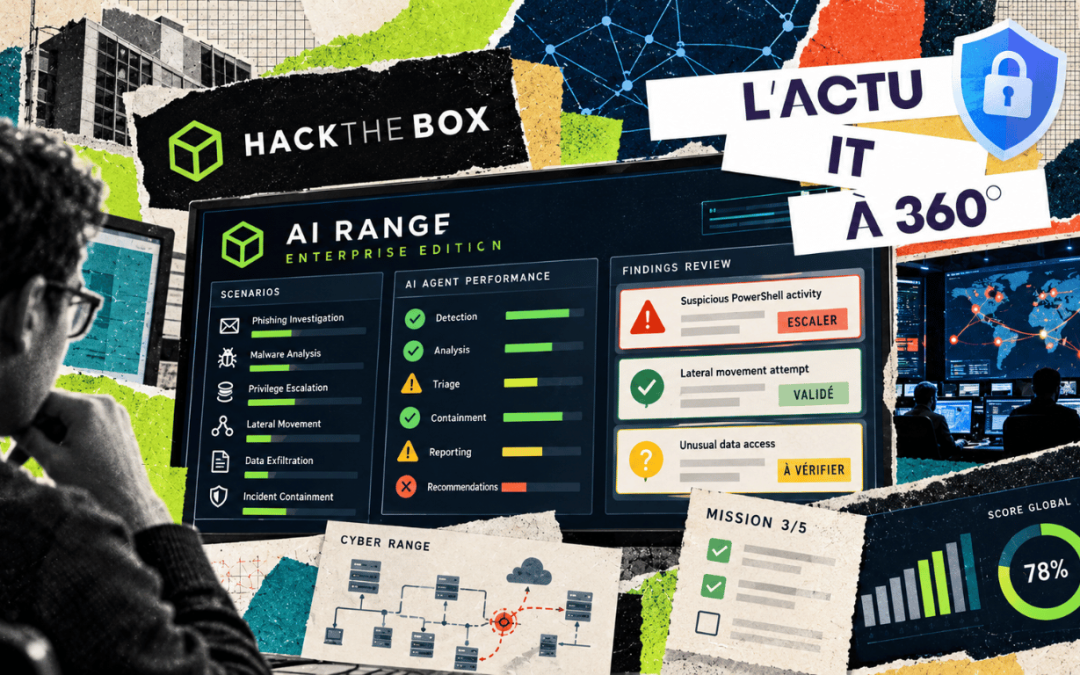
Can your AI agent really defend your company? Hack The Box puts its skills to the test
Hack The Box is launching AI Range Enterprise Edition to let security teams assess their own AI agents on the roles assigned to them.[1] For businesses, the stakes are concrete: having evidence before delegating a task, then checking that this evidence remains valid...

VAST Data wants AI to work with sensitive data in a protected environment
VAST Data has unveiled DataEnclave, a confidential execution capability designed to bring artificial intelligence models closer to companies’ sensitive data. Presented as a preview, it is due to go on sale in the first quarter of 2027.[1] The aim is to make certain...
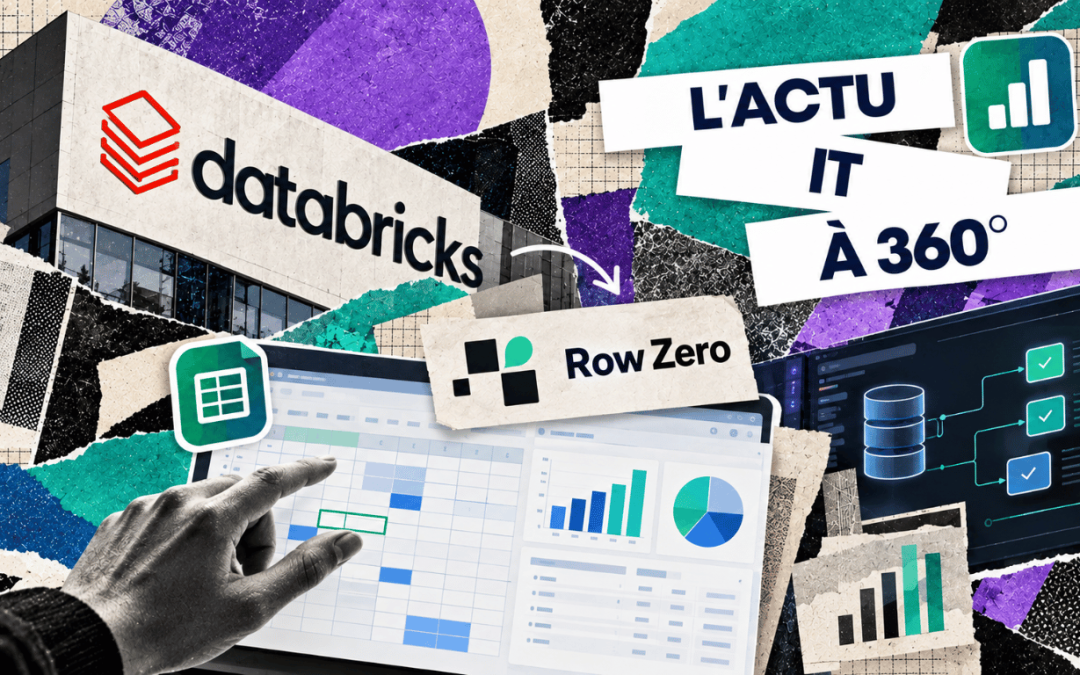
Databricks buys Row Zero to bring spreadsheets closer to governed data
Databricks has announced the acquisition of Row Zero and plans to integrate its spreadsheet experience into Genie.[1] The aim is to let business teams explore data in a familiar interface, with greater control over access and usage. For companies, the challenge is to...

Google Cloud takes its X5 instances to 48 TB for large SAP databases
Google Cloud has announced the general availability of the X5 series, which raises the maximum advertised memory capacity on a single node to 48 TB, compared with 32 TB for X4.[1] Aimed in particular at very large SAP HANA databases, the offering is based on bare...

Cloud Storage: Google automates the detection of anomalies
A rise in reads, cross-region transfers or stored volume can inflate the cloud bill and disrupt applications. With Storage Intelligence advisor, Google offers a view of unusual changes in Cloud Storage, along with leads for investigating them. For businesses, the...
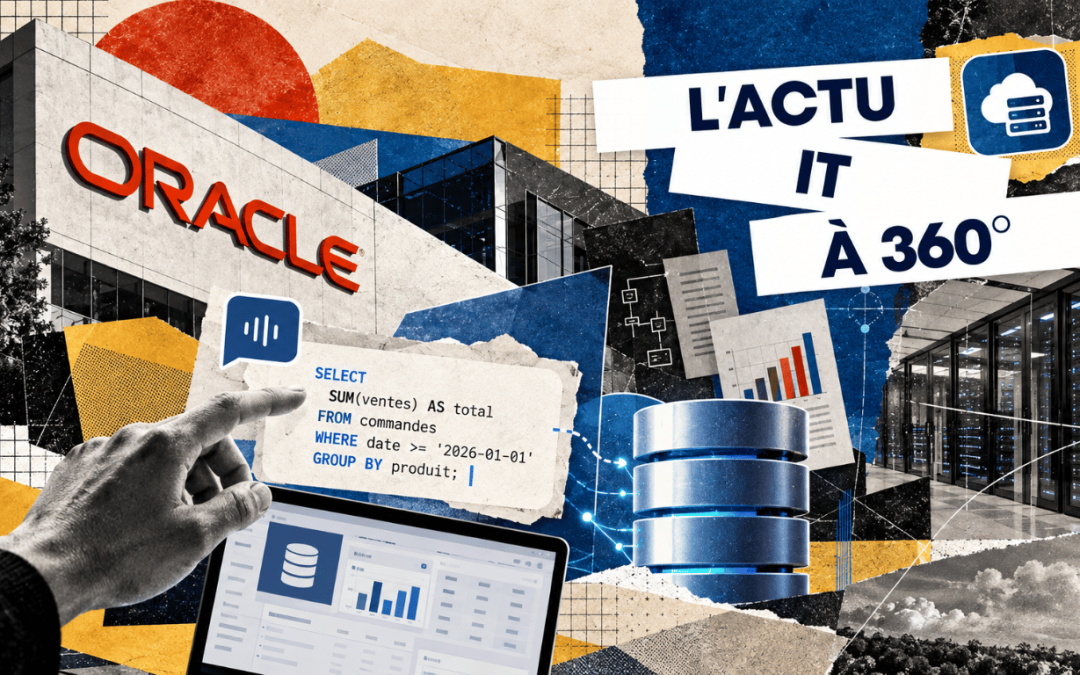
AI voice agents: Oracle details a LiveKit architecture on OCI
Oracle has described an architecture that pairs the LiveKit Agents framework with Oracle Cloud Infrastructure to automate real-time voice calls. The design links telephony, AI models and business services, while placing internal components in private subnets. For...
GitHub Copilot bulks up for business: coding agents come under IT control
Copilot is no longer just there to suggest the next line GitHub Copilot is continuing its transformation. Originally known mainly for completing code in the editor, the tool is now evolving towards agents capable of exploring a project, modifying files, using tools...