


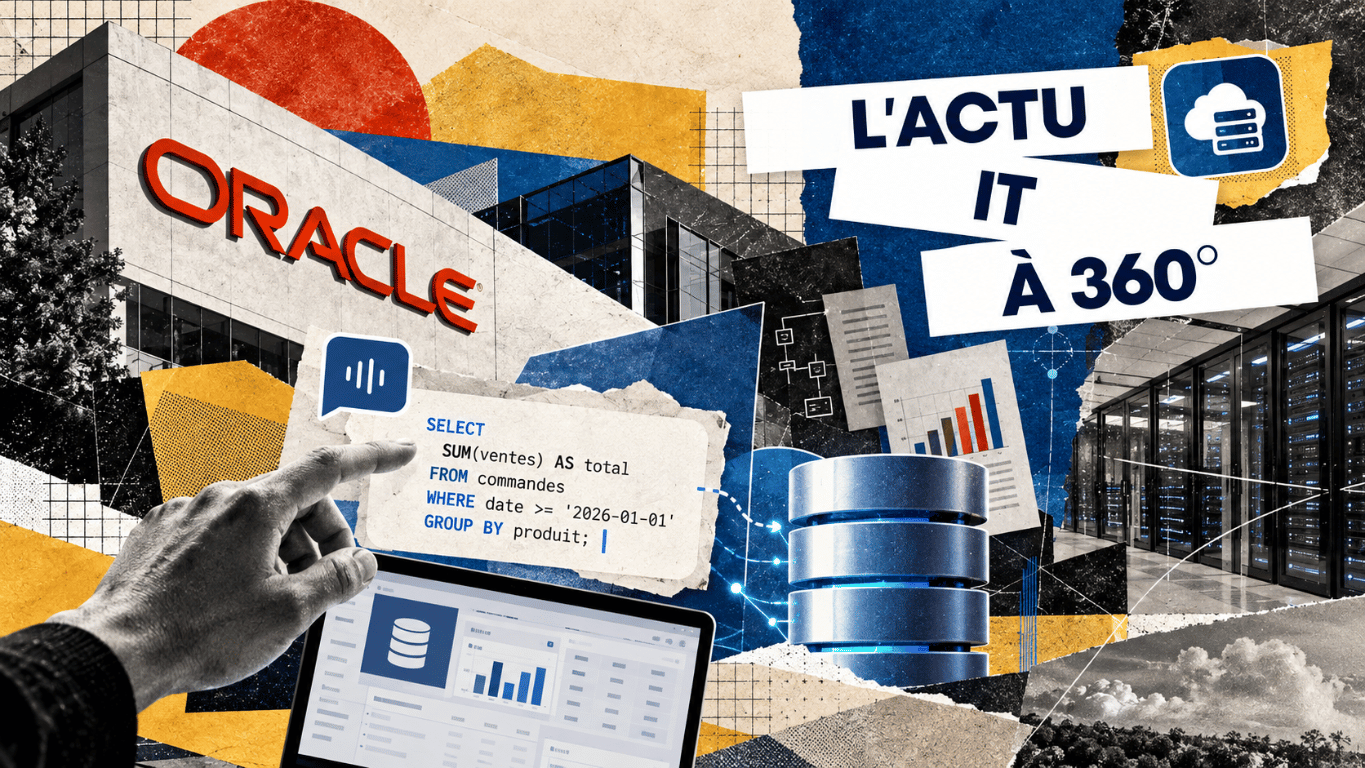
Oracle has described an architecture that pairs the LiveKit Agents framework with Oracle Cloud Infrastructure to automate real-time voice calls. The design links telephony, AI models and business services, while placing internal components in private subnets. For SMEs, the central question remains integration, security and running costs.
Editor’s note. This Oracle post is an architecture overview published by the vendor, not the announcement of a turnkey service nor an independent assessment of its performance.[1]
Oracle presents an architecture blueprint, not a ready-to-use deployment
Published on 26 September 2026, Oracle’s post explains how LiveKit Agents can be combined with OCI services to build outbound voice agents. The use case describes automated calls, for example to confirm a delivery, qualify an enquiry or schedule an appointment. The LiveKit framework, available as open source and self-hostable, orchestrates the voice session; OCI provides the infrastructure and, depending on the set-up chosen, AI, storage and database services.[1], [2]
The distinction matters: Oracle is documenting one possible architecture. The post alone does not demonstrate conversation quality, cost savings or the reliability achieved by a business in production. Those outcomes depend on the models chosen, the telephone network, business integrations and the level of oversight.
From speech to action in the information system
A voice agent combines several stages. The system first detects when someone is speaking, converts the audio into text, passes the content to a model that prepares a reply or triggers a tool, then converts that reply back into audio. LiveKit Agents coordinates these exchanges within a real-time session. LiveKit also documents outbound calls via a SIP trunk, the service that connects the application to a telephone carrier and the public network.[2], [3]
The agent can, for example, query a business tool to look up an order status or record the outcome of a call. This requires properly defined application interfaces and permissions. Voice then becomes a gateway to actions in the information system, with the same control requirements as an API or a user account.
A network boundary that remains partly exposed
In Oracle’s design, the media entry point and the connections required for SIP or WebRTC sit in the externally accessible part. The agents, tool servers, databases and secrets, on the other hand, can reside in private subnets. The post notably cites OCI Generative AI, OCI Speech, Autonomous Database, Object Storage and Vault among the services that can be used.[1]
This separation limits the direct exposure of internal components, but it does not make the whole call private. The stream passes through a telephone provider and may rely on external AI services depending on the configuration. OCI network security groups are used to define the permitted flows to the relevant resources; configuring them, managing identities and logging remain the organisation’s responsibility.[4], [5]
What this architecture changes in the IT ecosystem
The project is not purely a matter of cloud or AI. It requires coordinating telephony, networking, cloud services, business data, identity management and monitoring. A failure or misconfiguration in any one of these links can degrade the call or give the agent overly broad access. Success therefore depends on the coherence of the entire architecture, not just on the choice of voice model.
For SMEs, this approach can reduce the need to build each stage of the conversation separately, but it does not remove the integration work. The system has to be connected to the applications already in use, the operations the agent can perform must be restricted, the cases where an employee takes over must be defined, and component maintenance must be planned. A trial on a simple flow, such as confirming an appointment, makes it possible to assess the value before scaling up.
Analytical reading of the architecture
The table summarises the benefits described by Oracle and the questions an organisation must address before applying them to its own system.
| Component | Operational effect | Control question |
|---|---|---|
| Telephony and media access | Connects the agent to an inbound or outbound call via SIP and the telephone network. | Who provides the trunk, which connections are public and how are they filtered? |
| LiveKit Agents | Coordinates audio, transcription, the model, speech synthesis and tool calls. | What latency and quality are measured on real lines, in real languages and environments? |
| OCI services | Hosts the agents and can provide AI, storage, database and secrets management services. | Which services process each piece of data, in which region and at what usage cost? |
| Business tools | Allow operational data to be viewed or modified during the call. | Are permissions limited to each task, logged and reversible in the event of an error? |
| Monitoring and continuity | Logs and events help track sessions and diagnose incidents. | When is the call transferred to a human, and what happens in the event of an outage or uncertainty? |
Before deployment, test use cases, data and costs
The first check concerns quality in real-world conditions: background noise, accents, interruptions, response times, transcription errors and the rate of transfer to an adviser. The full cost also needs to be measured, adding up infrastructure, phone calls, voice services, models, integration, monitoring and maintenance. Oracle’s post describes the components, but provides neither an independent comparison of these costs nor generalisable production results.[1], [2], [3]
Recordings and transcripts may contain personal data, including the voice itself and information shared during the call. The business must therefore decide what is retained, for how long, with what access and for what purpose, then inform the people concerned where the applicable rules require it. The CNIL points out that a voice constitutes personal data and regulates how callers must be informed when calls are monitored or recorded.[7], [8]
If the calls are used to prospect private individuals in France, the rules applicable since 11 August 2026 must also be checked: the CNIL states that prior consent is now required, save for specified exceptions, notably in the context of an existing contract. The applicable regime may differ depending on the target and purpose of the call; a business must therefore classify its use case before automating it.[6]
The key IT skill: integrating services into a controlled architecture
The topic highlights a core skill: knowing how to integrate cloud, telephony and business services into a secure network architecture. This means understanding data flows, restricting access, monitoring exchanges and planning for degraded modes. It is precisely a cross-cutting view of IT, going beyond simply developing a conversational agent.
For SMEs, start with a controlled trial
The Oracle and LiveKit architecture shows how a voice agent can be connected to telephony and business tools while isolating part of its execution in the private cloud. It is not enough, however, to establish that a deployment will be cheaper, more reliable or suitable for every organisation. For SMEs, the next step is to test a limited use case, measure its quality and cost, then check access security, how conversations are handled and the hand-off to a human when the agent reaches its limits.
READ ALSO
To place the Oracle and LiveKit architecture in the context of current developments in cloud and enterprise agents, explore these four complementary analyses published on CCCLX.
Kimi K3, Mistral, DeepSeek: Oracle turns OCI into an AI model hub
Agentic Data Cloud: Google rethinks data for the age of AI agents
Enterprise AI Harness: Salesforce tackles AI agent chaos
With Lambda, AWS readies cloud infrastructure for autonomous AI agents
Sources
- 01
Oracle (26 September 2026). “LiveKit Agents Framework: Real-Time Outbound Voice AI on Oracle Cloud Infrastructure”. Primary source for the architecture.
- 02
LiveKit. Agents documentation. Real-time media orchestration and deployment.
- 03
LiveKit. Outbound calls. Telephone connection via SIP.
- 04
LiveKit. Self-hosted SIP server. Components and network requirements.
- 05
Oracle Cloud Infrastructure. Network security groups. Controlling flows to OCI resources.
- 06
CNIL. Prospection commerciale par téléphone. Applicable French rules.
- 07
CNIL. Définition d’une donnée personnelle. A voice can constitute personal data.
- 08
CNIL. Informing callers when calls are monitored or recorded.
Data centres in space: why Nvidia wants to revolutionise the cloud
News in brief At the GTC 2026 conference, Nvidia announced its intention to accelerate the development of artificial intelligence in space, joining an emerging movement around orbital data centres. The company is no longer content to supply chips for satellites; it is...

Claude Marketplace: what Anthropic’s new platform changes for businesses
News in brief Anthropic has just announced Claude Marketplace, a new platform that allows companies to access, share and use artificial intelligence agents based on its Claude model. The aim is no longer just to offer conversational AI, but to create a genuine...
Automated code review: Anthropic’s Claude now analyses developers’ code
News in brief Artificial intelligence continues to transform developers’ work. Anthropic, the company behind the Claude AI model, has just announced new capabilities that allow its assistant to analyse computer code and help developers with their code review...
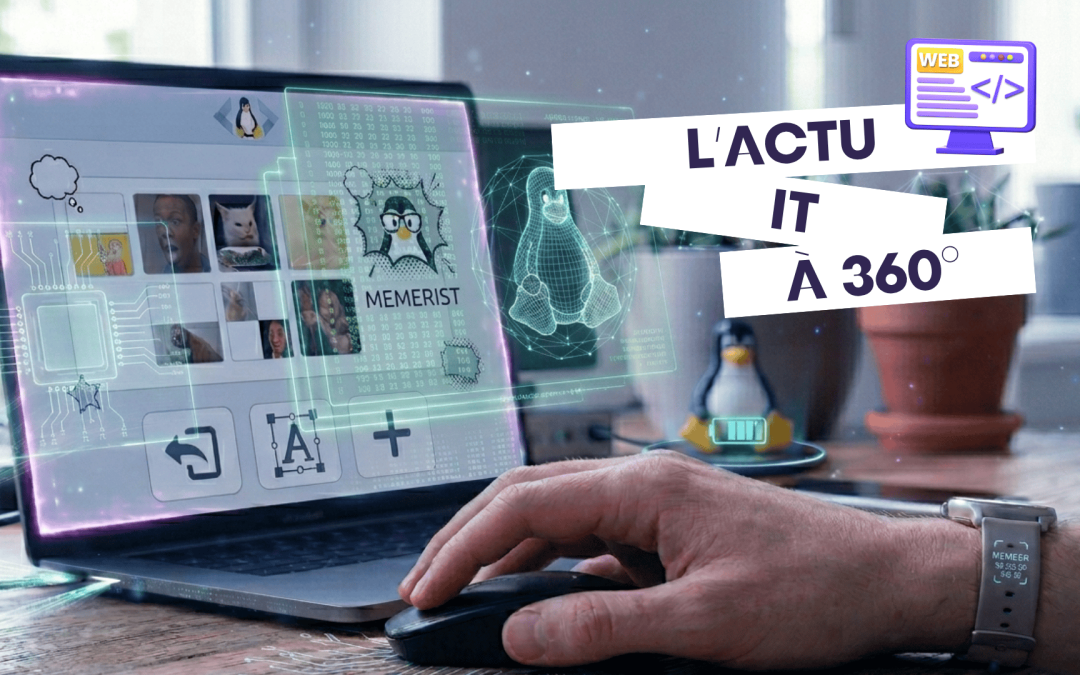
Memerist: the free Linux app for creating memes in seconds
News in brief Creating a meme has become an everyday activity on the internet. Humorous images circulate daily on social networks, forums and messaging apps, often used to comment on the news, share an idea or simply make people laugh. Yet producing a meme quickly is...
Microsoft unveils Microsoft 365 E7: Copilot and AI agents at the heart of its enterprise strategy
News in brief Microsoft recently announced Microsoft 365 E7, a new offering for businesses that places artificial intelligence at the heart of the working environment. This development is part of Microsoft’s overall strategy to transform traditional productivity tools...
Global cyber-espionage: the Salt Typhoon affair shows why cybersecurity is becoming crucial
News in brief A vast cyber-espionage operation called Salt Typhoon has reportedly infiltrated several telecom operators around the world. Hacker groups linked to China are believed to be behind these attacks, which can access sensitive communication infrastructure....
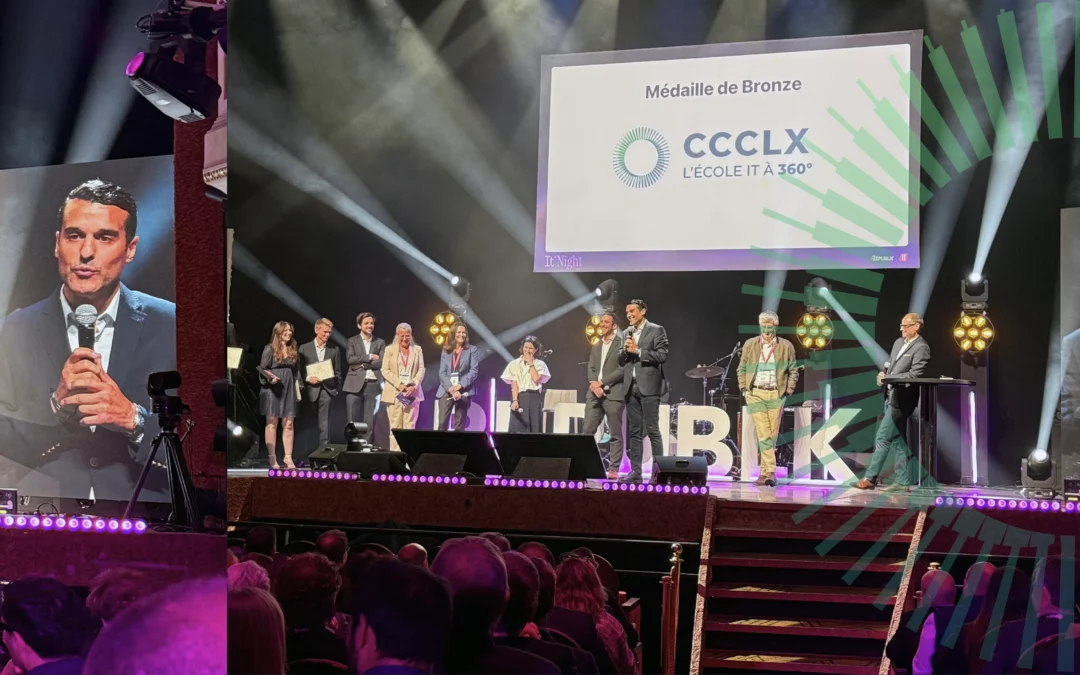
CCCLX wins Bronze Trophy at IT Night 2025!
CCCLX, the 360° IT school, was honored at IT Night 2025 - La Nuit de l'Entreprise Numérique, winning the Bronze Trophy in the Schools / Training category. A fine accolade in the context of this emblematic event for the French digital ecosystem, organized annually...

A revolution in higher education financing by aivancity/CCCLX and Umanity
A concrete solution to democratize access to education for the professions of tomorrow This scheme, the only one of its kind in France, complements a series of measures put in place by aivancity to promote diversity and equitable access to its programs (tuition-free...
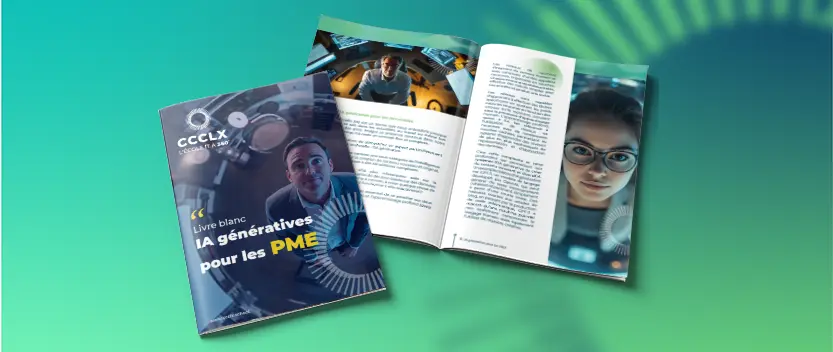
White paper: How generative AI is transforming SMEs
White paper: How generative AI is transforming SMEs In a world where technological innovation is redefining the rules of the game, small and medium-sized businesses have never had so much to gain... or lose. Against this ever-changing backdrop, CCCLX unveils its new...

CCCLX: A new IT school dedicated to SMEs and startups is born
On April 28, 2025, CCCLX was officially unveiled at the CCI Paris during a press conference packed with symbols and commitments. The launch was attended by a number of leading personalities: Soumia Malimbum, President of CCI Paris, Alain Martinez, President of CPME...