



Groq now wants to sell cloud rather than just chips
Groq is pursuing a major strategic transformation. Long seen as one of Nvidia’s challengers thanks to its LPUs (Language Processing Units) specialised in artificial intelligence model inference, the group is now focusing its efforts on GroqCloud, its cloud infrastructure dedicated to running AI models. This shift is part of a broader trend, that of neoclouds: specialist providers that build their infrastructure around the very specific needs of artificial intelligence rather than offering the vast catalogue of general-purpose services of AWS, Microsoft Azure or Google Cloud. Groq’s repositioning is already well under way: in June 2026 the company announced that it was operating 13 data centres across North America, Europe, the Middle East and Asia-Pacific, with more than five million developers using its infrastructure.¹
The shift to the neocloud was already in the making
Groq did not discover the cloud in 2026, since GroqCloud was launched back in 2024 following the acquisition of Definitive Intelligence, but its positioning has changed profoundly since then.² The non-exclusive licensing agreement signed with Nvidia in December 2025 was a turning point: Nvidia obtained a licence for some of Groq’s inference technologies, while founder Jonathan Ross, president Sunny Madra and several team members joined the GPU giant, with Groq remaining an independent company.³ In the following months, the company refocused its organisation around a much clearer ambition: to become a major cloud provider specialising in AI inference. This change is gradually transforming Groq from a player mainly identified with its hardware into a company selling computing capacity and inference services directly to developers and organisations.
Inference becomes the new jackpot of AI infrastructure
This strategy rests on a strong conviction: once models have been trained, their day-to-day use could require far more resources than their initial training. Groq estimates that inference could eventually require 15 to 20 times more computing capacity than training, particularly as conversational assistants, generative applications and autonomous agents that continuously send requests multiply.¹ The challenge is therefore no longer just to build the most powerful models, but to be able to run them quickly, at scale and at a cost low enough to make their use economically viable. Groq wants to occupy precisely this space with infrastructure optimised for real-time inference, and according to the company its cloud already processes several trillion tokens every week.
Neoclouds want to carve out a place alongside the hyperscalers
Groq is thus joining a market in which specialist players such as CoreWeave and Together AI are seeking to offer an alternative to the major cloud providers. The neocloud principle consists of building much more specialised infrastructure around AI workloads, with accelerators, networks and software optimised for training or inference, rather than trying to cover all of a company’s IT needs. The phenomenon is attracting massive amounts of capital: Together AI, for example, raised $800 million in July 2026, while several other specialist providers have completed major funding rounds in recent months.⁴ This momentum shows that the market expects a genuine layer of AI-specialised cloud to emerge, complementing or competing with the infrastructure offered by the hyperscalers.
For businesses, a new option emerges alongside AWS, Azure and Google Cloud
The appeal of neoclouds is particularly tangible for companies deploying artificial intelligence applications at scale. They may be looking for infrastructure offering more specialised capacity, lower latency or pricing better suited to their workloads, without necessarily moving their entire information system to a new provider. Groq highlights in particular the speed and cost-efficiency of its infrastructure for real-time inference applications, and its international expansion aims to bring computing capacity closer to users in order to reduce latency and meet certain data sovereignty requirements. In Australia, for example, Groq and Equinix announced a 4.5 MW infrastructure to deliver its inference services locally.⁵
Cloud Computing enters the era of specialised infrastructure
This transformation also shows how Cloud Computing skills are evolving. Cloud architects will no longer simply have to choose between AWS, Azure and Google Cloud, but may need to combine several providers depending on the nature of workloads, available hardware, data location, latency and the cost of inference. The rise of neoclouds therefore adds a new layer of complexity to multi-cloud architectures: a company could keep its business applications with a hyperscaler while running certain AI models on specialised infrastructure. Understanding distributed architectures, how AI accelerators work, inference APIs and data movement mechanisms then becomes essential to decide which infrastructure to use for each workload.
The battle for the AI cloud is only just beginning
Ultimately, Groq’s repositioning shows that the artificial intelligence revolution is not being played out solely between the labs developing the models. Another competition is taking place in data centres, where enough capacity must be built to run these models at scale while keeping their cost under control. Groq notably plans to continue expanding its infrastructure towards 200 MW by the end of 2027, a sign that its future now largely depends on operating a global inference platform.¹ Facing the hyperscalers and a new generation of extremely well-funded neoclouds, the question now is whether Groq can turn its long-standing expertise in AI accelerators into a genuine competitive advantage in the cloud.
360° IT News — decoding technology to understand the jobs of tomorrow.
Further reading
The infrastructure needed for artificial intelligence is also transforming traditional cloud architectures. Read our CCCLX article “The cloud prepares for autonomous agents: AWS evolves Lambda”, which analyses how AWS is adapting its serverless infrastructure to new agentic workloads.
References
1. Groq. (2026). Groq Raises $650M to Scale Its AI Inference Cloud Business.
https://groq.com/newsroom/groq-raises-usd650m-to-scale-its-ai-inference-cloud-business
2. Groq. (2024). Groq Acquires Definitive Intelligence to Launch GroqCloud.
https://groq.com/newsroom/groq-acquires-definitive-intelligence-to-launch-groqcloud
3. Groq. (2025). Groq and Nvidia Enter Non-Exclusive Inference Technology Licensing Agreement to Accelerate AI Inference at Global Scale.
https://groq.com/newsroom/groq-and-nvidia-enter-non-exclusive-inference-technology-licensing-agreement-to-accelerate-ai-inference-at-global-scale
4. TechCrunch. (2026). Neocloud Together AI raises $800M, leaps to $8.3B valuation.
https://techcrunch.com
5. Groq. (2025). Groq Expands to Asia-Pacific with Sydney Data Center to Power the Next Generation of AI Inference.
https://groq.com
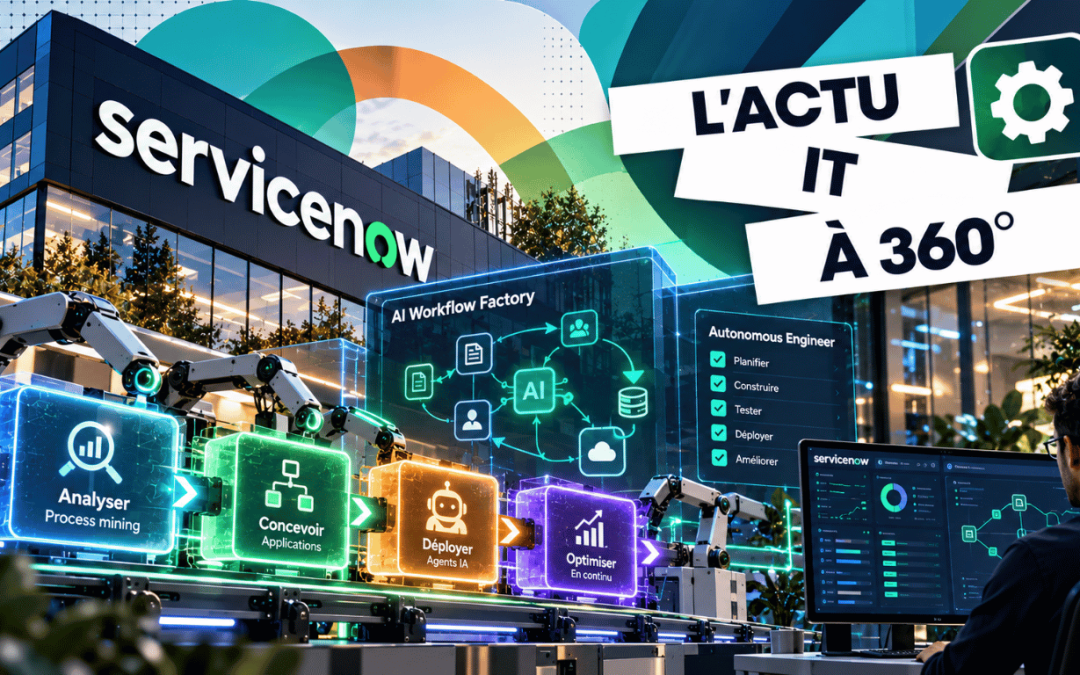
ServiceNow wants to turn process improvement into a continuous AI-driven loop
With AI Workflow Factory, ServiceNow aims to link the identification of inefficient processes with building and running their improvements. The announcement notably includes Autonomous Engineer, a tool designed to automate more of the implementation work.[1] For...

Mistral Large 4: what its trillion-parameter model could change for businesses
Mistral has opened the public preview of Mistral Large 4, nicknamed “Le Chonk”, and plans to release its weights by the end of the month.[1] This European model targets agentic use cases in particular, as well as cybersecurity, finance and industry. For businesses,...
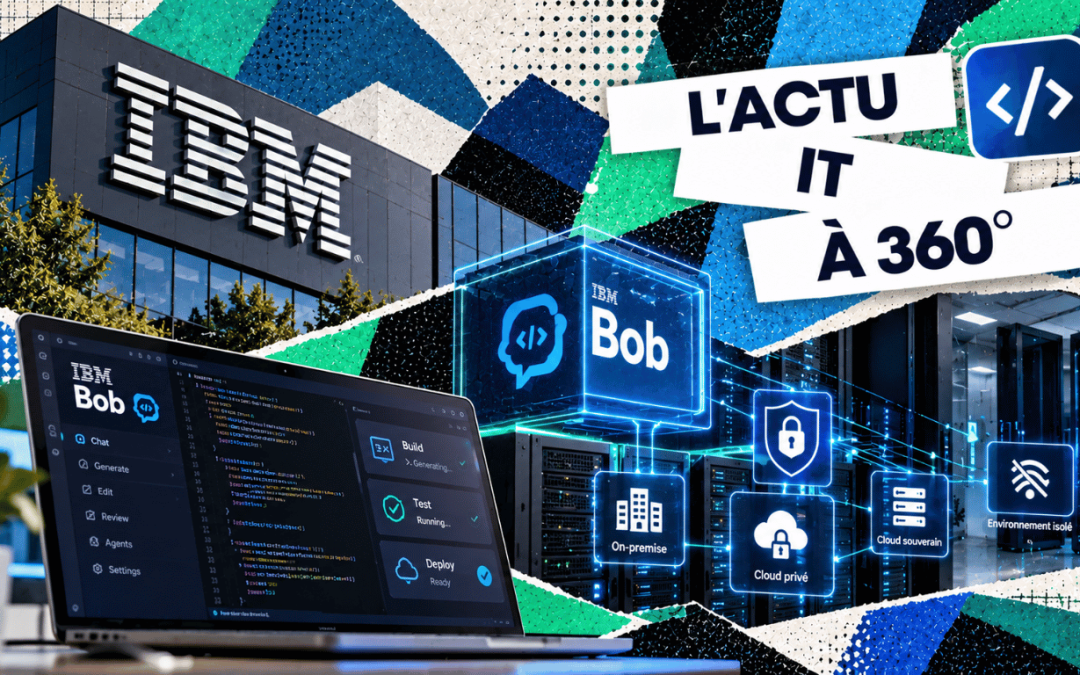
IBM Bob: developing with AI without your code leaving the company
IIBM has announced a self-hosted version of Bob, its agentic development platform, for internal infrastructure, private or sovereign clouds and environments isolated from the internet.[1] This option addresses a concrete obstacle: some applications contain code, data...

HPE is preparing a network that anticipates incidents and automates certain interventions
HPE plans to deploy a Self-Driving Network for the 2027 Ryder Cup, with Wi-Fi 7 and an operations centre bringing together data and AI tools.[1] The stated aim is to monitor usage, adapt the network and move towards autonomous interventions. For businesses, the...
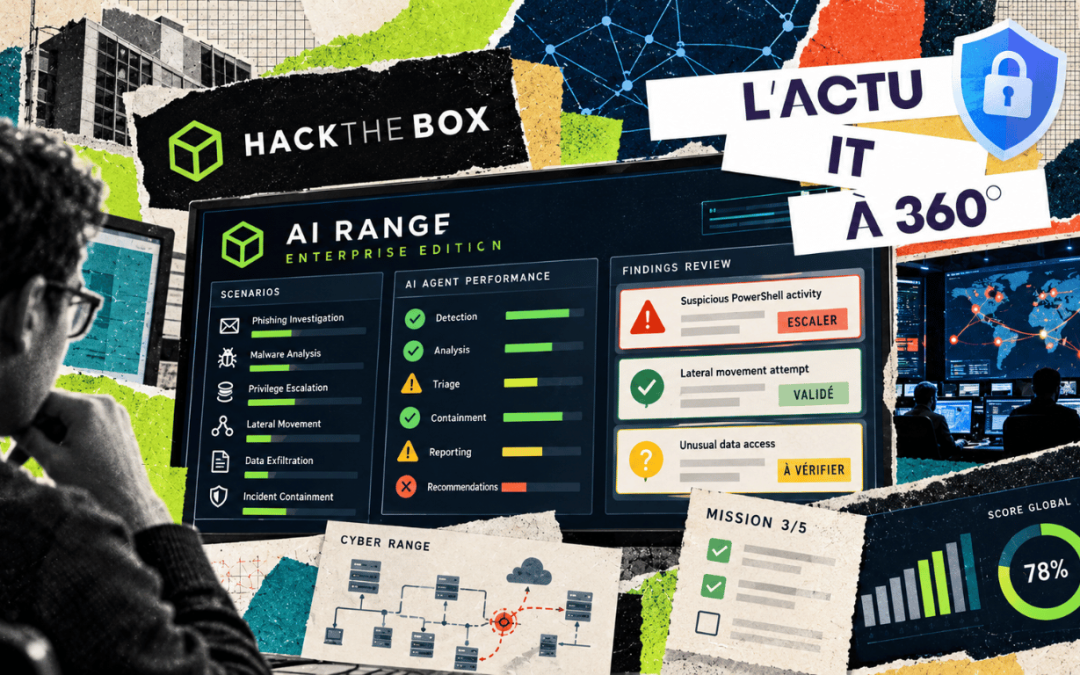
Can your AI agent really defend your company? Hack The Box puts its skills to the test
Hack The Box is launching AI Range Enterprise Edition to let security teams assess their own AI agents on the roles assigned to them.[1] For businesses, the stakes are concrete: having evidence before delegating a task, then checking that this evidence remains valid...

VAST Data wants AI to work with sensitive data in a protected environment
VAST Data has unveiled DataEnclave, a confidential execution capability designed to bring artificial intelligence models closer to companies’ sensitive data. Presented as a preview, it is due to go on sale in the first quarter of 2027.[1] The aim is to make certain...
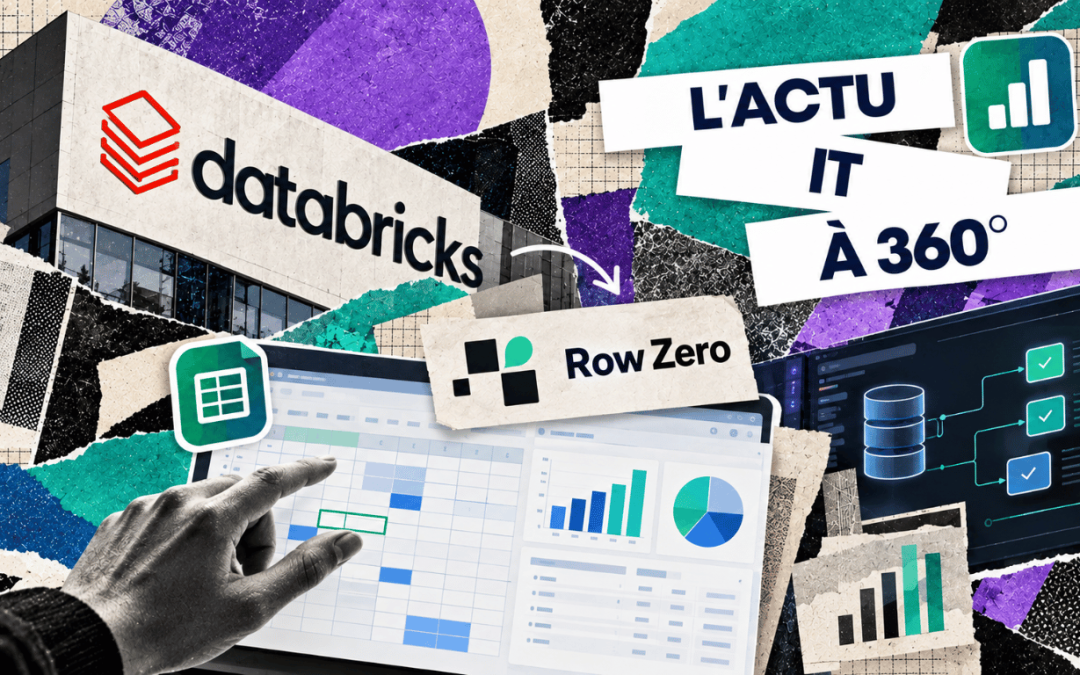
Databricks buys Row Zero to bring spreadsheets closer to governed data
Databricks has announced the acquisition of Row Zero and plans to integrate its spreadsheet experience into Genie.[1] The aim is to let business teams explore data in a familiar interface, with greater control over access and usage. For companies, the challenge is to...
Google Cloud takes its X5 instances to 48 TB for large SAP databases
Google Cloud has announced the general availability of the X5 series, which raises the maximum advertised memory capacity on a single node to 48 TB, compared with 32 TB for X4.[1] Aimed in particular at very large SAP HANA databases, the offering is based on bare...
Cloud Storage: Google automates the detection of anomalies
A rise in reads, cross-region transfers or stored volume can inflate the cloud bill and disrupt applications. With Storage Intelligence advisor, Google offers a view of unusual changes in Cloud Storage, along with leads for investigating them. For businesses, the...
AI voice agents: Oracle details a LiveKit architecture on OCI
Oracle has described an architecture that pairs the LiveKit Agents framework with Oracle Cloud Infrastructure to automate real-time voice calls. The design links telephony, AI models and business services, while placing internal components in private subnets. For...