


A new generation of AI designed for specific uses
OpenAI is changing its strategy with the launch of GPT-5.6, a new family of models made up of Sol, Terra and Luna. Rather than offering a single model capable of meeting every need, the company is now betting on a modular approach in which each model is optimised for certain uses. This development also comes with ChatGPT Work, a new experience designed for professional environments. OpenAI thus confirms that the future of artificial intelligence will involve specialised models tailored to different user profiles and business needs.1
Three models to meet different needs
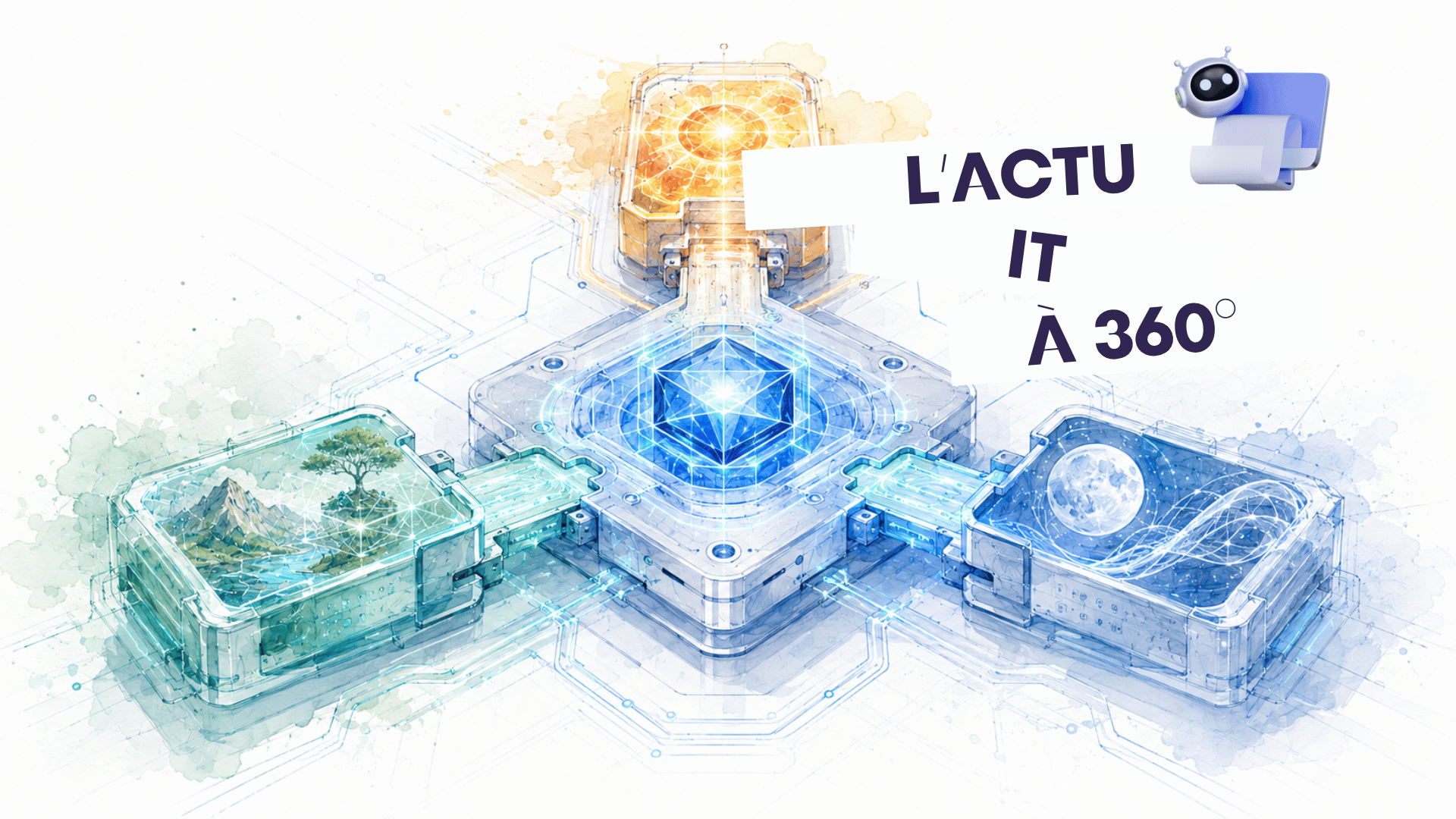
With GPT-5.6, OpenAI is segmenting its offering. The Sol, Terra and Luna models do not offer exactly the same capabilities or the same levels of performance. Some are optimised for everyday tasks, while others target uses that require more reasoning, code generation or automation. This specialisation makes it possible to use computing resources suited to each scenario, while giving companies more powerful tools according to their business needs.1
Access to models becomes a strategic factor
This new range also comes with tiered subscriptions. Free users and Go subscribers have limited access to certain models, while paying subscribers can use the entire GPT-5.6 family, notably in ChatGPT Work or Codex. OpenAI is thus adopting a logic similar to professional cloud services, where the most advanced features are reserved for organisations with greater needs in terms of performance, computing capacity and automation.2
Companies will be able to choose the most suitable AI
This development gives companies more flexibility. Depending on the project, they can opt for a fast model for day-to-day tasks, another specialising in software development or a more powerful model for complex analyses. This approach also makes it possible to optimise the cost of using artificial intelligence by selecting only the capabilities that are actually needed, without systematically calling on the most resource-hungry models.2
The market is moving towards specialised AI ecosystems
The launch of GPT-5.6 confirms a trend seen at several players in the sector. Vendors no longer develop a single universal model, but build ecosystems made up of several complementary AI systems. This strategy responds to the growing diversity of professional uses, whether software development, document research, data analysis or process automation. Artificial intelligence is gradually becoming a set of specialised services rather than a single assistant.3
Generative AI is becoming more specialised
The arrival of Sol, Terra and Luna shows that Generative Artificial Intelligence is evolving rapidly towards specialised models. Professionals will now need to understand the differences between these models, know how to select the one best suited to a given need and optimise their integration into business processes. This ability to choose and orchestrate several AI systems is becoming a real performance lever for companies.
AI enters a new phase of maturity
With GPT-5.6, OpenAI is not just launching a new generation of models. The company is changing the way artificial intelligence is offered to users. This modular approach could quickly become a market standard, with organisations building their own AI environment from specialised models able to meet ever more precise needs.
360° IT News — decoding technology to understand the jobs of tomorrow.
Further reading
The rapid progress of Mythos Preview illustrates how quickly the capabilities of the most advanced artificial intelligence models are accelerating. On a related topic, read our article “Claude Fable 5 leaves the free tier: Anthropic bets on professional use”, which analyses how Anthropic is now repositioning its most powerful models towards businesses and high-value uses.
References
1. OpenAI. (2026). Introducing GPT-5.6.
https://openai.com
2. OpenAI. (2026). ChatGPT Work Documentation.
https://help.openai.com
3. OpenAI. (2026). ChatGPT Plans and Pricing.
https://openai.com/chatgpt/pricing

The IT Clinic: when students take care of SMEs’ digital systems
A CCCLX innovation in education and solidarity What if students were to become digital "field doctors"? This is the bold gamble taken by CCCLX with the Clinique de l'IT, an innovative educational program inspired by legal clinics and the model launched in AI by...

Generative AI and the final year project: towards an augmented and responsible PFE
At CCCLX, Artificial Intelligence is not a marginal discipline: it is one of the pillars of the curriculum. This is why, in the fourth year, each student carries out a Final Year Project (FDP ) enriched by generative AI tools. But beyond technical use, the stakes are...

The Diploma Update Guarantee: a lifetime commitment with CCCLX
At CCCLX, ambition doesn't stop at graduation. Because technology is constantly evolving, and because skills become obsolete as quickly as they are acquired, CCCLX has taken a daring gamble: to offer a Diploma Update Guarantee©, a unique system that keeps every...

IT jobs in France: a strategic opportunity for multi-skilled talent
More than 6,000 IT offers analyzed: CCCLX reveals the market's true expectations In a rapidly changing job market, where artificial intelligence and the cloud are redefining standards, CCCLX has conducted an extensive study of over 6,000 job offers published between...