


Serverless enters a new phase
The cloud is evolving to meet the needs of a new generation of applications based on agentic artificial intelligence. As AI agents become capable of carrying out complex tasks for hours at a time, traditional serverless architectures are showing their limits. To support this shift, AWS is upgrading Lambda with a new offering based on Firecracker microVMs, the same technology that already powers AgentCore Runtime. This announcement illustrates a deeper transformation of cloud infrastructure, now designed to host intelligent, autonomous and always-available applications.1
MicroVMs push back Lambda’s limits
The new microVMs profoundly change the way Lambda works. Unlike conventional functions limited to fifteen minutes of execution, they can run for up to eight hours and offer a far more complete environment. Developers have shell access, can install packages, mount file systems and run their applications directly from a Dockerfile. Each microVM also has its own secure endpoint compatible with HTTP, WebSockets, gRPC and Server-Sent Events. Combined with SnapStart, which captures a snapshot of the environment to eliminate start-up times, this architecture brings Lambda closer to a true execution platform for persistent applications.1
Infrastructure designed for agentic AI
Although AWS does not officially present this development as an extension of AgentCore, the similarities are numerous. The microVMs use Firecracker, the technology already employed by AWS’s AI agent services, and address the same technical constraints: running third-party code, preserving session state, isolating users and delivering high performance while retaining the flexibility of serverless. AWS also offers a reference architecture for Anthropic’s Claude Managed Agents, in which each conversation runs in its own microVM while orchestration remains in Claude’s hands, illustrating the direction taken by future artificial intelligence platforms.2
Much more than a simple Lambda upgrade
The use cases presented by AWS show that these microVMs are not reserved for AI agents. They can also host data analytics platforms, vulnerability scanners, CI/CD environments, game servers or sandboxes designed to reproduce software bugs. Among the first users is ClickHouse, which uses the technology to run its chDB analytics engine, launch federated queries, create on-demand test environments or provide dedicated memory for each agentic session. This diversity shows that microVMs represent a major development in serverless execution well beyond the field of artificial intelligence alone.1
The cloud becomes an intelligent execution platform
The introduction of microVMs confirms an underlying trend: cloud providers no longer seek merely to host applications, but to offer environments that can adapt dynamically to the needs of intelligent workloads. The new microVMs can be suspended when idle while retaining their memory state and storage, then restart instantly when a new request arrives. This capability reduces operating costs while giving AI agents a persistent environment, an essential feature for applications that alternate between periods of inactivity and intensive computing phases.1
Cloud Computing becomes an essential skill
This development shows that cloud infrastructure is becoming ever more sophisticated and demands advanced technical skills. Understanding serverless architectures, virtualisation technologies, containers, microVMs and orchestration mechanisms is becoming indispensable for designing the platforms that will host tomorrow’s applications. This is precisely what the Cloud Computing skill taught at CCCLX develops. It enables future professionals to master modern cloud services, understand how they work and help companies design infrastructure capable of supporting new generations of AI-based applications.
AWS is already preparing the infrastructure for tomorrow’s applications
With this upgrade to Lambda, AWS is not just seeking to improve its serverless offering. The provider is laying the technical foundations that will allow future autonomous agents to run in secure, scalable and economically viable environments. As intelligent applications gain autonomy, cloud infrastructure will need to offer greater persistence, flexibility and isolation. MicroVMs are a first response to this transformation and herald a new generation of platforms designed to support the rise of agentic AI.
360° IT News — decoding technology to understand the jobs of tomorrow.
Further reading
Lambda’s microVMs illustrate how cloud infrastructure is evolving into platforms designed specifically for intelligent agents. This transformation also affects the services responsible for connecting these agents to company data. On a related topic, read our article “AWS strengthens OpenSearch to connect AI to enterprise data”, which explains how AWS is adapting its search engine to make it easier for AI agents to access information spread across information systems.
References
1. AWS. (2026). AWS Lambda MicroVMs Preview.
https://aws.amazon.com/
2. AWS. (2026). Firecracker MicroVM Documentation.
https://firecracker-microvm.github.io/
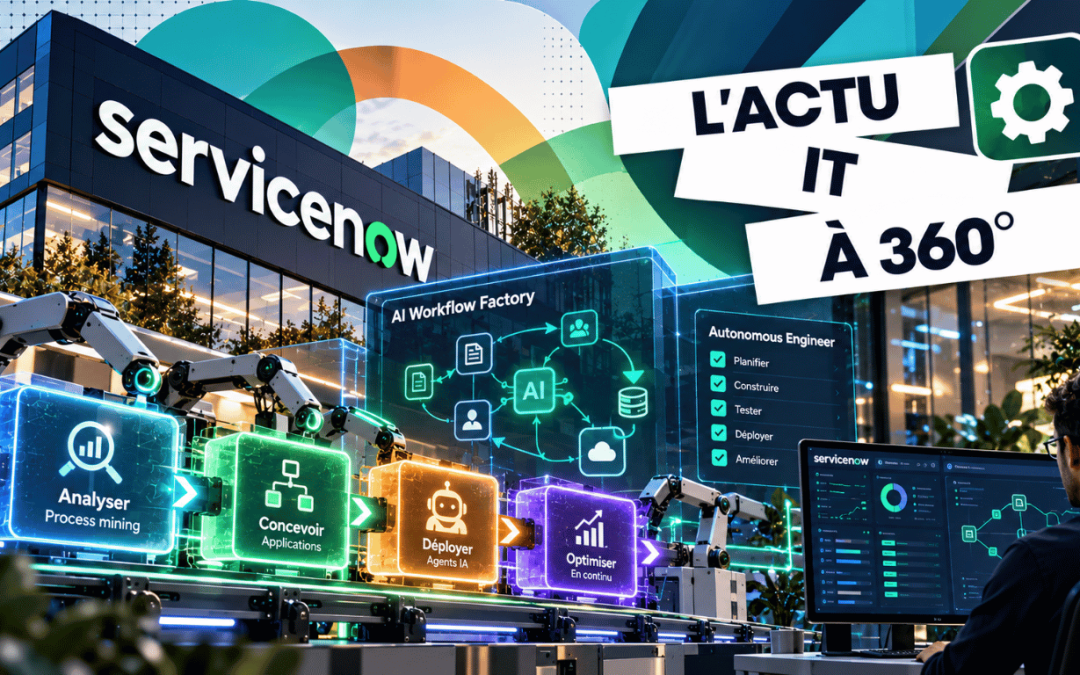
ServiceNow wants to turn process improvement into a continuous AI-driven loop
With AI Workflow Factory, ServiceNow aims to link the identification of inefficient processes with building and running their improvements. The announcement notably includes Autonomous Engineer, a tool designed to automate more of the implementation work.[1] For...

Mistral Large 4: what its trillion-parameter model could change for businesses
Mistral has opened the public preview of Mistral Large 4, nicknamed “Le Chonk”, and plans to release its weights by the end of the month.[1] This European model targets agentic use cases in particular, as well as cybersecurity, finance and industry. For businesses,...
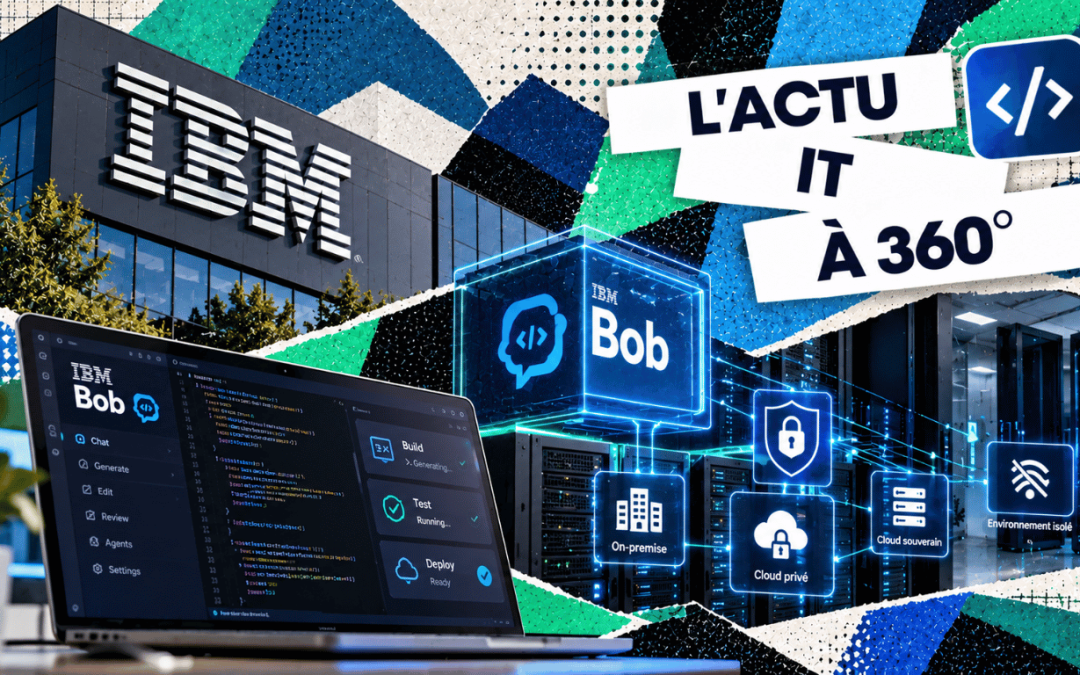
IBM Bob: developing with AI without your code leaving the company
IIBM has announced a self-hosted version of Bob, its agentic development platform, for internal infrastructure, private or sovereign clouds and environments isolated from the internet.[1] This option addresses a concrete obstacle: some applications contain code, data...

HPE is preparing a network that anticipates incidents and automates certain interventions
HPE plans to deploy a Self-Driving Network for the 2027 Ryder Cup, with Wi-Fi 7 and an operations centre bringing together data and AI tools.[1] The stated aim is to monitor usage, adapt the network and move towards autonomous interventions. For businesses, the...
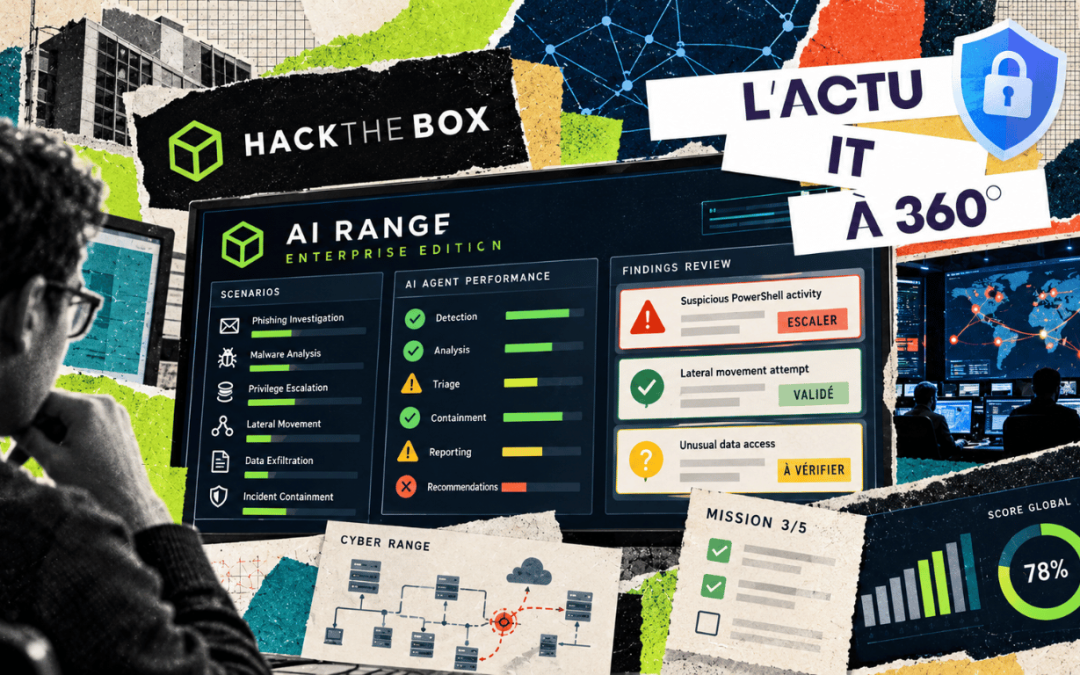
Can your AI agent really defend your company? Hack The Box puts its skills to the test
Hack The Box is launching AI Range Enterprise Edition to let security teams assess their own AI agents on the roles assigned to them.[1] For businesses, the stakes are concrete: having evidence before delegating a task, then checking that this evidence remains valid...
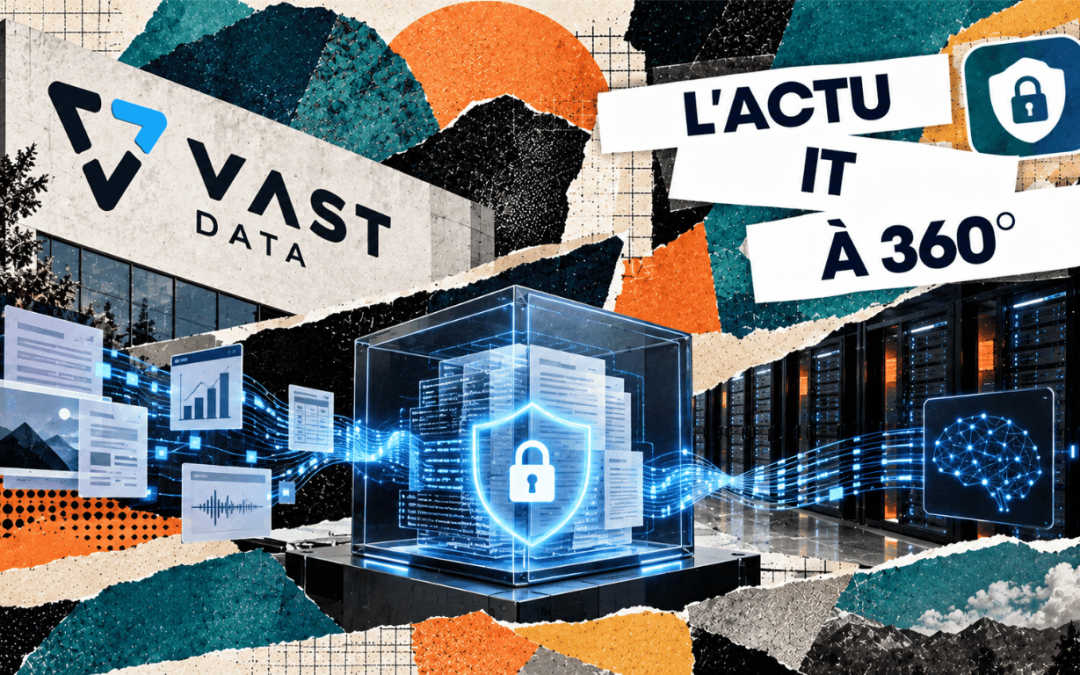
VAST Data wants AI to work with sensitive data in a protected environment
VAST Data has unveiled DataEnclave, a confidential execution capability designed to bring artificial intelligence models closer to companies’ sensitive data. Presented as a preview, it is due to go on sale in the first quarter of 2027.[1] The aim is to make certain...
Databricks buys Row Zero to bring spreadsheets closer to governed data
Databricks has announced the acquisition of Row Zero and plans to integrate its spreadsheet experience into Genie.[1] The aim is to let business teams explore data in a familiar interface, with greater control over access and usage. For companies, the challenge is to...

Google Cloud takes its X5 instances to 48 TB for large SAP databases
Google Cloud has announced the general availability of the X5 series, which raises the maximum advertised memory capacity on a single node to 48 TB, compared with 32 TB for X4.[1] Aimed in particular at very large SAP HANA databases, the offering is based on bare...
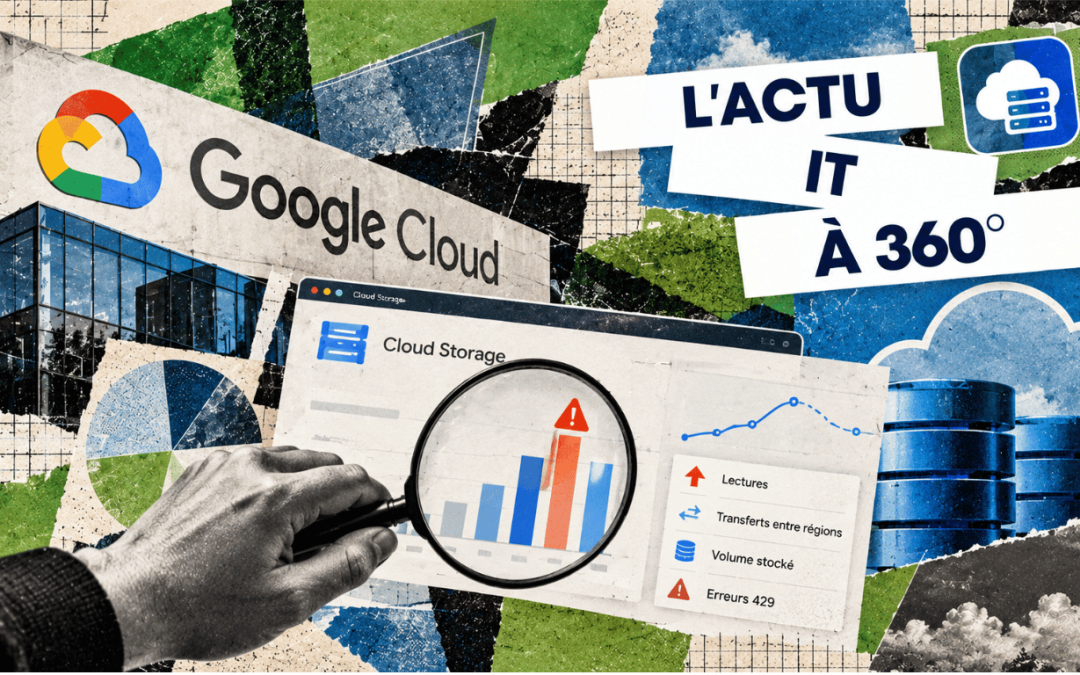
Cloud Storage: Google automates the detection of anomalies
A rise in reads, cross-region transfers or stored volume can inflate the cloud bill and disrupt applications. With Storage Intelligence advisor, Google offers a view of unusual changes in Cloud Storage, along with leads for investigating them. For businesses, the...
AI voice agents: Oracle details a LiveKit architecture on OCI
Oracle has described an architecture that pairs the LiveKit Agents framework with Oracle Cloud Infrastructure to automate real-time voice calls. The design links telephony, AI models and business services, while placing internal components in private subnets. For...