


News in brief
Creating a meme has become an everyday activity on the internet. Humorous images circulate daily on social networks, forums and messaging apps, often used to comment on the news, share an idea or simply make people laugh. Yet producing a meme quickly is not always easy when you have to use image-editing software or online tools.
That is precisely what Memerist offers: a new free application for Linux users. The software lets you create memes in seconds from a library of images or popular templates. Users can add text, customise the visual and export the result immediately. The aim is simple: to provide a fast, accessible and fully open-source tool for generating visual content for the web.¹
What is really happening
Memerist is part of a broader trend: the simplification of digital content creation tools. For a long time, producing an image or visual for the internet required complex software such as Photoshop or GIMP. Today, by contrast, many applications seek to automate certain tasks in order to make creation accessible to as many people as possible.
The application works on a simple principle. It offers a lightweight interface with a collection of popular meme templates. Users choose an image, add their text, adjust its position and export the result. In a few clicks, the visual is ready to be shared on a social network or online platform.
This type of tool also illustrates the philosophy of the open-source world. Memerist is designed to be free, accessible and modifiable by developers. Users can thus contribute to the project, suggest new templates or improve the application’s features. This collaborative approach is at the heart of the Linux ecosystem, which has long relied on software developed by communities of programmers.²
Beyond the humorous side of memes, these tools show how digital content creation is becoming increasingly automated. Modern applications seek to reduce the technical steps so that users can quickly produce visuals, text or even videos for the internet.
Why it matters for SMEs
At first glance, a meme-creation tool may seem trivial for businesses. Yet memes are now a genuine communication phenomenon on the internet. Brands, start-ups and even some institutions use this format to interact with their community and make their messages more accessible.
For SMEs, these tools can be a simple way to produce visual content quickly without needing advanced graphic design skills. At a time when digital communication has become essential, the ability to create engaging visuals can help a company improve its online visibility.
Social networks now play a central role in organisations’ communication strategies. Short, humorous or interactive visual content often attracts more attention than traditional formats. A tool such as Memerist can therefore make it easier to create content for social platforms.
But this development also shows that content creation is increasingly tied to digital technologies. Companies need to be able to use a range of software tools, manage their online presence and understand the codes of digital communication. This reinforces the importance of digital skills in organisations’ digital transformation strategies.
The IT skill behind this news: Web Programming and Management
The emergence of tools such as Memerist is a reminder of the importance of programming and web management skills. Behind an easy-to-use application lie computing technologies that handle the user interface, image processing and file export.
Developers who design this type of application need to master several technical aspects: building software interfaces, handling graphic files and integrating with operating systems such as Linux. On the web, these skills also make it possible to develop content-creation platforms, media management tools or interactive applications.
For companies and start-ups, this know-how is essential. Organisations need professionals able to design digital tools, maintain their web platforms and improve the user experience of online services.
In a world where digital communication and content production play a central role, IT jobs related to web and software development are therefore becoming increasingly strategic.
Why this news matters
The arrival of tools such as Memerist shows how much digital technologies continue to transform content creation. What once required complex software and advanced technical skills is gradually becoming accessible through simple, automated applications.
For users and businesses alike, these tools make it possible to produce content suited to the web and social networks more quickly. This development reflects a broader trend in the digital economy: technologies seek to simplify processes so that everyone can create, share and disseminate information.
Understanding these transformations is important for future IT professionals. Behind every digital tool lie technologies, skills and jobs that help build the digital ecosystem.
360° IT News — decoding technology to understand the jobs of tomorrow.
References
1. Memerist. Open-source meme creation project for Linux.
https://github.com
2. Linux Foundation. What is open source software?
https://www.linuxfoundation.org/resources/open-source-guides/what-is-open-source-software
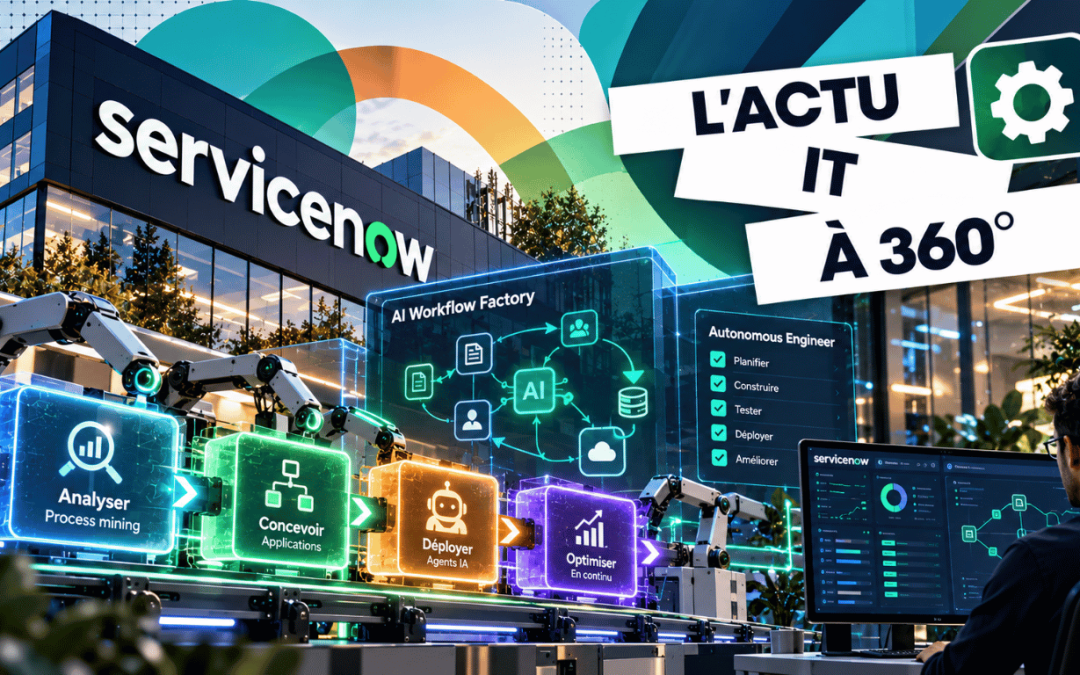
ServiceNow wants to turn process improvement into a continuous AI-driven loop
With AI Workflow Factory, ServiceNow aims to link the identification of inefficient processes with building and running their improvements. The announcement notably includes Autonomous Engineer, a tool designed to automate more of the implementation work.[1] For...

Mistral Large 4: what its trillion-parameter model could change for businesses
Mistral has opened the public preview of Mistral Large 4, nicknamed “Le Chonk”, and plans to release its weights by the end of the month.[1] This European model targets agentic use cases in particular, as well as cybersecurity, finance and industry. For businesses,...
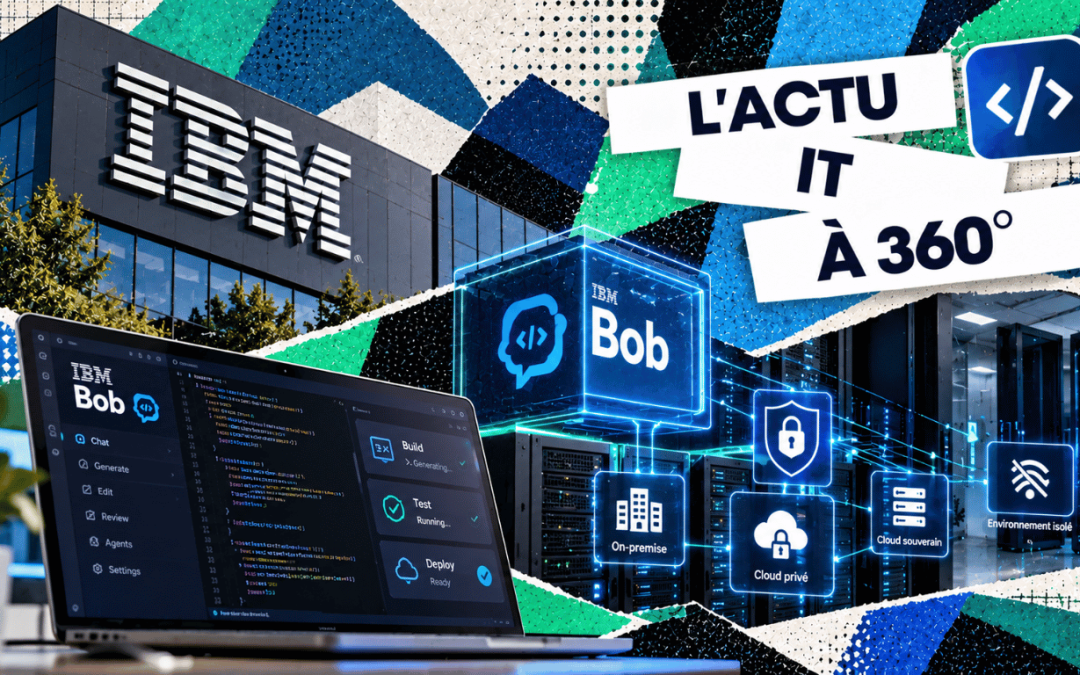
IBM Bob: developing with AI without your code leaving the company
IIBM has announced a self-hosted version of Bob, its agentic development platform, for internal infrastructure, private or sovereign clouds and environments isolated from the internet.[1] This option addresses a concrete obstacle: some applications contain code, data...

HPE is preparing a network that anticipates incidents and automates certain interventions
HPE plans to deploy a Self-Driving Network for the 2027 Ryder Cup, with Wi-Fi 7 and an operations centre bringing together data and AI tools.[1] The stated aim is to monitor usage, adapt the network and move towards autonomous interventions. For businesses, the...
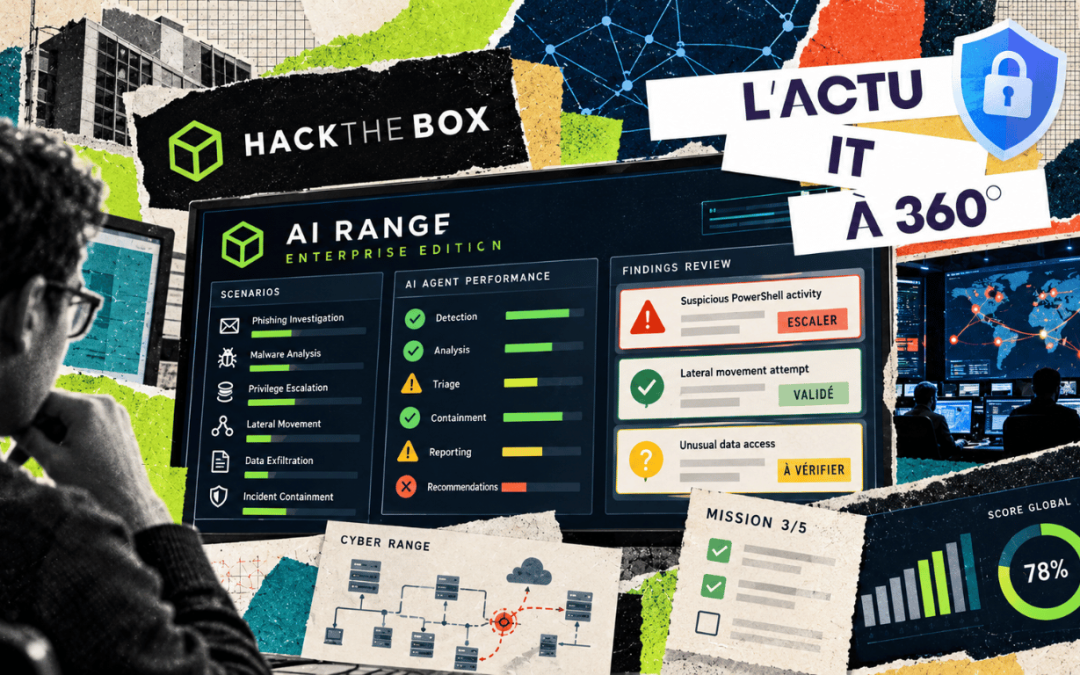
Can your AI agent really defend your company? Hack The Box puts its skills to the test
Hack The Box is launching AI Range Enterprise Edition to let security teams assess their own AI agents on the roles assigned to them.[1] For businesses, the stakes are concrete: having evidence before delegating a task, then checking that this evidence remains valid...

VAST Data wants AI to work with sensitive data in a protected environment
VAST Data has unveiled DataEnclave, a confidential execution capability designed to bring artificial intelligence models closer to companies’ sensitive data. Presented as a preview, it is due to go on sale in the first quarter of 2027.[1] The aim is to make certain...
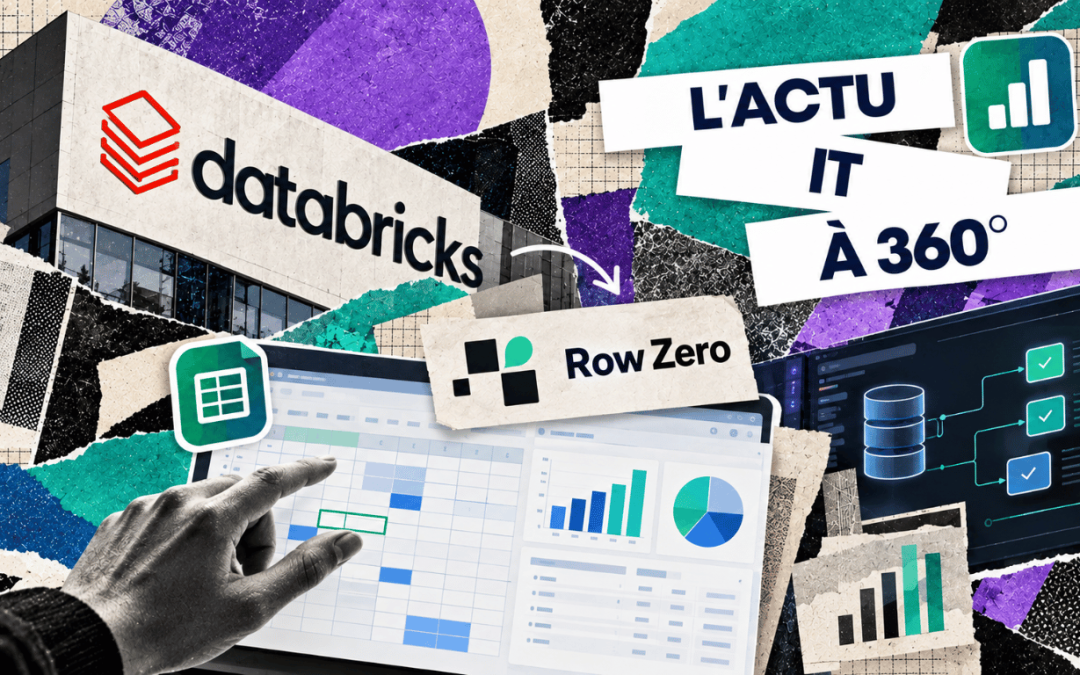
Databricks buys Row Zero to bring spreadsheets closer to governed data
Databricks has announced the acquisition of Row Zero and plans to integrate its spreadsheet experience into Genie.[1] The aim is to let business teams explore data in a familiar interface, with greater control over access and usage. For companies, the challenge is to...

Google Cloud takes its X5 instances to 48 TB for large SAP databases
Google Cloud has announced the general availability of the X5 series, which raises the maximum advertised memory capacity on a single node to 48 TB, compared with 32 TB for X4.[1] Aimed in particular at very large SAP HANA databases, the offering is based on bare...
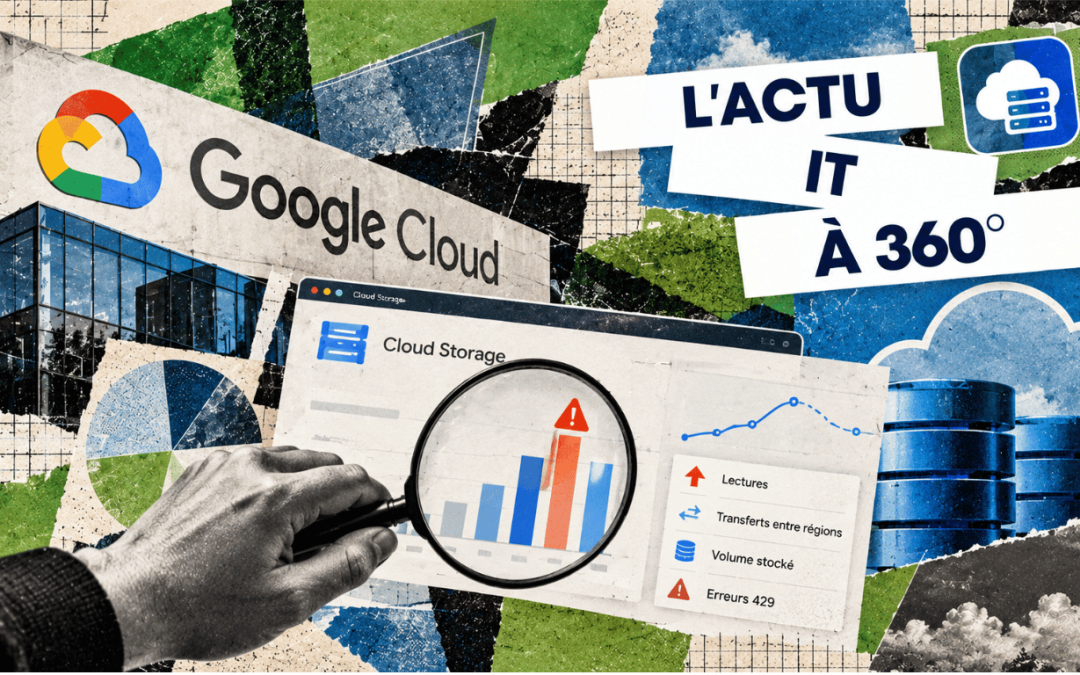
Cloud Storage: Google automates the detection of anomalies
A rise in reads, cross-region transfers or stored volume can inflate the cloud bill and disrupt applications. With Storage Intelligence advisor, Google offers a view of unusual changes in Cloud Storage, along with leads for investigating them. For businesses, the...

AI voice agents: Oracle details a LiveKit architecture on OCI
Oracle has described an architecture that pairs the LiveKit Agents framework with Oracle Cloud Infrastructure to automate real-time voice calls. The design links telephony, AI models and business services, while placing internal components in private subnets. For...