


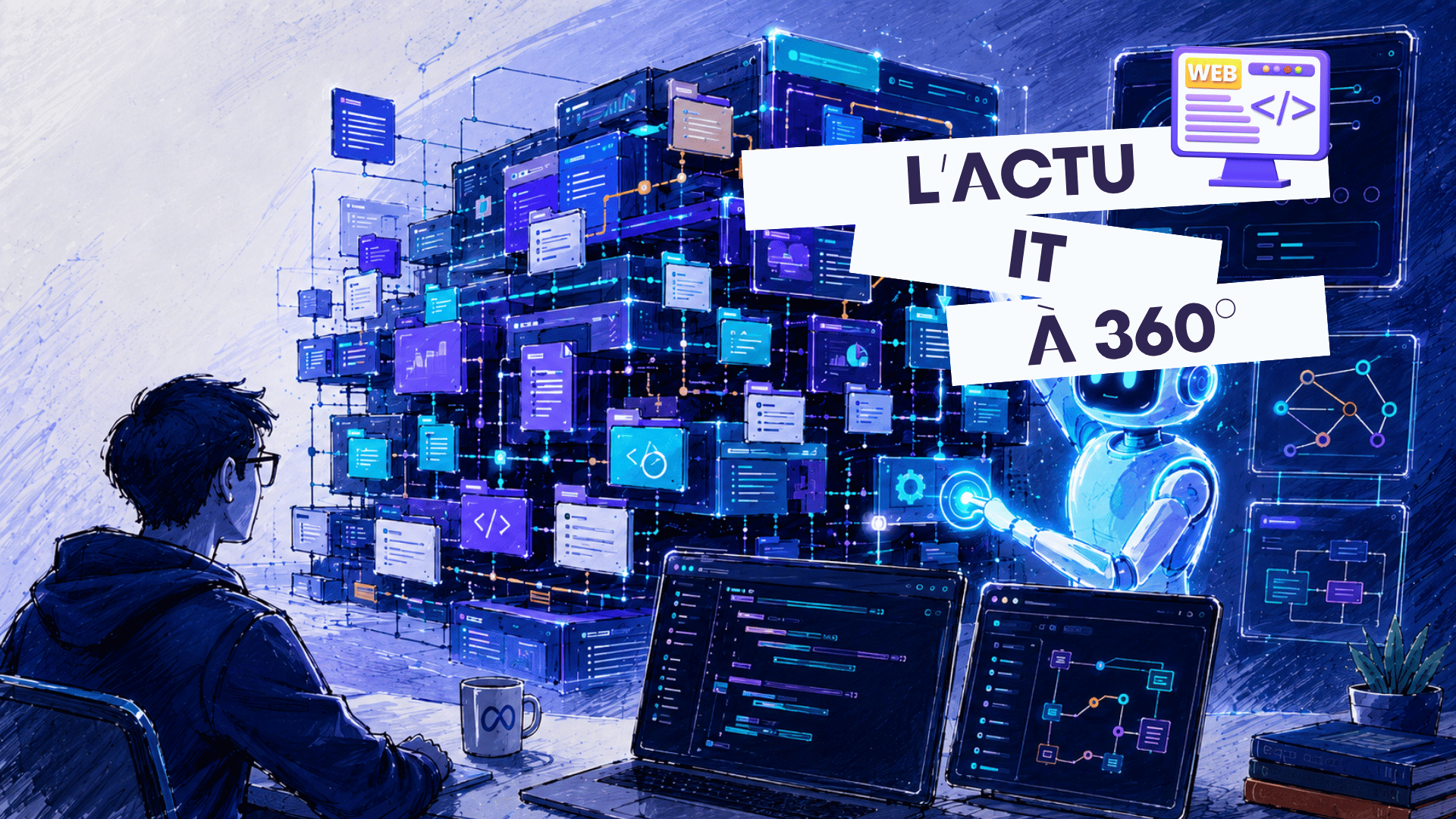
Meta wants to bring AI agents into complex software projects
Meta is stepping up its efforts in AI-assisted software development with Muse Code, a new agent designed to work on large codebases, where traditional assistants can quickly lose the context needed to understand the interactions between thousands of files and millions of lines of code.¹ The aim is no longer simply to generate a function or complete a few lines, but to enable AI to explore an existing project, understand how it is organised and make consistent changes across several components. With Muse Code, Meta is tackling one of the hardest problems in agentic development: giving a model enough context to work effectively on complex applications without treating each file as an isolated element.
Understanding an entire repository rather than a single file
In a large application, changing a few lines can affect dozens of other components, because the code relies on dependencies, internal libraries, APIs and conventions sometimes built up over many years. Muse Code is designed to navigate this environment and search for relevant information before proposing a change, which makes it work much like a developer discovering an unfamiliar codebase.² This ability to reason at repository level is becoming decisive for coding agents, because companies do not generally work on greenfield projects: they have to maintain and evolve existing systems whose complexity is precisely one of the main challenges of software development.
Millions of lines of code become the new challenge for agents
Generative models have made rapid progress in writing code, but the size of professional projects remains a major obstacle. Even with ever larger context windows, loading an entire codebase into a model would often be inefficient and costly, which forces agents to work out for themselves what information is really needed to complete a task. Muse Code follows this approach by combining repository search, context understanding and reasoning in order to select the relevant portions of code before acting.¹ The challenge is therefore no longer just producing syntactically correct code, but understanding how a change fits into a much larger architecture without causing regressions elsewhere in the system.
Meta is also transforming its own development methods
The launch of Muse Code takes on particular significance at Meta, whose engineers work on some of the largest software infrastructures in the tech sector. Facebook, Instagram, WhatsApp and the group’s many internal platforms rely on extremely large bodies of code, making them a particularly demanding testing ground for the capabilities of AI agents. For several years Meta has been developing tools to automate certain engineering tasks and improve its developers’ productivity, while its work on code models shows that the company now regards artificial intelligence as a lasting part of its development processes.³ Muse Code is part of this evolution, seeking to make agents context-aware enough to work in environments where simple code generation is no longer sufficient.
The market moves from copilot to agentic software engineer
Muse Code arrives in a sector where competition is intensifying rapidly. Cursor, Claude Code, GitHub Copilot, Codex, ZCode and the Qwen models are all seeking to move beyond the original copilot approach of suggesting a few lines of code. The new agents can explore files, use a terminal, run tests, identify errors and modify several parts of a project before presenting their work to the developer. Meta is pushing this evolution towards large codebases, a particularly strategic area for companies that have software developed over many years and want to benefit from AI without rebuilding their applications from scratch.
Understanding a codebase becomes as important as knowing how to code
This shift directly transforms the skills associated with Web Programming and Management. As agents take on part of the writing and modification of code, developers need to strengthen their understanding of software architectures, dependencies, APIs, testing and versioning mechanisms so that they can control the changes proposed by artificial intelligence. Being able to generate code quickly loses its value if nobody can check that it respects the project’s overall architecture, security constraints and business rules. Agents such as Muse Code could therefore increase the importance of high-level software engineering skills, as the developer gradually becomes the person who sets the framework, supervises changes and validates the consistency of the system.
Giant codebases become AI’s next battleground
After code generation and the automation of development tasks, understanding large software projects is emerging as a new frontier for AI agents. A system able to navigate efficiently through several million lines of code could speed up maintenance, make it easier to modernise legacy applications and help new developers understand complex architectures more quickly, but this promise will depend on the reliability of the changes produced and on teams’ ability to retain human control over important decisions. In any case, Muse Code shows that the next battle among coding assistants will probably no longer be fought over their ability to write an isolated function, but over their ability to understand and evolve entire software systems.
360° IT News — decoding technology to understand the jobs of tomorrow.
Further reading
Coding agents no longer just generate a few lines of code; they are becoming capable of working directly within development environments. On a related topic, read our article “SpaceX buys Cursor: agentic AI becomes the new standard in development”, which analyses the rise of agents able to design, modify and deploy applications ever more autonomously.
References
1. Meta AI. (2026). Introducing Muse Code: An AI coding agent for large codebases.
https://ai.meta.com
2. Meta Engineering. (2026). AI-assisted software engineering at Meta.
https://engineering.fb.com
3. Meta AI. (2026). AI for software development and code generation.
https://ai.meta.com

Data centre boom: Legrand goes on the offensive in China and the UK
Data centres are becoming the heart of the global digital economy Legrand is stepping up its investments in China and the United Kingdom to strengthen its presence in the data centre sector, which has become critical infrastructure for the digital economy. This...

GPT-5.4-Cyber: OpenAI responds to Claude Mythos in the AI cybersecurity battle
A new front line in the artificial intelligence war On 14 April 2026, OpenAI launched GPT-5.4-Cyber, a model specialising in cybersecurity, just days after Anthropic announced Claude Mythos. This timing is no coincidence: it marks an acceleration in the competition...

Claude Mythos: beyond the buzz, what are the real stakes for IT security?
An AI that promises to transform cybersecurity With Claude Mythos, Anthropic is showcasing a new generation of artificial intelligence able to analyse, detect and anticipate cybersecurity threats. At a time when cyberattacks are soaring, with more than 2,200 attacks a...
Microsoft reinvents development with AI agents in VS Code
Software development enters the age of agents Microsoft is taking a new step by integrating artificial intelligence agents into Visual Studio Code, with a beta version available via the Insiders channel. This development comes at a time when VS Code is used by more...

In the cloud era, enterprise networks are changing standards
The network is no longer just support: it is becoming a driver of performance For a long time, the enterprise network was regarded as a simple technical infrastructure, often invisible as long as it worked. But with the explosion of the cloud, SaaS applications and...

Windows 11: Microsoft wants to speed up user testing with Insider
Software testing becomes a lever for innovation Microsoft is overhauling its Windows Insider programme, which now brings together more than 10 million testers worldwide, to simplify access to experimental versions of Windows 11 and speed up user feedback. In an...

51,600 satellites: Jeff Bezos steps up the battle for the global internet
News in brief With Project Kuiper, Jeff Bezos is committing Amazon to a major transformation of the world’s internet infrastructure by deploying tens of thousands of satellites in low Earth orbit. The goal is not limited to connecting isolated areas, but to building a...
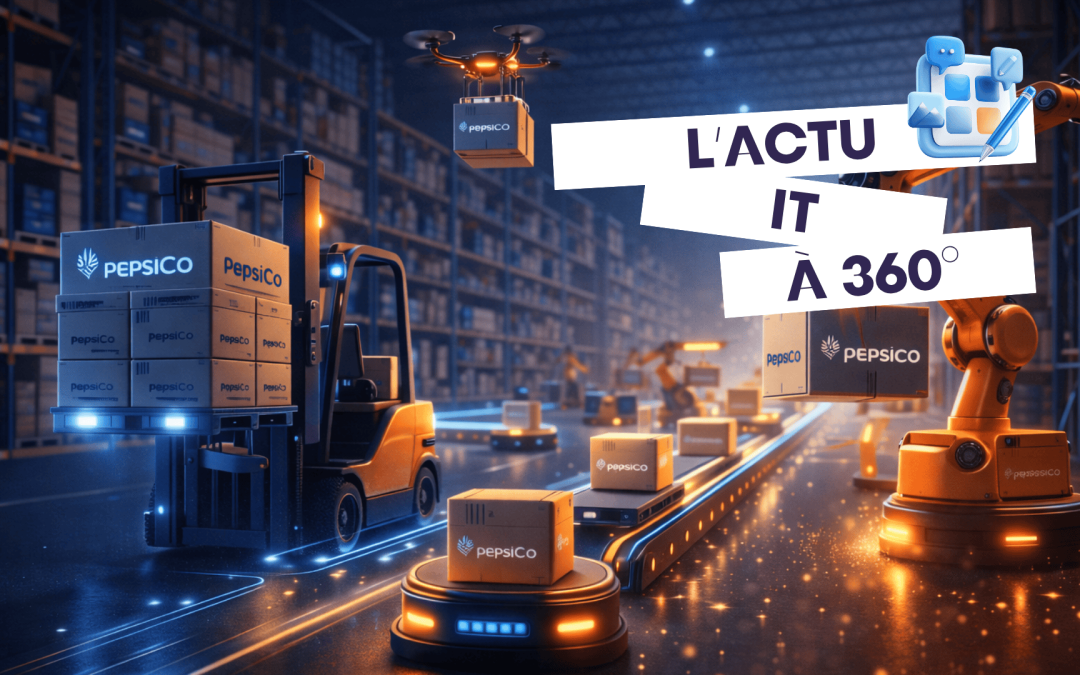
PepsiCo automates its logistics: a turning point for smart warehouses
News in brief PepsiCo France is investing in an automated, multimodal warehouse that combines robotics, digital systems and intelligent management of logistics flows. The aim is no longer simply to store and distribute products, but to turn the warehouse into a...

Windows 11: Microsoft finally relaxes forced updates
News in brief Microsoft is preparing to overhaul the way updates are managed in Windows 11, giving users greater control over their installation, notably by making it easier to postpone them or avoid certain enforced interruptions. This change responds to a...

WeChat goes autonomous AI: Tencent steps up with OpenClaw
News in brief Tencent has just integrated OpenClaw into WeChat, turning the app into far more than a simple communication tool. This development introduces agents capable of carrying out tasks directly from the interface, without going through several applications or...