



Meta wants to bring AI agents into complex software projects
Meta is stepping up its efforts in AI-assisted software development with Muse Code, a new agent designed to work on large codebases, where traditional assistants can quickly lose the context needed to understand the interactions between thousands of files and millions of lines of code.¹ The aim is no longer simply to generate a function or complete a few lines, but to enable AI to explore an existing project, understand how it is organised and make consistent changes across several components. With Muse Code, Meta is tackling one of the hardest problems in agentic development: giving a model enough context to work effectively on complex applications without treating each file as an isolated element.
Understanding an entire repository rather than a single file
In a large application, changing a few lines can affect dozens of other components, because the code relies on dependencies, internal libraries, APIs and conventions sometimes built up over many years. Muse Code is designed to navigate this environment and search for relevant information before proposing a change, which makes it work much like a developer discovering an unfamiliar codebase.² This ability to reason at repository level is becoming decisive for coding agents, because companies do not generally work on greenfield projects: they have to maintain and evolve existing systems whose complexity is precisely one of the main challenges of software development.
Millions of lines of code become the new challenge for agents
Generative models have made rapid progress in writing code, but the size of professional projects remains a major obstacle. Even with ever larger context windows, loading an entire codebase into a model would often be inefficient and costly, which forces agents to work out for themselves what information is really needed to complete a task. Muse Code follows this approach by combining repository search, context understanding and reasoning in order to select the relevant portions of code before acting.¹ The challenge is therefore no longer just producing syntactically correct code, but understanding how a change fits into a much larger architecture without causing regressions elsewhere in the system.
Meta is also transforming its own development methods
The launch of Muse Code takes on particular significance at Meta, whose engineers work on some of the largest software infrastructures in the tech sector. Facebook, Instagram, WhatsApp and the group’s many internal platforms rely on extremely large bodies of code, making them a particularly demanding testing ground for the capabilities of AI agents. For several years Meta has been developing tools to automate certain engineering tasks and improve its developers’ productivity, while its work on code models shows that the company now regards artificial intelligence as a lasting part of its development processes.³ Muse Code is part of this evolution, seeking to make agents context-aware enough to work in environments where simple code generation is no longer sufficient.
The market moves from copilot to agentic software engineer
Muse Code arrives in a sector where competition is intensifying rapidly. Cursor, Claude Code, GitHub Copilot, Codex, ZCode and the Qwen models are all seeking to move beyond the original copilot approach of suggesting a few lines of code. The new agents can explore files, use a terminal, run tests, identify errors and modify several parts of a project before presenting their work to the developer. Meta is pushing this evolution towards large codebases, a particularly strategic area for companies that have software developed over many years and want to benefit from AI without rebuilding their applications from scratch.
Understanding a codebase becomes as important as knowing how to code
This shift directly transforms the skills associated with Web Programming and Management. As agents take on part of the writing and modification of code, developers need to strengthen their understanding of software architectures, dependencies, APIs, testing and versioning mechanisms so that they can control the changes proposed by artificial intelligence. Being able to generate code quickly loses its value if nobody can check that it respects the project’s overall architecture, security constraints and business rules. Agents such as Muse Code could therefore increase the importance of high-level software engineering skills, as the developer gradually becomes the person who sets the framework, supervises changes and validates the consistency of the system.
Giant codebases become AI’s next battleground
After code generation and the automation of development tasks, understanding large software projects is emerging as a new frontier for AI agents. A system able to navigate efficiently through several million lines of code could speed up maintenance, make it easier to modernise legacy applications and help new developers understand complex architectures more quickly, but this promise will depend on the reliability of the changes produced and on teams’ ability to retain human control over important decisions. In any case, Muse Code shows that the next battle among coding assistants will probably no longer be fought over their ability to write an isolated function, but over their ability to understand and evolve entire software systems.
360° IT News — decoding technology to understand the jobs of tomorrow.
Further reading
Coding agents no longer just generate a few lines of code; they are becoming capable of working directly within development environments. On a related topic, read our article “SpaceX buys Cursor: agentic AI becomes the new standard in development”, which analyses the rise of agents able to design, modify and deploy applications ever more autonomously.
References
1. Meta AI. (2026). Introducing Muse Code: An AI coding agent for large codebases.
https://ai.meta.com
2. Meta Engineering. (2026). AI-assisted software engineering at Meta.
https://engineering.fb.com
3. Meta AI. (2026). AI for software development and code generation.
https://ai.meta.com
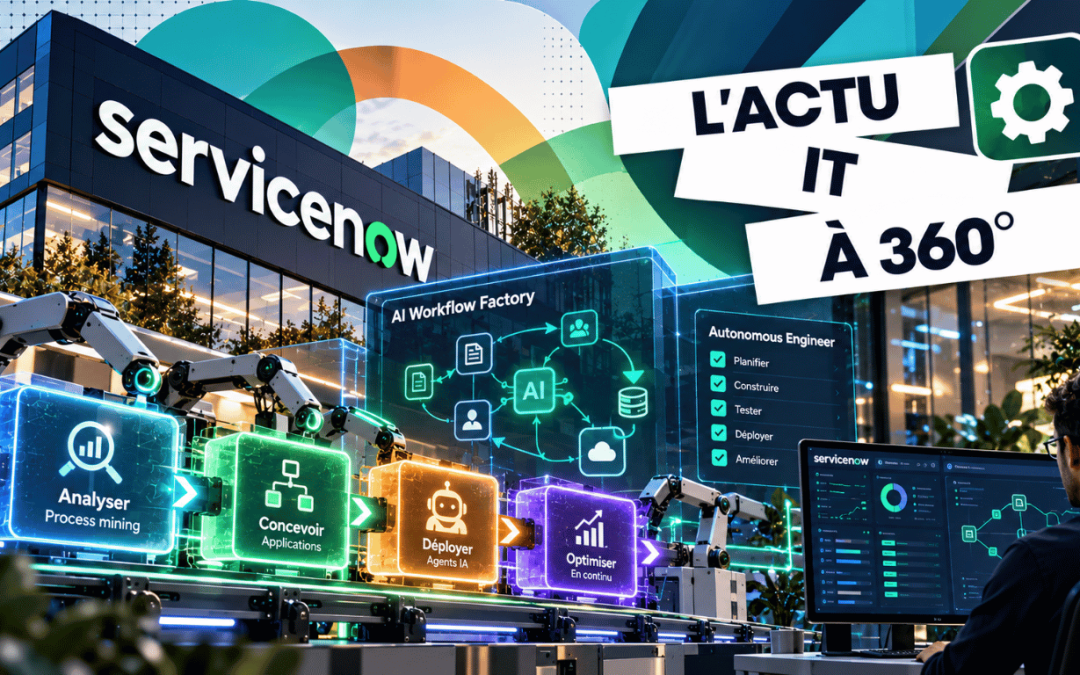
ServiceNow wants to turn process improvement into a continuous AI-driven loop
With AI Workflow Factory, ServiceNow aims to link the identification of inefficient processes with building and running their improvements. The announcement notably includes Autonomous Engineer, a tool designed to automate more of the implementation work.[1] For...

Mistral Large 4: what its trillion-parameter model could change for businesses
Mistral has opened the public preview of Mistral Large 4, nicknamed “Le Chonk”, and plans to release its weights by the end of the month.[1] This European model targets agentic use cases in particular, as well as cybersecurity, finance and industry. For businesses,...

IBM Bob: developing with AI without your code leaving the company
IIBM has announced a self-hosted version of Bob, its agentic development platform, for internal infrastructure, private or sovereign clouds and environments isolated from the internet.[1] This option addresses a concrete obstacle: some applications contain code, data...

HPE is preparing a network that anticipates incidents and automates certain interventions
HPE plans to deploy a Self-Driving Network for the 2027 Ryder Cup, with Wi-Fi 7 and an operations centre bringing together data and AI tools.[1] The stated aim is to monitor usage, adapt the network and move towards autonomous interventions. For businesses, the...
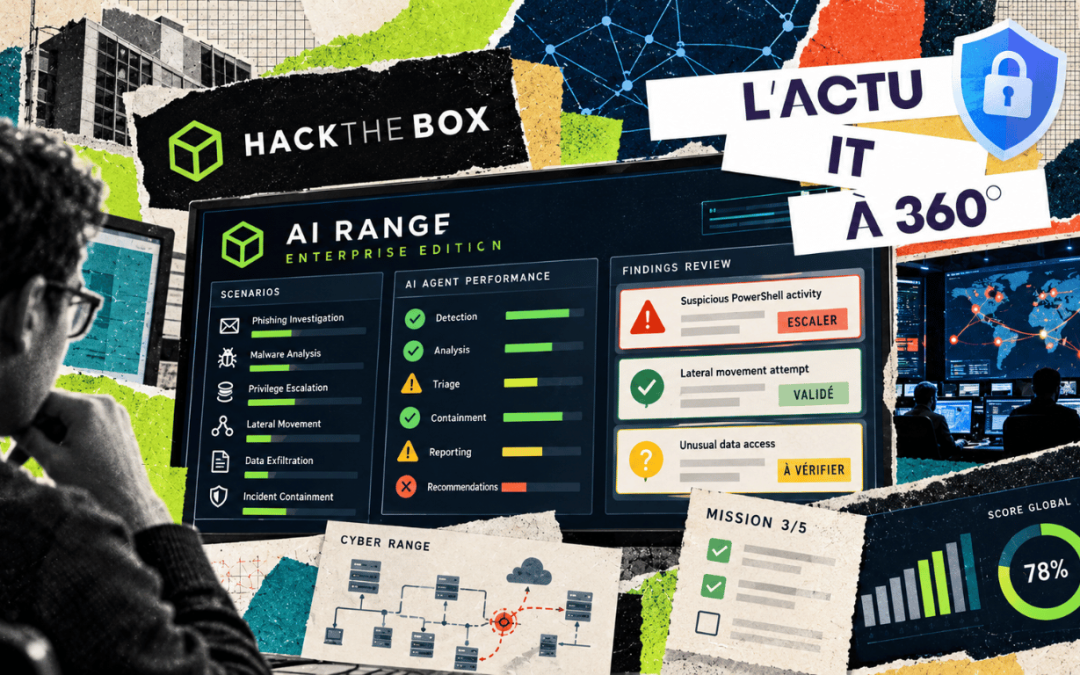
Can your AI agent really defend your company? Hack The Box puts its skills to the test
Hack The Box is launching AI Range Enterprise Edition to let security teams assess their own AI agents on the roles assigned to them.[1] For businesses, the stakes are concrete: having evidence before delegating a task, then checking that this evidence remains valid...

VAST Data wants AI to work with sensitive data in a protected environment
VAST Data has unveiled DataEnclave, a confidential execution capability designed to bring artificial intelligence models closer to companies’ sensitive data. Presented as a preview, it is due to go on sale in the first quarter of 2027.[1] The aim is to make certain...
Databricks buys Row Zero to bring spreadsheets closer to governed data
Databricks has announced the acquisition of Row Zero and plans to integrate its spreadsheet experience into Genie.[1] The aim is to let business teams explore data in a familiar interface, with greater control over access and usage. For companies, the challenge is to...

Google Cloud takes its X5 instances to 48 TB for large SAP databases
Google Cloud has announced the general availability of the X5 series, which raises the maximum advertised memory capacity on a single node to 48 TB, compared with 32 TB for X4.[1] Aimed in particular at very large SAP HANA databases, the offering is based on bare...
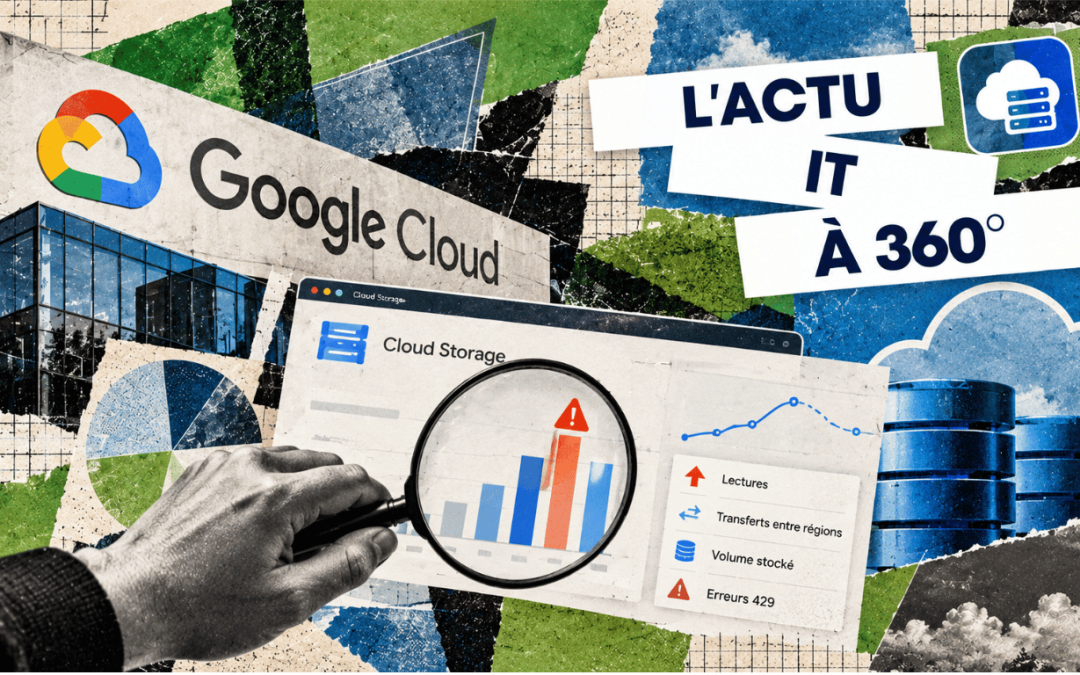
Cloud Storage: Google automates the detection of anomalies
A rise in reads, cross-region transfers or stored volume can inflate the cloud bill and disrupt applications. With Storage Intelligence advisor, Google offers a view of unusual changes in Cloud Storage, along with leads for investigating them. For businesses, the...
AI voice agents: Oracle details a LiveKit architecture on OCI
Oracle has described an architecture that pairs the LiveKit Agents framework with Oracle Cloud Infrastructure to automate real-time voice calls. The design links telephony, AI models and business services, while placing internal components in private subnets. For...