


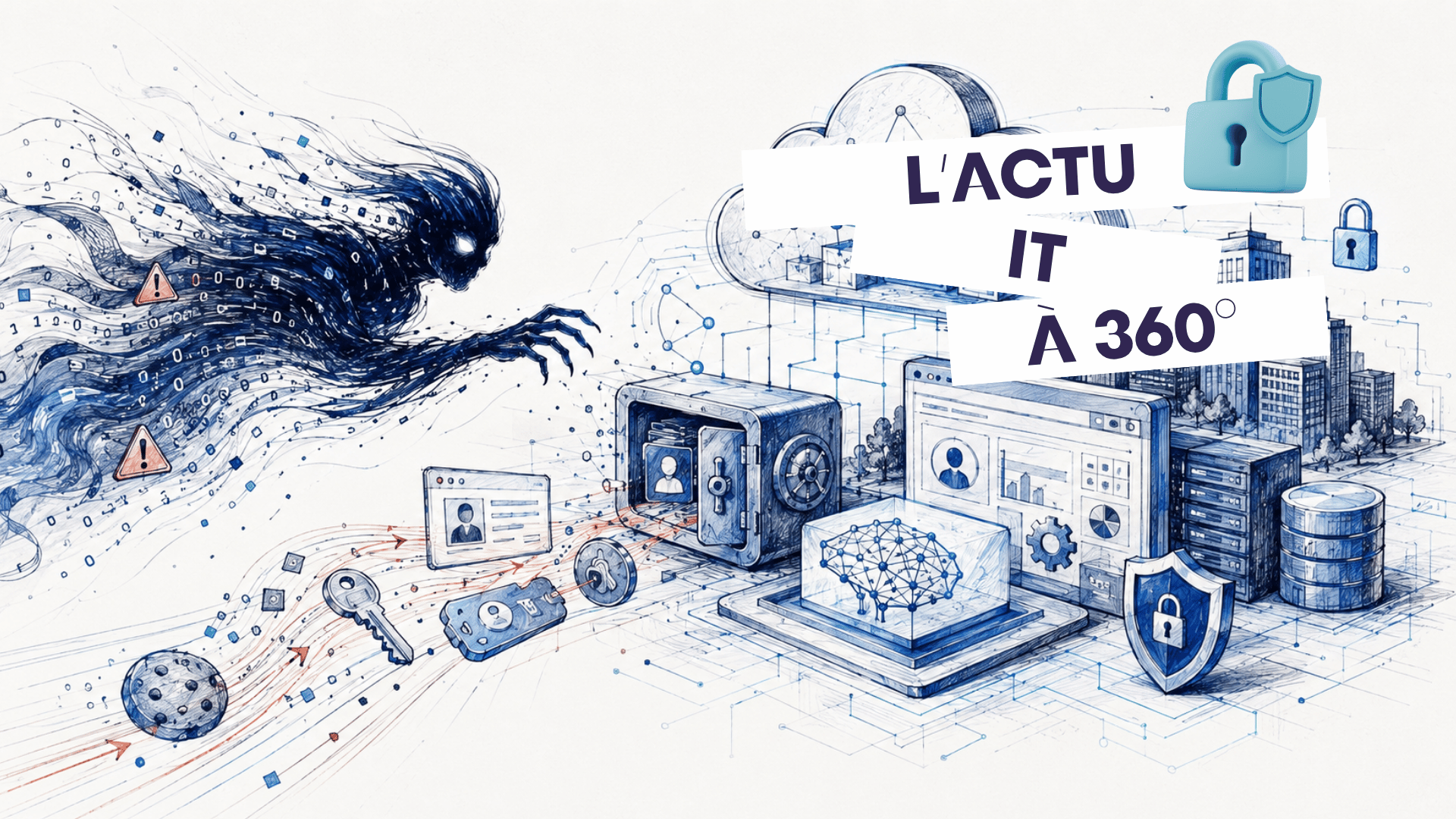
Cybercriminals are changing targets
Cyberattacks are no longer aimed solely at data or workstations. The credentials used to access cloud platforms, artificial intelligence environments and development tools have become highly sought-after assets. It is against this backdrop that cybersecurity researchers have identified Djinn Stealer, a new piece of malware spread via a critical vulnerability in the SimpleHelp remote administration software, tracked as CVE-2026-48558. Once installed, it seeks to steal authentication details that could open up access to companies’ digital infrastructure.1
A single flaw can open the doors to the information system
Djinn Stealer exploits an authentication vulnerability that allows attackers to compromise an inadequately protected SimpleHelp server. Once this initial access has been gained, the malware harvests various types of credentials stored on the compromised machines: administrator accounts, cloud access, API keys, authentication tokens, development environments and artificial intelligence platforms. This information can then be sold on or used to prepare more complex attacks against the entire information system.1
Cloud credentials have become a strategic target
Businesses today use many cloud-hosted services as well as AI platforms accessed via credentials or access keys. For cybercriminals, stealing this information is often more profitable than launching a direct attack on infrastructure. By obtaining valid credentials, they can bypass certain protections, access sensitive resources, deploy malicious software or compromise development environments. Technical accounts are thus becoming prime entry points into modern information systems.2
AI creates new assets to protect
The rise of artificial intelligence is also changing the nature of sensitive information. API keys giving access to AI models, tokens used to orchestrate intelligent agents and credentials for development platforms are now critical resources for businesses. Their compromise can lead to financial losses, service outages or fraudulent use of particularly expensive computing capacity. Cybersecurity strategies must therefore evolve to cover these new digital assets in the same way as sensitive data or network infrastructure.2
Detecting the intrusion before it spreads
Faced with this type of threat, speed of detection becomes essential. Once credentials have been compromised, attackers generally seek to escalate their privileges gradually in order to reach other systems. Monitoring unusual logins, multi-factor authentication, regular rotation of access keys and segmentation of cloud environments help limit the consequences of a compromise. Businesses must also apply security patches promptly to prevent the exploitation of known vulnerabilities such as the one affecting SimpleHelp.3
New digital assets are redefining cybersecurity
This threat illustrates why Cybersecurity is evolving rapidly in response to new uses of the cloud and artificial intelligence. Professionals must now protect far more than servers or workstations. They must also secure digital identities, API keys, development environments, cloud platforms and access to AI services. As these resources become indispensable to how businesses operate, protecting them is becoming a central element of any security strategy.
Digital identities become the new defence perimeter
With Djinn Stealer, cybercriminals are demonstrating that access to cloud services and artificial intelligence platforms is now a priority target. This development confirms that corporate security no longer rests solely on protecting data, but also on controlling the digital identities that provide access to it. In an environment where infrastructure is becoming ever more distributed, securing this access is one of the main challenges of the years ahead.
360° IT News — decoding technology to understand the jobs of tomorrow.
Further reading
The integration of AI agents into collaborative tools is part of a broader evolution of professional software, in which artificial intelligence plays a direct role in business processes. On a related topic, read our article “With Code Layers, Figma brings design and development firmly together”, which shows how AI agents are now being built into design platforms to bring design and development teams closer together.
References
1. Dark Reading. (2026). Djinn Stealer Targets Cloud and AI Credentials via SimpleHelp Vulnerability.
https://www.darkreading.com
2. MITRE. (2026). CVE-2026-48558.
https://cve.mitre.org
3. CISA. (2026). Best Practices for Protecting Credentials and Cloud Environments.
https://www.cisa.gov

Data centres in space: why Nvidia wants to revolutionise the cloud
News in brief At the GTC 2026 conference, Nvidia announced its intention to accelerate the development of artificial intelligence in space, joining an emerging movement around orbital data centres. The company is no longer content to supply chips for satellites; it is...

Claude Marketplace: what Anthropic’s new platform changes for businesses
News in brief Anthropic has just announced Claude Marketplace, a new platform that allows companies to access, share and use artificial intelligence agents based on its Claude model. The aim is no longer just to offer conversational AI, but to create a genuine...
Automated code review: Anthropic’s Claude now analyses developers’ code
News in brief Artificial intelligence continues to transform developers’ work. Anthropic, the company behind the Claude AI model, has just announced new capabilities that allow its assistant to analyse computer code and help developers with their code review...
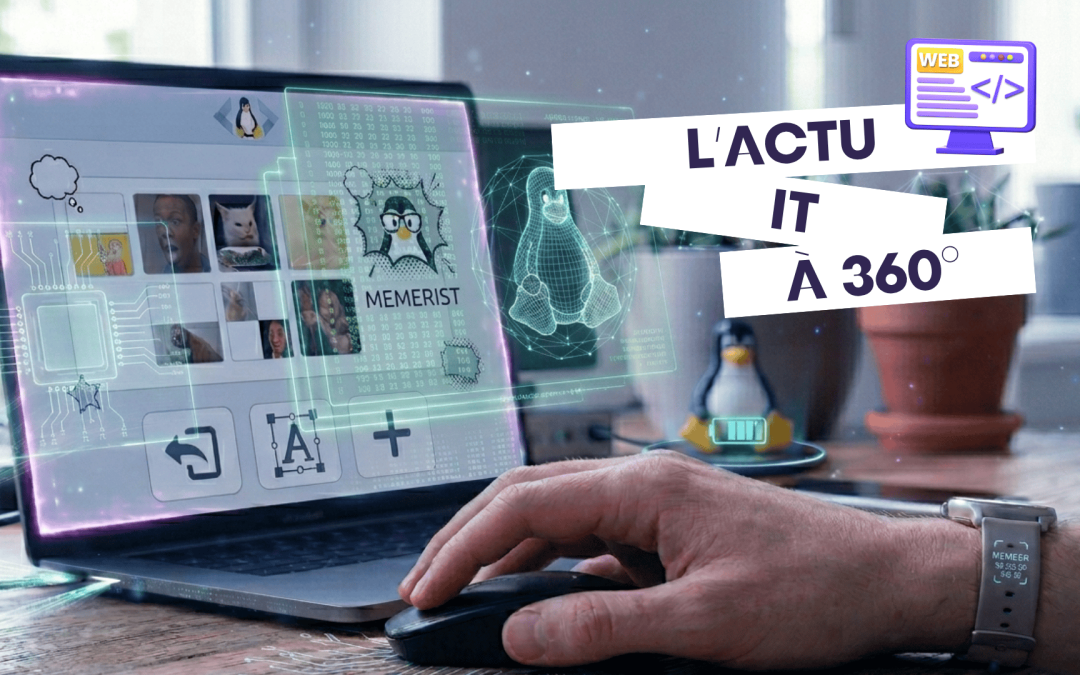
Memerist: the free Linux app for creating memes in seconds
News in brief Creating a meme has become an everyday activity on the internet. Humorous images circulate daily on social networks, forums and messaging apps, often used to comment on the news, share an idea or simply make people laugh. Yet producing a meme quickly is...
Microsoft unveils Microsoft 365 E7: Copilot and AI agents at the heart of its enterprise strategy
News in brief Microsoft recently announced Microsoft 365 E7, a new offering for businesses that places artificial intelligence at the heart of the working environment. This development is part of Microsoft’s overall strategy to transform traditional productivity tools...

Global cyber-espionage: the Salt Typhoon affair shows why cybersecurity is becoming crucial
News in brief A vast cyber-espionage operation called Salt Typhoon has reportedly infiltrated several telecom operators around the world. Hacker groups linked to China are believed to be behind these attacks, which can access sensitive communication infrastructure....

CCCLX wins Bronze Trophy at IT Night 2025!
CCCLX, the 360° IT school, was honored at IT Night 2025 - La Nuit de l'Entreprise Numérique, winning the Bronze Trophy in the Schools / Training category. A fine accolade in the context of this emblematic event for the French digital ecosystem, organized annually...

A revolution in higher education financing by aivancity/CCCLX and Umanity
A concrete solution to democratize access to education for the professions of tomorrow This scheme, the only one of its kind in France, complements a series of measures put in place by aivancity to promote diversity and equitable access to its programs (tuition-free...

White paper: How generative AI is transforming SMEs
White paper: How generative AI is transforming SMEs In a world where technological innovation is redefining the rules of the game, small and medium-sized businesses have never had so much to gain... or lose. Against this ever-changing backdrop, CCCLX unveils its new...

CCCLX: A new IT school dedicated to SMEs and startups is born
On April 28, 2025, CCCLX was officially unveiled at the CCI Paris during a press conference packed with symbols and commitments. The launch was attended by a number of leading personalities: Soumia Malimbum, President of CCI Paris, Alain Martinez, President of CPME...