


A new step towards building apps without boundaries
Design and software development have long followed two separate paths. Designers imagined the interfaces, developers then translated them into code, with many back-and-forth exchanges and sometimes discrepancies between the mock-up and the final product. At Config 2026, Figma aims to remove this boundary. The platform is introducing Code Layers, enriching its environment with new creative tools and strengthening its artificial intelligence agents in order to bring every stage of building an application into a single collaborative space.1
This is not simply a feature update. It reflects a more ambitious vision: turning Figma into a platform capable of supporting the entire development cycle, from the first ideas through to product delivery.
Design and code now evolve together
The main new feature presented at Config 2026 is the arrival of Code Layers. This feature makes it possible to import a Git repository directly into Figma, work on graphic and technical components on the same canvas and then automatically synchronise changes with the software project.1
Until now, moving from design to development often involved several intermediate steps. Mock-ups were exported, interpreted and then recreated by developers before being integrated into applications. Code Layers greatly reduce this disconnect. Designers immediately see the impact of their choices on the final product, while developers work from a representation that is constantly synchronised with the code.
This new way of working improves interface consistency while shortening production times.
Artificial intelligence becomes a creative partner
The other major development concerns the capabilities of the AI agent built into Figma. It now plays a part throughout the design process. It can generate new interface variants, produce code compatible with existing components, suggest improvements or automate certain repetitive tasks to save teams time.1
The aim is not to replace designers or developers. Rather, artificial intelligence acts as a collaborator that can take on the most time-consuming operations so that teams can devote more time to functional decisions, user experience and application quality.
An ever more complete creative environment
Figma is also using Config 2026 to enrich its canvas with several new tools. Motion now makes it possible to create animations, transitions and 3D scenes directly in the platform while automatically generating the corresponding code. Shaders introduces the creation of advanced graphic effects from simple natural-language descriptions. Finally, Weave Workflows bring together more than twenty tools designed to simplify AI-related processes and automate complex tasks.2
By grouping these features in a single environment, Figma seeks to limit switching between tools and to offer product teams a single workspace.
AI agents gain autonomy
The Config 2026 announcements also show that AI agents are gradually becoming able to play a more active role in projects. They can memorise certain tasks as reusable skills, use documents, access web search or use various connectors to better understand the context in which they operate.2
Figma also makes it possible to create custom plugins simply from a natural-language instruction. This development democratises extension development and makes it easier to automate many operations, even for users without strong programming skills.
A new way of collaborating in digital teams
With these new features, Figma no longer presents itself solely as a design tool. The platform is gradually becoming a shared space where designers, developers, product managers and user experience specialists work simultaneously on the same components.
This convergence reduces miscommunication, speeds up iterations and makes it easier to develop ever more complex applications. At a time when production cycles are getting shorter, this collaborative approach is a significant advantage for organisations.
Web Programming and Management becomes a strategic skill
Figma’s announcements perfectly illustrate how digital jobs are changing. Today, a professional can no longer master only design or only development. Companies are looking for people who understand web technologies, user interfaces, modern frameworks and the new AI-enhanced tools.
This is precisely what the Web Programming and Management skill taught at CCCLX develops. It provides the knowledge needed to design web applications, understand modern software architectures and collaborate effectively with multidisciplinary teams. With platforms such as Figma bringing graphic design and development closer together, this skill is becoming essential for taking part in building the applications of tomorrow.
A platform that supports the transformation of jobs
Code Layers illustrate a broader trend affecting the entire digital industry. Tools are evolving into environments that bring design, development and artificial intelligence together in a single workspace. This convergence is gradually transforming software production methods and redefining the skills companies expect.
For students and future digital professionals, these developments show that jobs are becoming increasingly cross-functional. Knowing how to work with intelligent tools, understanding web technologies and working in environments where code and design evolve simultaneously is now a real professional advantage.
360° IT News — decoding technology to understand the jobs of tomorrow.
Further reading
Figma’s announcements illustrate an underlying trend: professional software is becoming an intelligent workspace, able to assist users and understand their context. This development is not limited to design tools. Web browsers are following the same path by building AI features directly into their interface. To explore this transformation further, read our article “Google upgrades Chrome: Gemini now analyses what is on your screen”, which shows how artificial intelligence is gradually being built into everyday tools to simplify interactions and improve productivity.
References
1. Figma. (2026). Config 2026 Product Announcements.
https://www.figma.com
2. Figma. (2026). Introducing Code Layers, Motion and Weave.
https://www.figma.com/blog
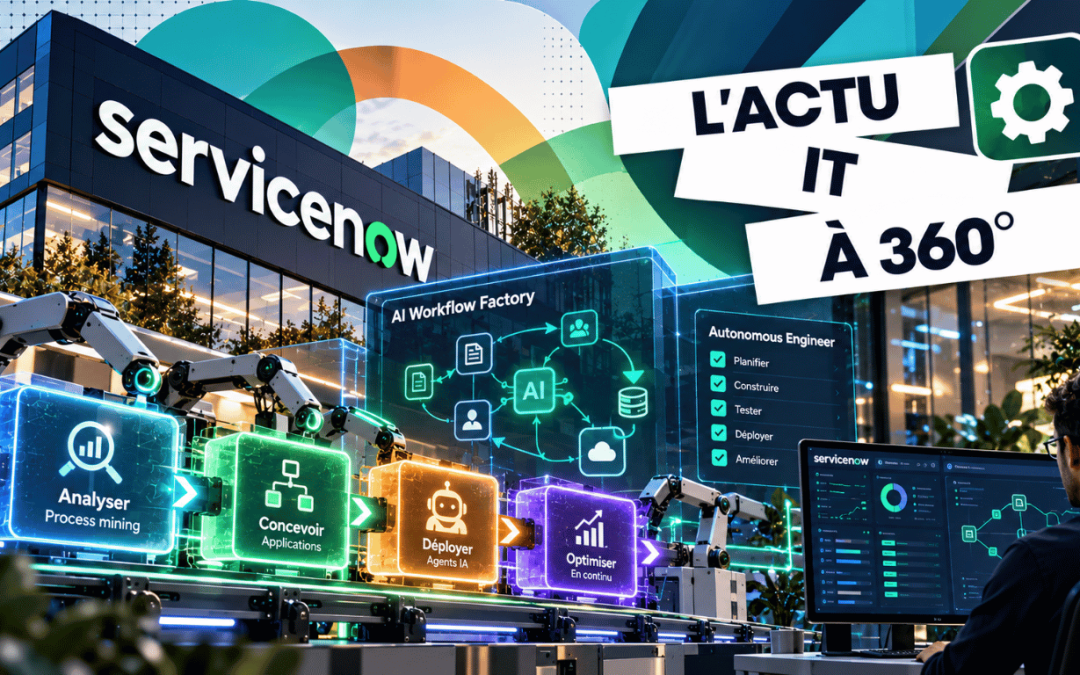
ServiceNow wants to turn process improvement into a continuous AI-driven loop
With AI Workflow Factory, ServiceNow aims to link the identification of inefficient processes with building and running their improvements. The announcement notably includes Autonomous Engineer, a tool designed to automate more of the implementation work.[1] For...

Mistral Large 4: what its trillion-parameter model could change for businesses
Mistral has opened the public preview of Mistral Large 4, nicknamed “Le Chonk”, and plans to release its weights by the end of the month.[1] This European model targets agentic use cases in particular, as well as cybersecurity, finance and industry. For businesses,...
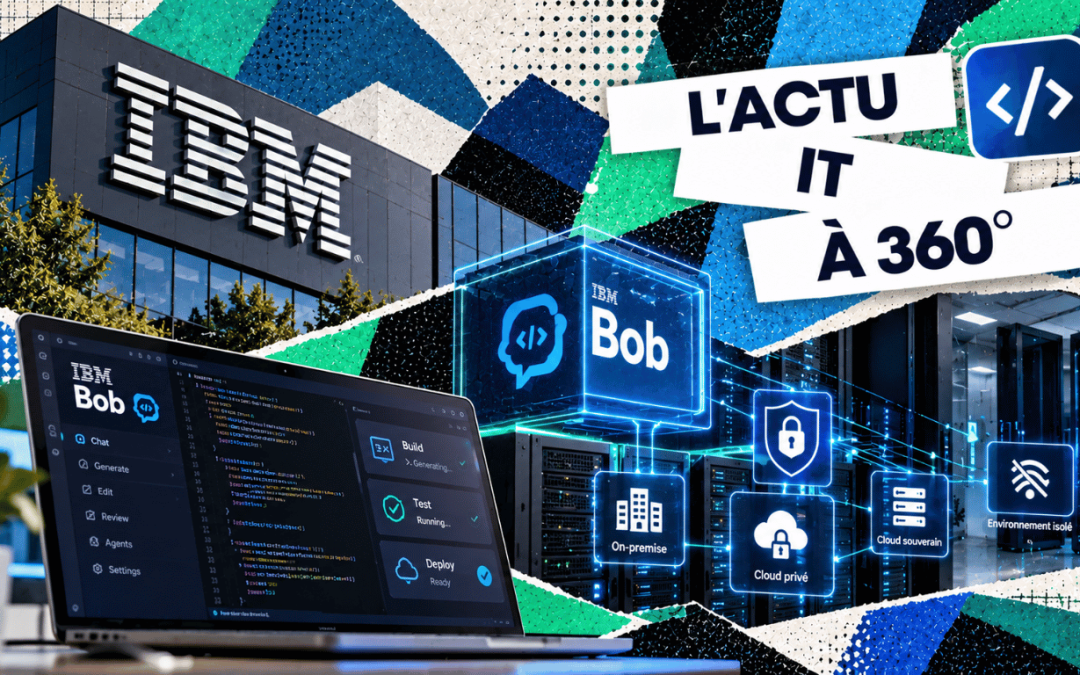
IBM Bob: developing with AI without your code leaving the company
IIBM has announced a self-hosted version of Bob, its agentic development platform, for internal infrastructure, private or sovereign clouds and environments isolated from the internet.[1] This option addresses a concrete obstacle: some applications contain code, data...

HPE is preparing a network that anticipates incidents and automates certain interventions
HPE plans to deploy a Self-Driving Network for the 2027 Ryder Cup, with Wi-Fi 7 and an operations centre bringing together data and AI tools.[1] The stated aim is to monitor usage, adapt the network and move towards autonomous interventions. For businesses, the...
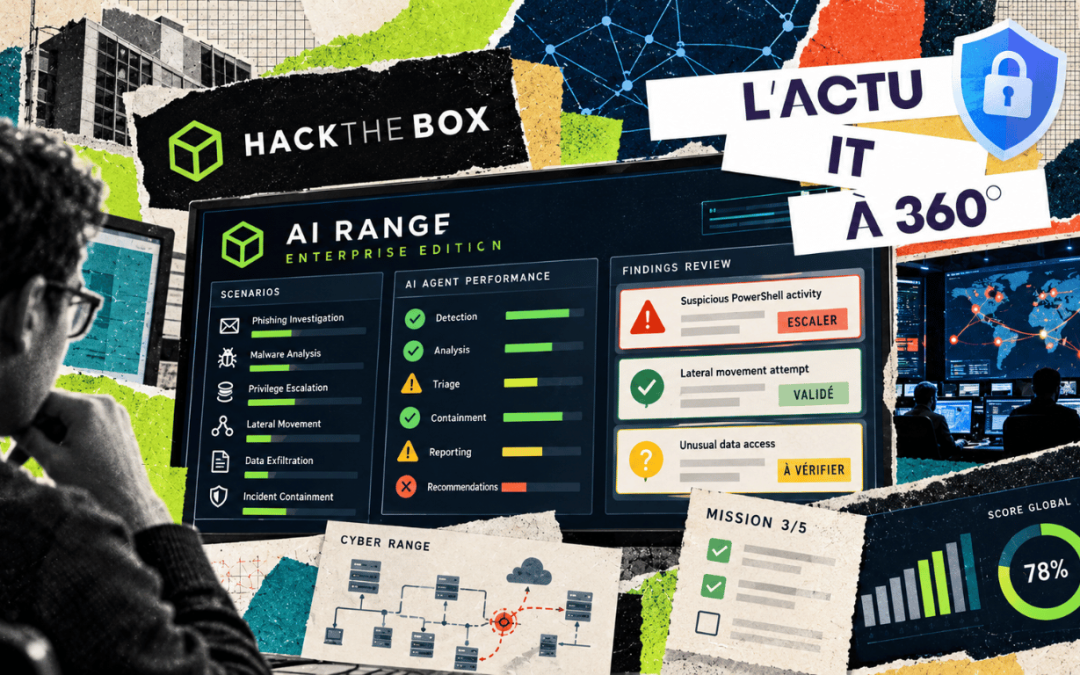
Can your AI agent really defend your company? Hack The Box puts its skills to the test
Hack The Box is launching AI Range Enterprise Edition to let security teams assess their own AI agents on the roles assigned to them.[1] For businesses, the stakes are concrete: having evidence before delegating a task, then checking that this evidence remains valid...

VAST Data wants AI to work with sensitive data in a protected environment
VAST Data has unveiled DataEnclave, a confidential execution capability designed to bring artificial intelligence models closer to companies’ sensitive data. Presented as a preview, it is due to go on sale in the first quarter of 2027.[1] The aim is to make certain...
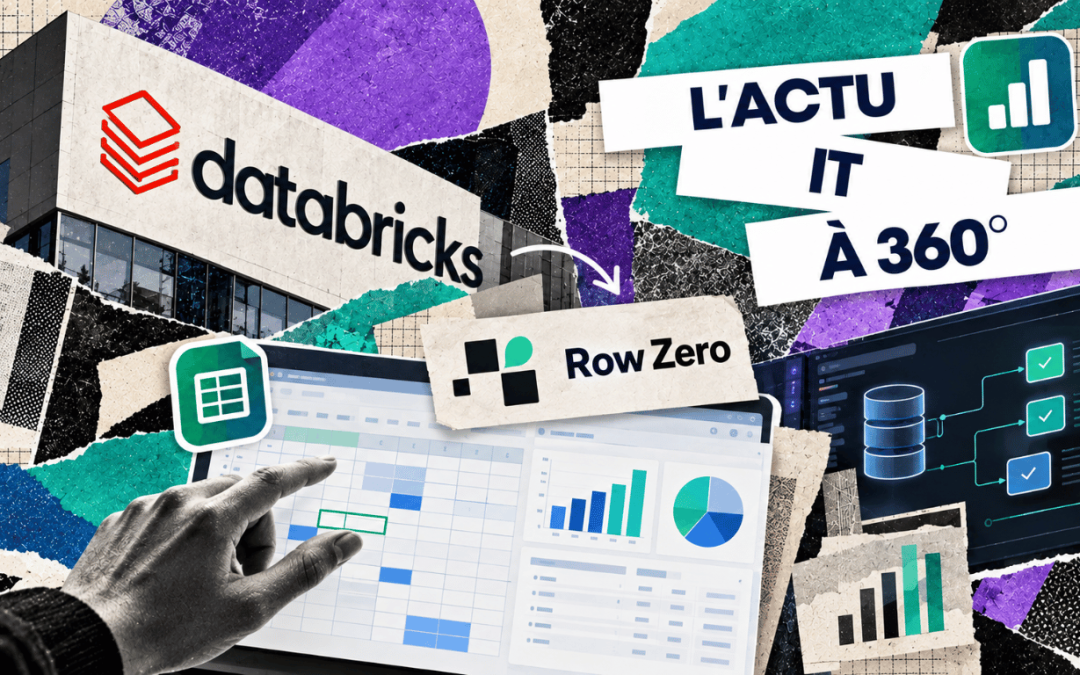
Databricks buys Row Zero to bring spreadsheets closer to governed data
Databricks has announced the acquisition of Row Zero and plans to integrate its spreadsheet experience into Genie.[1] The aim is to let business teams explore data in a familiar interface, with greater control over access and usage. For companies, the challenge is to...

Google Cloud takes its X5 instances to 48 TB for large SAP databases
Google Cloud has announced the general availability of the X5 series, which raises the maximum advertised memory capacity on a single node to 48 TB, compared with 32 TB for X4.[1] Aimed in particular at very large SAP HANA databases, the offering is based on bare...
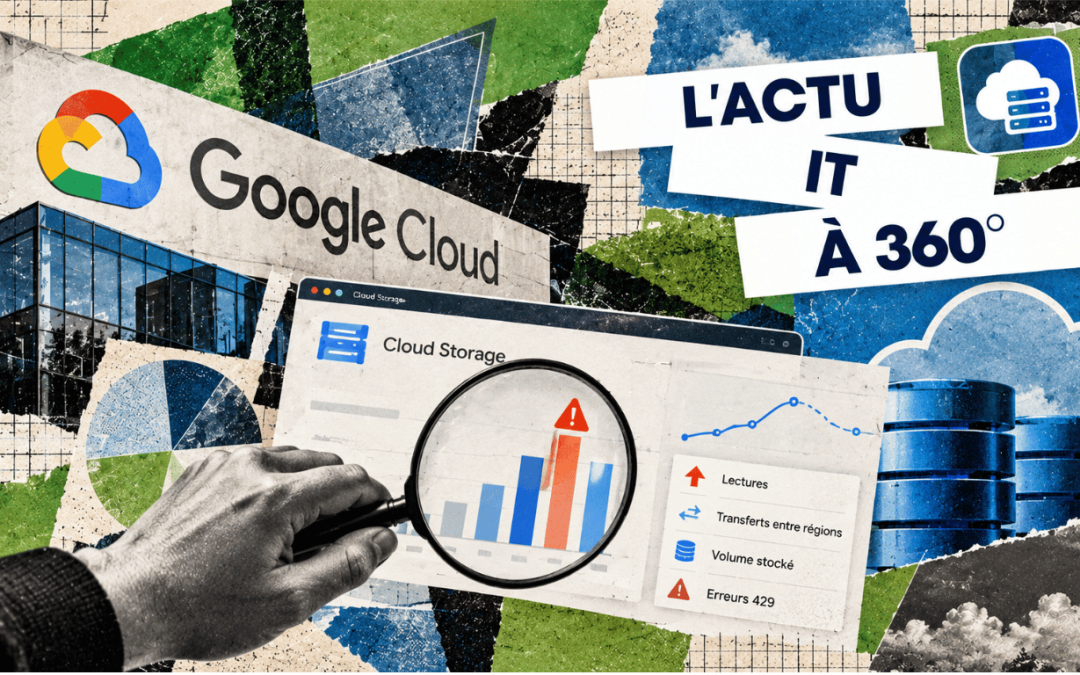
Cloud Storage: Google automates the detection of anomalies
A rise in reads, cross-region transfers or stored volume can inflate the cloud bill and disrupt applications. With Storage Intelligence advisor, Google offers a view of unusual changes in Cloud Storage, along with leads for investigating them. For businesses, the...

AI voice agents: Oracle details a LiveKit architecture on OCI
Oracle has described an architecture that pairs the LiveKit Agents framework with Oracle Cloud Infrastructure to automate real-time voice calls. The design links telephony, AI models and business services, while placing internal components in private subnets. For...