


An acquisition that reaches far beyond the software world
SpaceX’s acquisition of Anysphere, the company behind Cursor, for an estimated $60 billion marks a major turning point in the tech industry. Behind this spectacular deal lies a much deeper transformation: the emergence of agentic software development. Long seen as simple assistants able to suggest code, AI tools are now becoming systems capable of designing, modifying and deploying applications largely autonomously. With this acquisition, Elon Musk’s ecosystem is clearly signalling its ambition to play a central role in this new phase of computing.
Cursor has established itself as a leader in AI-assisted programming
Founded in 2022, Anysphere quickly made its name with Cursor, an integrated development environment (IDE) built around artificial intelligence. The platform now claims more than 2 million users, including nearly one million paying subscribers1. Its success rests on an approach that goes well beyond traditional autocompletion. Cursor can analyse an entire software project, suggest consistent changes and automate certain complex tasks in the development cycle.
This rapid rise explains the interest the company attracted from the biggest tech players. Microsoft reportedly looked into a deal before deciding against an acquisition, ultimately leaving the field clear for SpaceX and its subsidiary xAI.
xAI gains a strategic tool
The deal is part of a broader strategy to strengthen the artificial intelligence ecosystem built around xAI. By adding Cursor to its technology portfolio, SpaceX is not just acquiring a popular development tool. The company is getting its hands on a platform that could become the preferred interface between developers and xAI’s future AI models.
This vertical integration echoes strategies already seen at Microsoft with GitHub Copilot and at Google with Gemini Code Assist. The difference is that SpaceX now controls the computing infrastructure, the artificial intelligence models and the development environment.
Colossus could accelerate the next generation of developer agents
One of the main benefits of this acquisition lies in access to Colossus, the giant computing infrastructure developed by xAI around thousands of Nvidia H100 GPUs2. This computing power could enable Cursor to take its “Composer” models to far more advanced capabilities.
Until now, programming assistants have focused mainly on generating code or fixing errors. Future generations of tools could be capable of understanding complete business objectives, architecting applications, generating tests, handling deployment and even overseeing maintenance.
The battle for software development is intensifying
The AI-assisted development market has become one of the most competitive sectors of the digital industry. Several players are now vying for this strategic market:
- Cursor (Anysphere / xAI)
- GitHub Copilot (Microsoft)
- GPT Codex (OpenAI)
- Claude Code (Anthropic)
- Gemini Code Assist (Google)
This competition is no longer just about the quality of the generated code. It now concerns the ability to transform the entire software development cycle through agentic AI.
The developer’s role continues to evolve
The rise of AI agents does not mean the end of developers. Their role is, however, changing rapidly. Software professionals are spending less and less time writing every line of code by hand and more time defining objectives, checking the quality of results and supervising automatically generated systems.
This shift could considerably shorten delivery times for digital projects while increasing the complexity of the applications that small teams can produce.
Large companies have already begun the transition
The technologies developed around Cursor are no longer experimental. Several large organisations are already using these tools in their production environments. Groups such as Samsung, Rakuten, Sanofi and Vueling use these platforms to speed up software development, optimise their application architectures or modernise their existing systems1.
Adoption by major accounts shows that AI-assisted development is gradually becoming a standard component of companies’ digital strategies.
Agentic AI is redefining software creation
The emergence of agentic AI is probably one of the most significant transformations in the software industry since the advent of cloud computing. The new systems no longer simply respond to one-off requests. They can carry out complete sequences of actions, make intermediate decisions and adapt their behaviour to the context.
In software development, this shift could lead to unprecedented automation of many technical tasks.
Understanding agentic AI is becoming a key skill
This transformation highlights increasingly sought-after skills: mastery of generative AI, agentic AI, data management and data engineering. Tomorrow’s developers will need to learn to collaborate with intelligent agents, define complex objectives and supervise the automated systems that will help create the applications of the future.
Software development is entering a new phase
With the purchase of Cursor, SpaceX is not merely making a spectacular acquisition. The company is sending a strong signal to the whole market: the future of software development will be largely driven by artificial intelligence agents. For students and future digital professionals, this marks the start of a new era in which the ability to work with AI will become as important as mastering programming languages themselves.
360° IT News — decoding technology to understand the jobs of tomorrow.
Further reading
The Cursor acquisition illustrates the rise of agents capable of carrying out complex tasks autonomously. This logic now extends beyond software development to many areas of IT. On a related topic, read our article “ Spark: Google is preparing an AI that can act on your behalf ”, which examines the emergence of systems capable of carrying out complete actions on behalf of users.
References
1. Reuters. (2026). SpaceX acquires Anysphere, maker of Cursor AI coding platform.
https://www.reuters.com
2. xAI. (2026). Colossus AI Infrastructure Overview.
https://x.ai
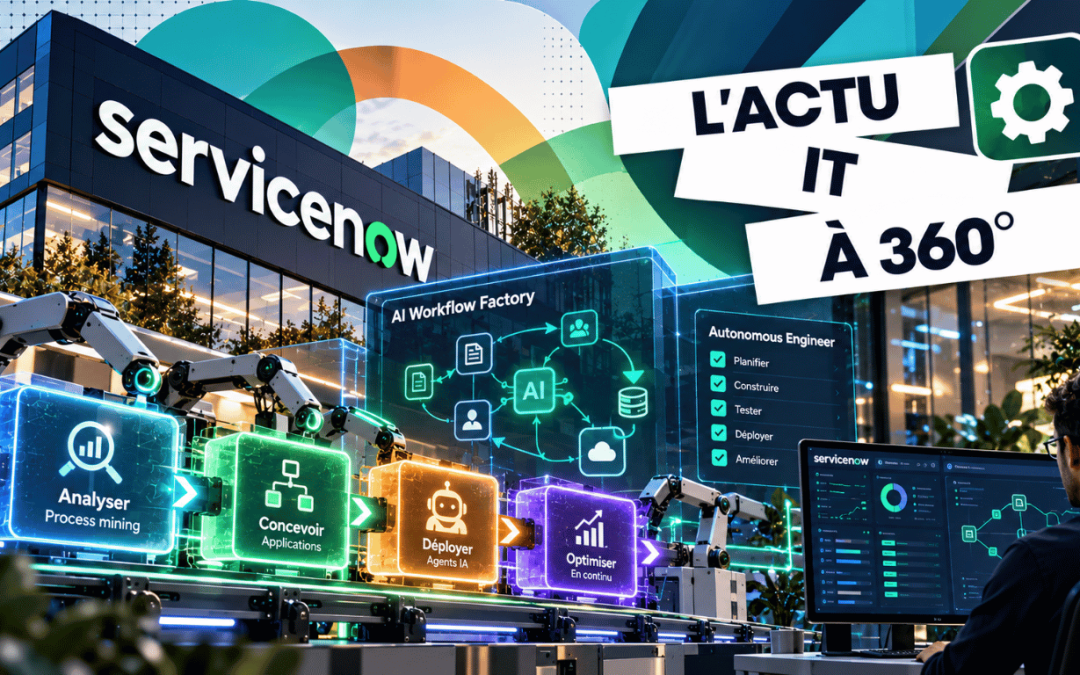
ServiceNow wants to turn process improvement into a continuous AI-driven loop
With AI Workflow Factory, ServiceNow aims to link the identification of inefficient processes with building and running their improvements. The announcement notably includes Autonomous Engineer, a tool designed to automate more of the implementation work.[1] For...

Mistral Large 4: what its trillion-parameter model could change for businesses
Mistral has opened the public preview of Mistral Large 4, nicknamed “Le Chonk”, and plans to release its weights by the end of the month.[1] This European model targets agentic use cases in particular, as well as cybersecurity, finance and industry. For businesses,...
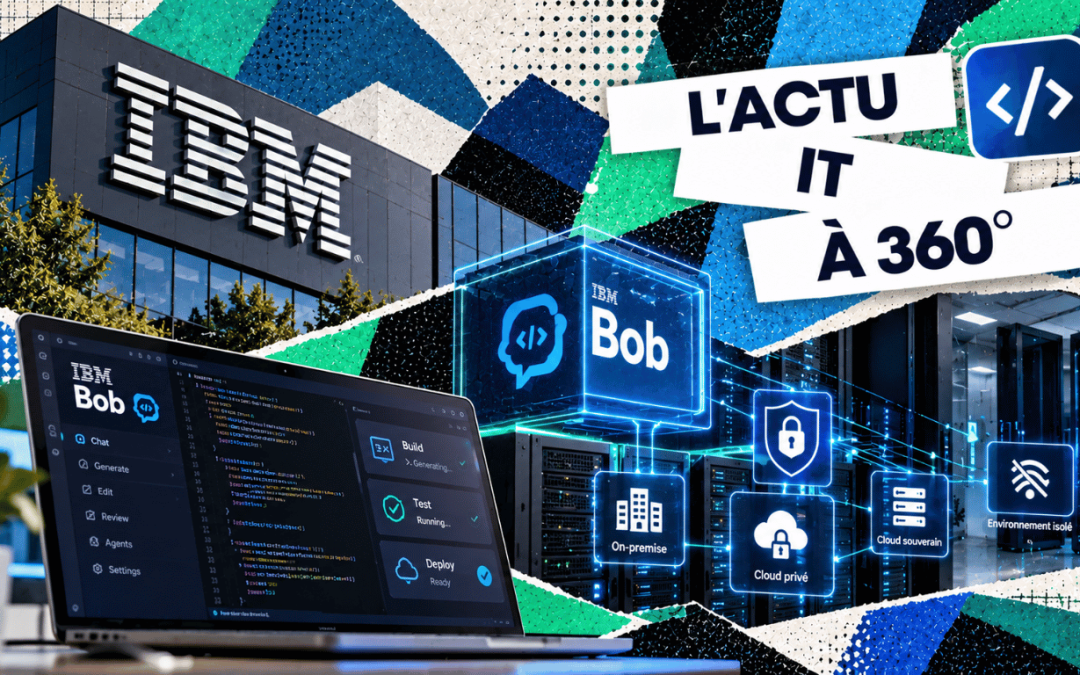
IBM Bob: developing with AI without your code leaving the company
IIBM has announced a self-hosted version of Bob, its agentic development platform, for internal infrastructure, private or sovereign clouds and environments isolated from the internet.[1] This option addresses a concrete obstacle: some applications contain code, data...

HPE is preparing a network that anticipates incidents and automates certain interventions
HPE plans to deploy a Self-Driving Network for the 2027 Ryder Cup, with Wi-Fi 7 and an operations centre bringing together data and AI tools.[1] The stated aim is to monitor usage, adapt the network and move towards autonomous interventions. For businesses, the...
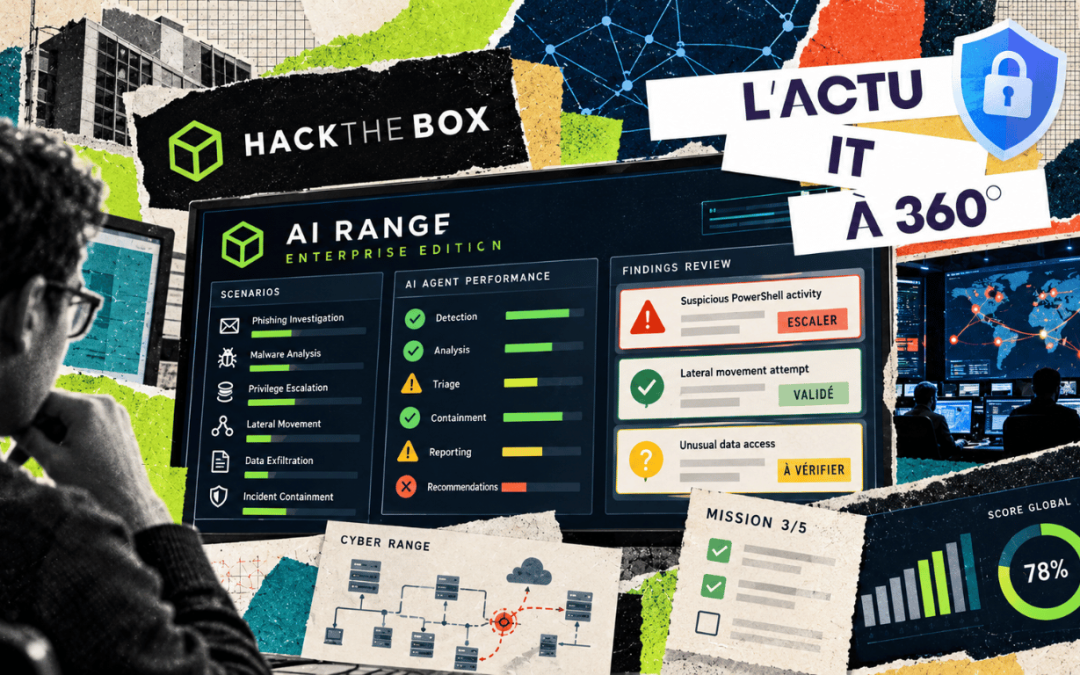
Can your AI agent really defend your company? Hack The Box puts its skills to the test
Hack The Box is launching AI Range Enterprise Edition to let security teams assess their own AI agents on the roles assigned to them.[1] For businesses, the stakes are concrete: having evidence before delegating a task, then checking that this evidence remains valid...
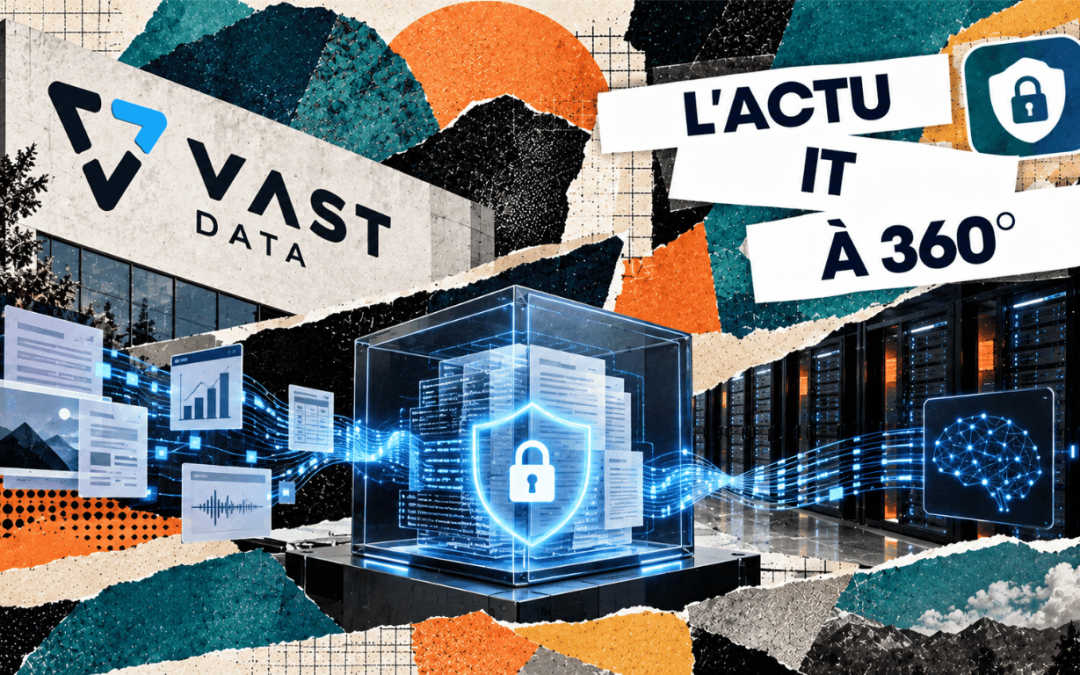
VAST Data wants AI to work with sensitive data in a protected environment
VAST Data has unveiled DataEnclave, a confidential execution capability designed to bring artificial intelligence models closer to companies’ sensitive data. Presented as a preview, it is due to go on sale in the first quarter of 2027.[1] The aim is to make certain...
Databricks buys Row Zero to bring spreadsheets closer to governed data
Databricks has announced the acquisition of Row Zero and plans to integrate its spreadsheet experience into Genie.[1] The aim is to let business teams explore data in a familiar interface, with greater control over access and usage. For companies, the challenge is to...
Google Cloud takes its X5 instances to 48 TB for large SAP databases
Google Cloud has announced the general availability of the X5 series, which raises the maximum advertised memory capacity on a single node to 48 TB, compared with 32 TB for X4.[1] Aimed in particular at very large SAP HANA databases, the offering is based on bare...
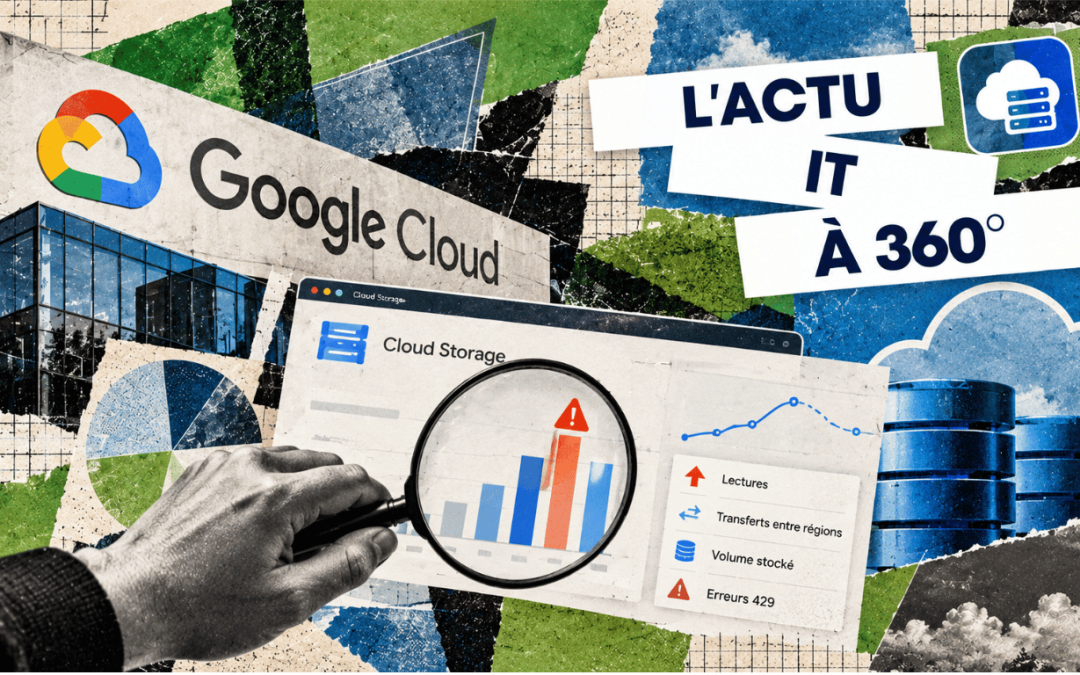
Cloud Storage: Google automates the detection of anomalies
A rise in reads, cross-region transfers or stored volume can inflate the cloud bill and disrupt applications. With Storage Intelligence advisor, Google offers a view of unusual changes in Cloud Storage, along with leads for investigating them. For businesses, the...
AI voice agents: Oracle details a LiveKit architecture on OCI
Oracle has described an architecture that pairs the LiveKit Agents framework with Oracle Cloud Infrastructure to automate real-time voice calls. The design links telephony, AI models and business services, while placing internal components in private subnets. For...