


OVHcloud wants to move from cloud to artificial intelligence
Long recognised as a major player in European cloud, OVHcloud now aims to play a much bigger role in the artificial intelligence ecosystem. At the VivaTech trade show, Octave Klaba, the group’s founder and CEO, announced that the company was working on developing its own large language models (LLMs). This decision marks a strategic turning point for the French provider, which no longer wants merely to host AI infrastructure, but also to master the technologies that power it.
Digital sovereignty is a priority once again
This announcement comes at a particular time. Recent debates over access to Anthropic’s most advanced models have reminded European businesses of their dependence on American artificial intelligence players. For OVHcloud, this situation highlights the need for local alternatives capable of guaranteeing service continuity and control over critical technologies.
According to Octave Klaba, mastering AI models is now essential to secure the group’s future and meet the expectations of European customers1. This vision goes beyond a purely commercial rationale: it is part of a broader reflection on the continent’s technological sovereignty.
Financial barriers are starting to fall
For several years, developing a large language model was the preserve of a handful of tech giants able to invest several billion euros in computing infrastructure and training data. That reality is changing fast.
OVHcloud believes that advances in model architectures, chip optimisation and the use of synthetic data now make it possible to cut development costs considerably1. Where a project previously required nearly one billion euros of investment, it could now be carried out with a budget of between 150 and 200 million euros.
This shift opens the door to new players able to take part in the race for advanced models.
Jupiter, a first testing ground
OVHcloud is not starting from scratch. The company says it has already completed the pre-training of a first model on Jupiter, presented as Europe’s most powerful supercomputer1. This step is an important milestone in the group’s roadmap and demonstrates its ability to mobilise the infrastructure needed to train large-scale models.
The company does indeed have a particular advantage: it already controls a significant part of the value chain, from data centres to high-performance computing capacity.
Dragon LLM brings the missing expertise
To accelerate its development, OVHcloud has also strengthened its skills through the recent acquisition of Dragon LLM, formerly known as Lingua Custodia. The deal led to the creation of an in-house artificial intelligence laboratory called AI Lab2.
The know-how of this company, a winner of the European Commission’s Large AI Grand Challenge, should enable OVHcloud to develop specialised models that meet the needs of heavily regulated industries, notably in the financial, legal and public administration sectors.
Specialised models rather than a direct ChatGPT rival
OVHcloud’s strategy does not necessarily involve creating a European equivalent of ChatGPT for the general public. The company appears to favour a more targeted approach, based on families of models tailored to specific uses.
This direction could make it possible to address the constraints faced by European businesses more effectively, particularly in terms of compliance, confidentiality and data governance. With this in mind, the value lies less in the size of the model than in its ability to meet precise business needs.
Open source as a long-term goal
OVHcloud also says it wants to take an open approach. The company indicates that some of its technologies could be released as open source once performance reaches a level deemed satisfactory1.
This direction is in line with a trend already seen in Europe, where several players regard opening up models as a way of fostering innovation, transparency and technological independence.
Reducing the real cost of generative AI
Beyond developing the models themselves, OVHcloud is seeking to address another major challenge: the operating cost of artificial intelligence. The company is focusing on optimising performance and reducing inference costs, in other words the resources required when a model is used in production.
This issue is becoming crucial as businesses move from experimenting with generative AI to industrialising it. A model that performs well but is too expensive to run can quickly become hard to make profitable.
Understanding AI infrastructure is becoming strategic
This development highlights a key skill: mastering the entire artificial intelligence value chain, from cloud infrastructure to the models themselves. Future IT professionals will need to understand how Data, data engineering, Data management, generative AI and agentic AI fit together in order to design solutions that are high-performing, secure and economically viable.
A new ambition for the European ecosystem
With this initiative, OVHcloud joins the players seeking to strengthen Europe’s technological autonomy in artificial intelligence. For students and future digital professionals, this announcement illustrates an underlying trend: the next phase of AI development will not only be about the most powerful models, but also about organisations’ ability to master them, host them and adapt them to their specific needs.
360° IT News — decoding technology to understand the jobs of tomorrow.
Further reading
Developing artificial intelligence models is only one part of the equation. To create value, businesses must also be able to connect these models to their data, applications and business processes. This integration is becoming a strategic issue as AI becomes widespread within organisations. On a related topic, read our article “AWS strengthens OpenSearch to connect AI to enterprise data”, which analyses how data infrastructures are evolving to support new uses of artificial intelligence.
References
1. Reuters. (2026). OVHcloud plans to develop its own frontier AI models.
https://www.reuters.com
2. OVHcloud. (2026). Acquisition of Dragon LLM and creation of AI Lab.
https://www.ovhcloud.com
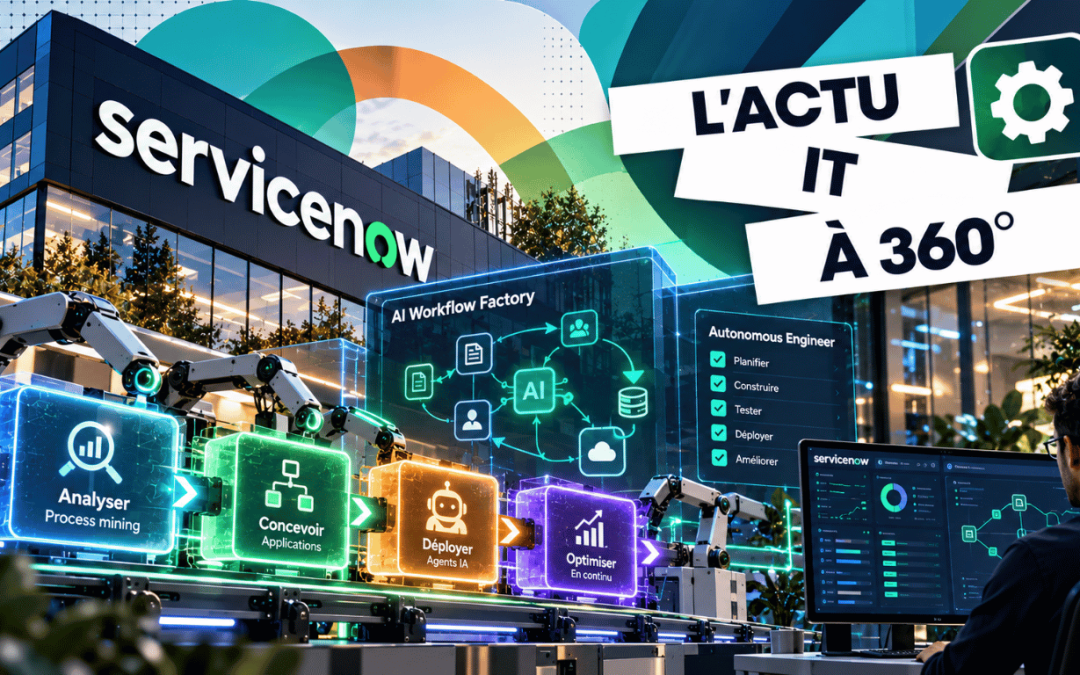
ServiceNow wants to turn process improvement into a continuous AI-driven loop
With AI Workflow Factory, ServiceNow aims to link the identification of inefficient processes with building and running their improvements. The announcement notably includes Autonomous Engineer, a tool designed to automate more of the implementation work.[1] For...

Mistral Large 4: what its trillion-parameter model could change for businesses
Mistral has opened the public preview of Mistral Large 4, nicknamed “Le Chonk”, and plans to release its weights by the end of the month.[1] This European model targets agentic use cases in particular, as well as cybersecurity, finance and industry. For businesses,...
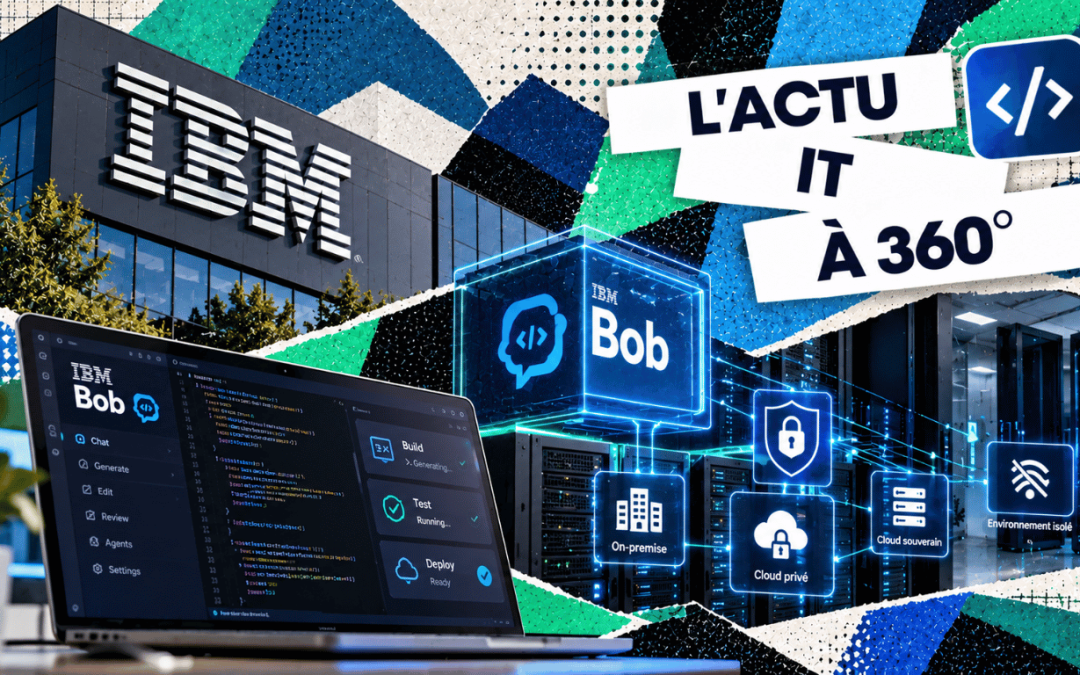
IBM Bob: developing with AI without your code leaving the company
IIBM has announced a self-hosted version of Bob, its agentic development platform, for internal infrastructure, private or sovereign clouds and environments isolated from the internet.[1] This option addresses a concrete obstacle: some applications contain code, data...

HPE is preparing a network that anticipates incidents and automates certain interventions
HPE plans to deploy a Self-Driving Network for the 2027 Ryder Cup, with Wi-Fi 7 and an operations centre bringing together data and AI tools.[1] The stated aim is to monitor usage, adapt the network and move towards autonomous interventions. For businesses, the...
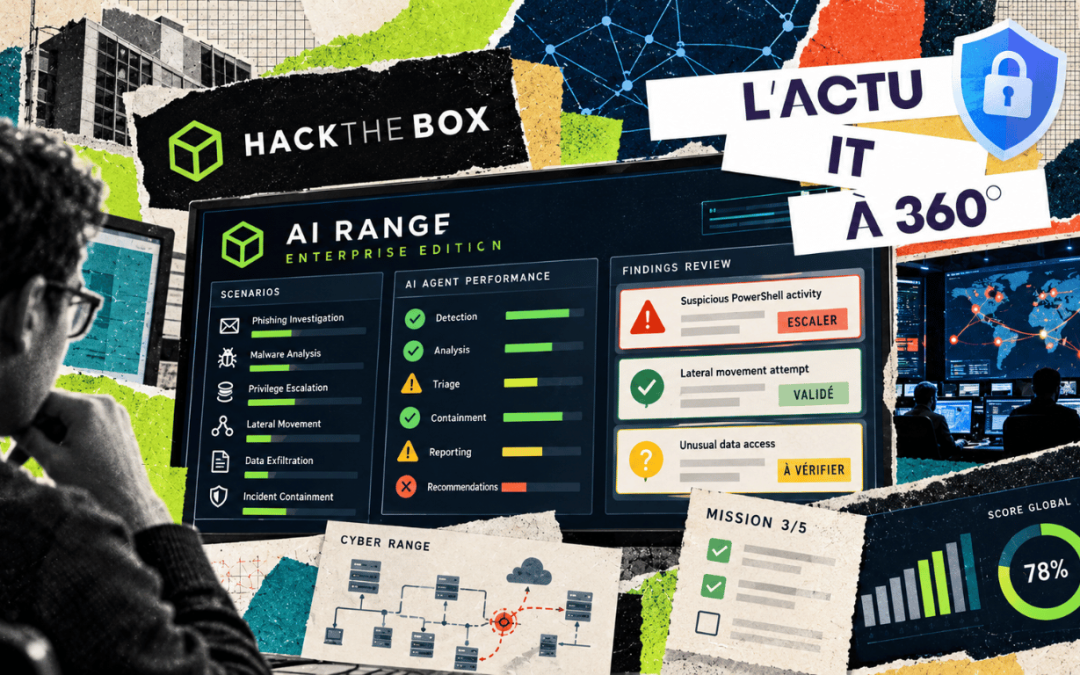
Can your AI agent really defend your company? Hack The Box puts its skills to the test
Hack The Box is launching AI Range Enterprise Edition to let security teams assess their own AI agents on the roles assigned to them.[1] For businesses, the stakes are concrete: having evidence before delegating a task, then checking that this evidence remains valid...
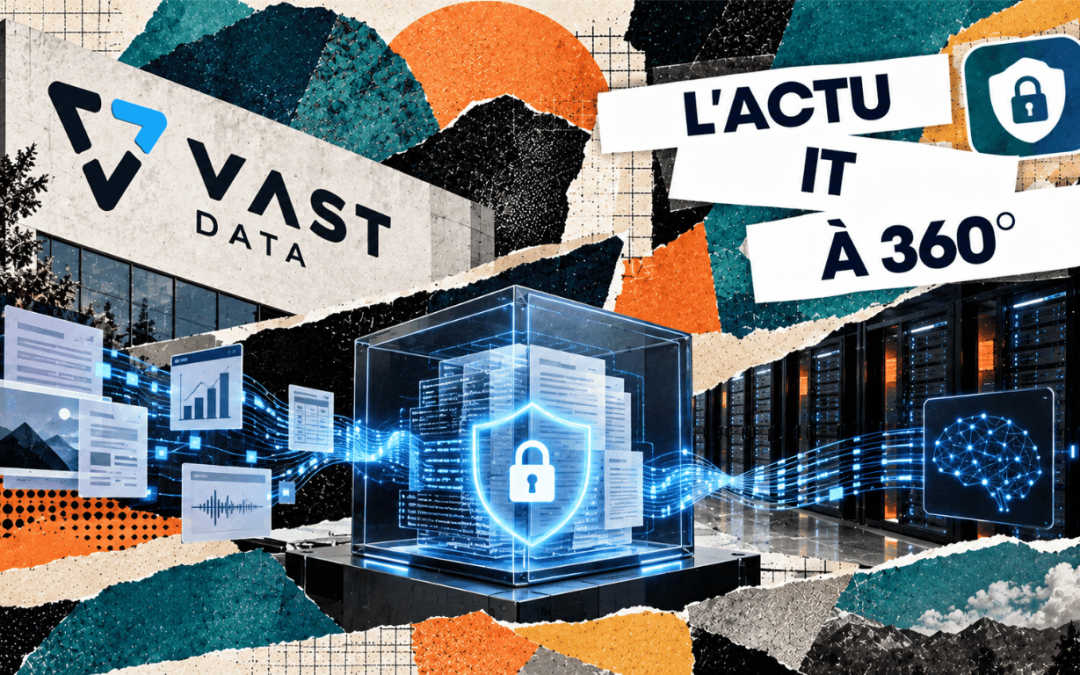
VAST Data wants AI to work with sensitive data in a protected environment
VAST Data has unveiled DataEnclave, a confidential execution capability designed to bring artificial intelligence models closer to companies’ sensitive data. Presented as a preview, it is due to go on sale in the first quarter of 2027.[1] The aim is to make certain...
Databricks buys Row Zero to bring spreadsheets closer to governed data
Databricks has announced the acquisition of Row Zero and plans to integrate its spreadsheet experience into Genie.[1] The aim is to let business teams explore data in a familiar interface, with greater control over access and usage. For companies, the challenge is to...

Google Cloud takes its X5 instances to 48 TB for large SAP databases
Google Cloud has announced the general availability of the X5 series, which raises the maximum advertised memory capacity on a single node to 48 TB, compared with 32 TB for X4.[1] Aimed in particular at very large SAP HANA databases, the offering is based on bare...
Cloud Storage: Google automates the detection of anomalies
A rise in reads, cross-region transfers or stored volume can inflate the cloud bill and disrupt applications. With Storage Intelligence advisor, Google offers a view of unusual changes in Cloud Storage, along with leads for investigating them. For businesses, the...
AI voice agents: Oracle details a LiveKit architecture on OCI
Oracle has described an architecture that pairs the LiveKit Agents framework with Oracle Cloud Infrastructure to automate real-time voice calls. The design links telephony, AI models and business services, while placing internal components in private subnets. For...