


A strategic investment to transform the company through AI
Biopharmaceutical giant Merck has announced a 1-billion-dollar, 10-year partnership with Google Cloud, with a clear goal: to embed agentic artificial intelligence at the heart of its operations. This project goes far beyond a simple cloud contract. It is an in-depth collaboration in which Google and Merck teams are co-building an AI ecosystem capable of acting autonomously within business processes. In a sector where developing a drug can take up to 10 years, this transformation aims to accelerate innovation and improve the company’s overall performance1.
Agentic AI: moving from assistance to autonomous action
Unlike conventional generative AI, which is limited to producing content or recommendations, agentic AI can carry out complex tasks autonomously. In Merck’s case, this means simulating scientific experiments, automating regulatory processes and analysing data continuously. This development marks a paradigm shift: AI no longer merely helps, it acts directly within workflows. According to Gartner, more than 30% of businesses are expected to use AI agents by 2028, proof that this approach is becoming an emerging standard2.
Tangible gains in R&D and the supply chain
The partnership’s first results already illustrate the potential of this transformation. In research and development, the time needed to produce clinical study reports has been cut from 180 hours to 80 hours, more than halving it. On the supply chain side, the combined use of BigQuery and Vertex AI makes it possible to forecast demand and optimise inventory in real time, reducing stock-outs and logistics costs. These operational gains show that agentic AI can have a direct impact on industrial performance.
An explosion in the use of data across the company
Another pillar of this strategy is the democratisation of data. Thanks to Google Cloud tools, Merck employees can access information more easily and use it without advanced technical skills. Traffic to analytics dashboards has risen by 650% in two years, a sign of mass adoption of data tools. This transformation enables faster, better-informed decisions based on accessible and understandable data.
Impacts that go beyond the pharmaceutical sector
Although this partnership concerns the healthcare sector, its implications go much further. It illustrates a global trend: the integration of agentic AI into businesses to automate processes and improve productivity. For SMEs, these technologies can help optimise management, automate certain tasks and access advanced capabilities without investing in complex infrastructure. AI is thus becoming an accessible lever for transformation, capable of redefining how organisations operate.
Orchestrating AI agents becomes a strategic skill
This development highlights a key skill: artificial intelligence, with a strong focus on systems orchestration. IT professionals must be able to design workflows that incorporate agents, supervise their actions and ensure that processes remain consistent. It is no longer just about developing or using tools, but about managing intelligent ecosystems capable of acting autonomously. This skill is becoming essential in the IT jobs of tomorrow.
Towards an AI-augmented enterprise
With this partnership, Merck and Google Cloud illustrate a major transformation: the company is becoming an intelligent system, able to adapt, learn and act in real time. Agentic AI is no longer confined to isolated use cases; it is being integrated across all business processes. For students and future IT professionals, this development is essential to understand. It shows that the future of business will rest on the ability to combine data, cloud and artificial intelligence in automated, interconnected environments.
360° IT News — decoding technology to understand the jobs of tomorrow.
References
https://www.merck.com
2. Gartner.
(2025). Agentic AI trends in enterprise..
https://www.gartner.com
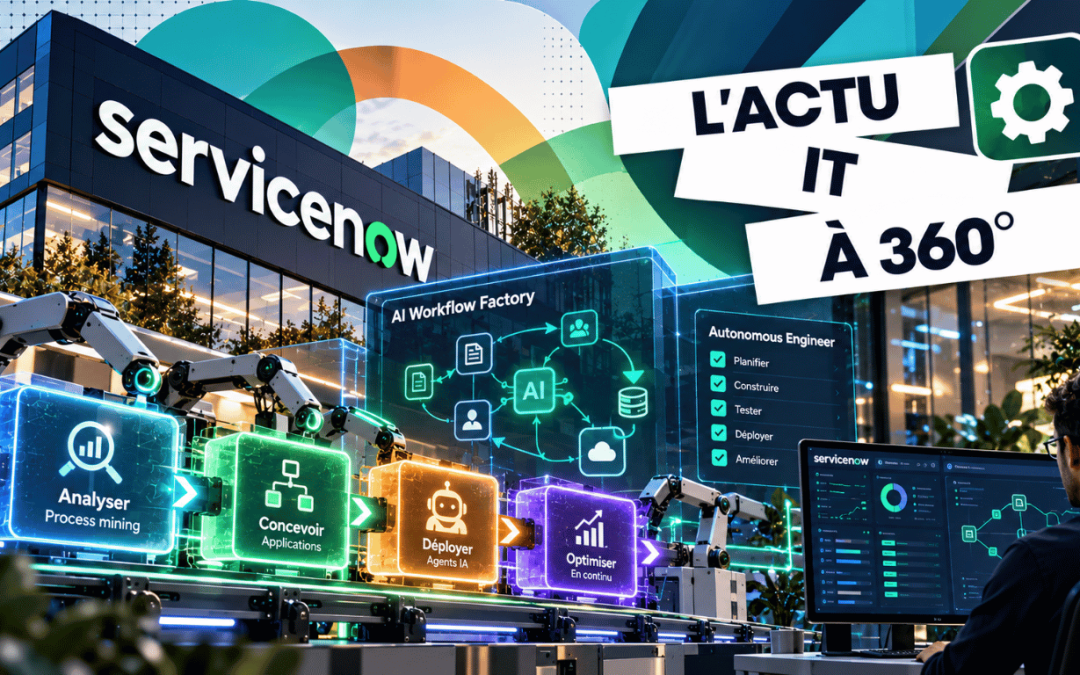
ServiceNow wants to turn process improvement into a continuous AI-driven loop
With AI Workflow Factory, ServiceNow aims to link the identification of inefficient processes with building and running their improvements. The announcement notably includes Autonomous Engineer, a tool designed to automate more of the implementation work.[1] For...

Mistral Large 4: what its trillion-parameter model could change for businesses
Mistral has opened the public preview of Mistral Large 4, nicknamed “Le Chonk”, and plans to release its weights by the end of the month.[1] This European model targets agentic use cases in particular, as well as cybersecurity, finance and industry. For businesses,...
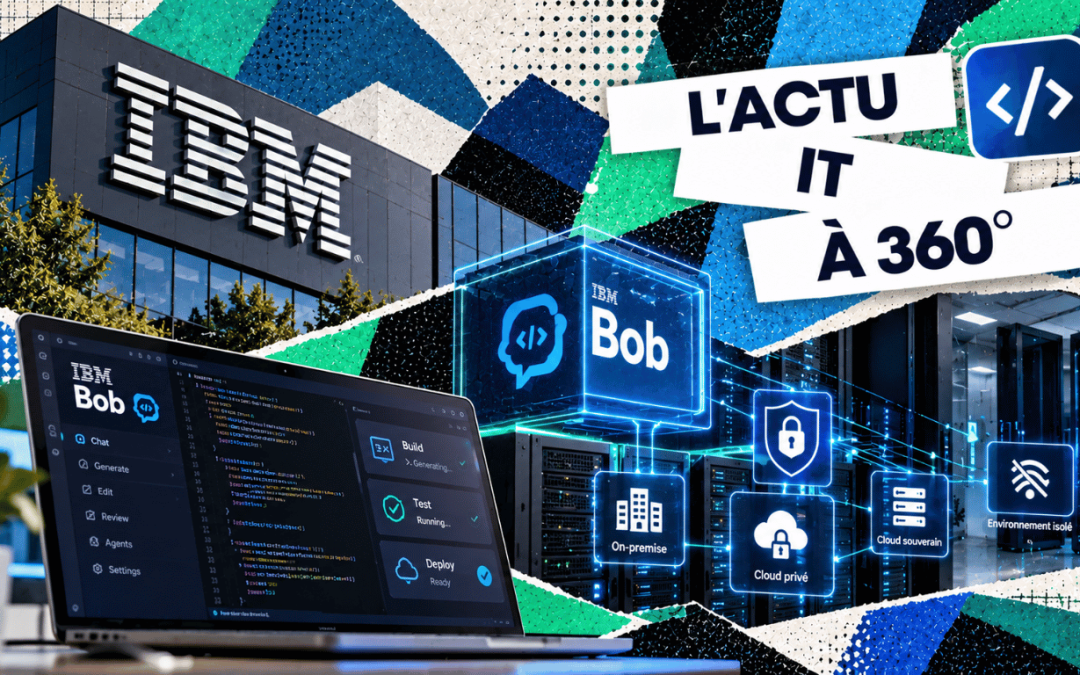
IBM Bob: developing with AI without your code leaving the company
IIBM has announced a self-hosted version of Bob, its agentic development platform, for internal infrastructure, private or sovereign clouds and environments isolated from the internet.[1] This option addresses a concrete obstacle: some applications contain code, data...

HPE is preparing a network that anticipates incidents and automates certain interventions
HPE plans to deploy a Self-Driving Network for the 2027 Ryder Cup, with Wi-Fi 7 and an operations centre bringing together data and AI tools.[1] The stated aim is to monitor usage, adapt the network and move towards autonomous interventions. For businesses, the...
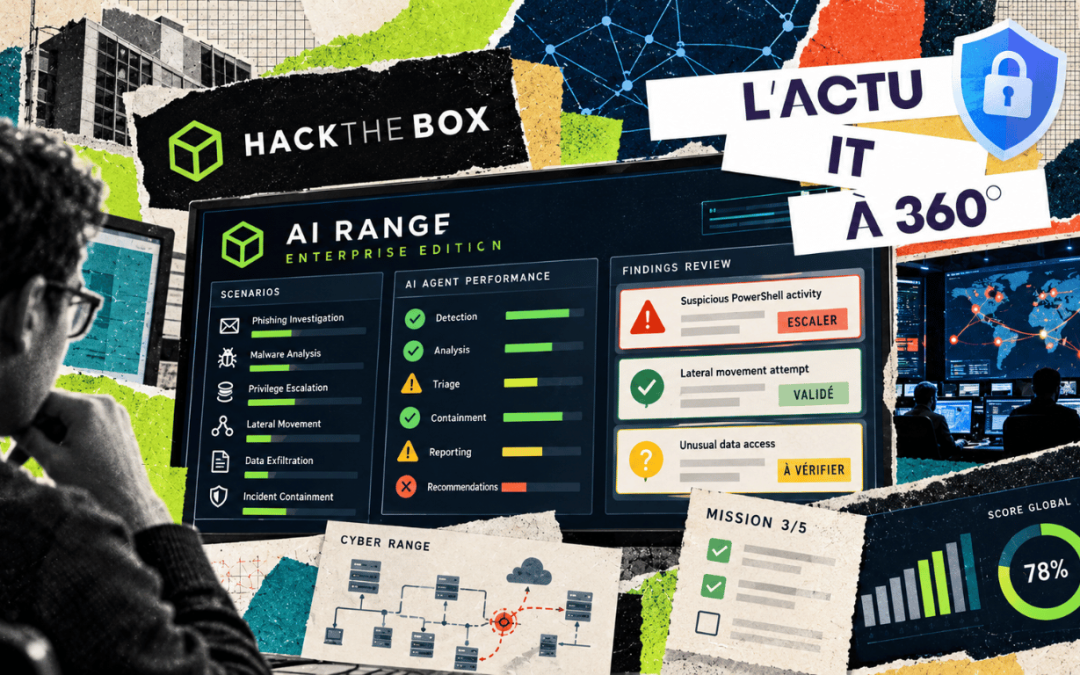
Can your AI agent really defend your company? Hack The Box puts its skills to the test
Hack The Box is launching AI Range Enterprise Edition to let security teams assess their own AI agents on the roles assigned to them.[1] For businesses, the stakes are concrete: having evidence before delegating a task, then checking that this evidence remains valid...
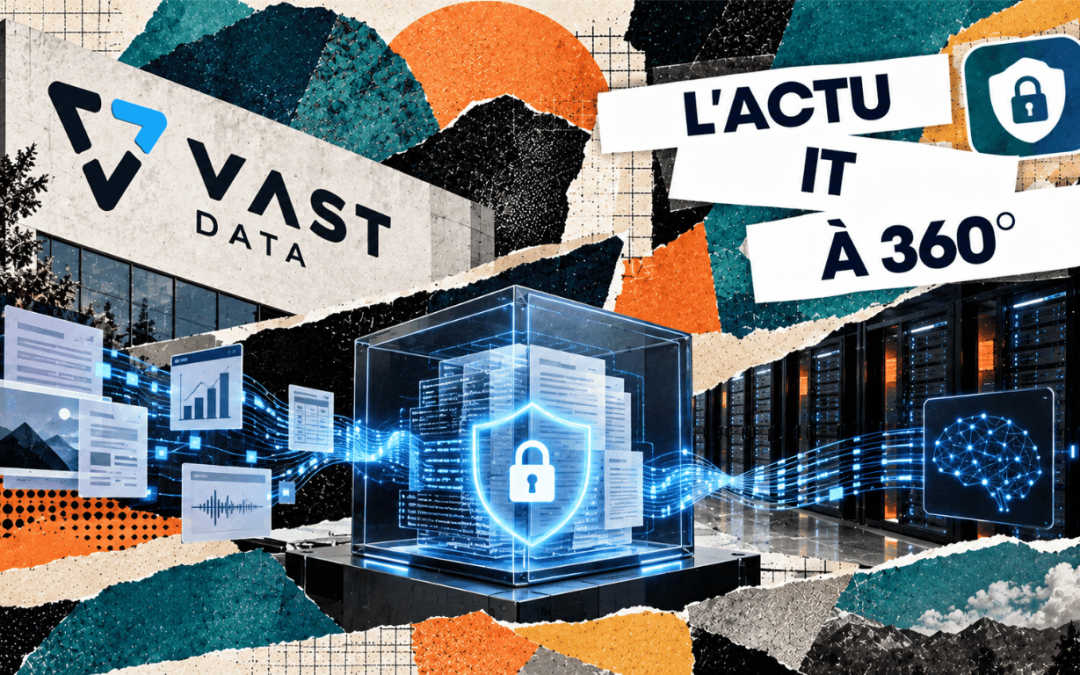
VAST Data wants AI to work with sensitive data in a protected environment
VAST Data has unveiled DataEnclave, a confidential execution capability designed to bring artificial intelligence models closer to companies’ sensitive data. Presented as a preview, it is due to go on sale in the first quarter of 2027.[1] The aim is to make certain...
Databricks buys Row Zero to bring spreadsheets closer to governed data
Databricks has announced the acquisition of Row Zero and plans to integrate its spreadsheet experience into Genie.[1] The aim is to let business teams explore data in a familiar interface, with greater control over access and usage. For companies, the challenge is to...
Google Cloud takes its X5 instances to 48 TB for large SAP databases
Google Cloud has announced the general availability of the X5 series, which raises the maximum advertised memory capacity on a single node to 48 TB, compared with 32 TB for X4.[1] Aimed in particular at very large SAP HANA databases, the offering is based on bare...
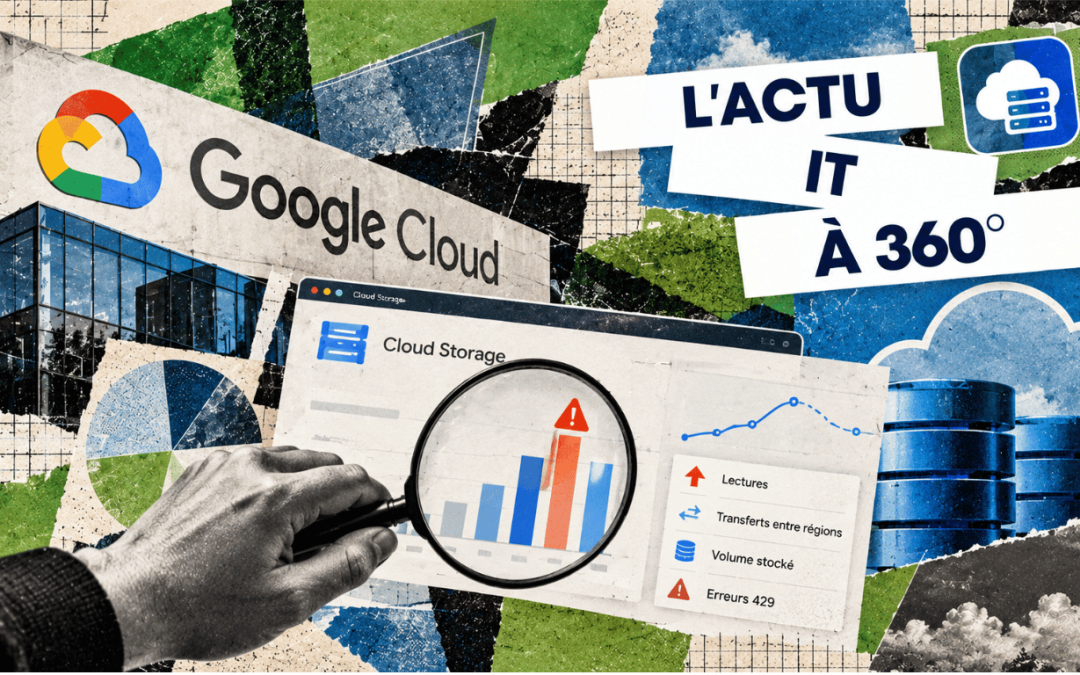
Cloud Storage: Google automates the detection of anomalies
A rise in reads, cross-region transfers or stored volume can inflate the cloud bill and disrupt applications. With Storage Intelligence advisor, Google offers a view of unusual changes in Cloud Storage, along with leads for investigating them. For businesses, the...
AI voice agents: Oracle details a LiveKit architecture on OCI
Oracle has described an architecture that pairs the LiveKit Agents framework with Oracle Cloud Infrastructure to automate real-time voice calls. The design links telephony, AI models and business services, while placing internal components in private subnets. For...