


Data centres are becoming the heart of the global digital economy
Legrand is stepping up its investments in China and the United Kingdom to strengthen its presence in the data centre sector, which has become critical infrastructure for the digital economy. This strategy comes against a backdrop of massive market growth, estimated at more than 300 billion dollars by 2030, driven by the explosion of cloud, artificial intelligence and data1. Today, every application, every digital service and every business tool relies on this infrastructure, which is becoming the invisible foundation of digital transformation.
An international strategy to capture cloud growth
By targeting key markets such as China and the United Kingdom, Legrand is seeking to position itself as close as possible to areas of strong technological growth. China is a strategic market with huge demand for digital infrastructure, while the United Kingdom is establishing itself as a major European hub for data centres. This expansion enables Legrand to meet companies’ growing needs for connectivity, storage and data processing, while strengthening its position in the cloud value chain.
Infrastructure under pressure as usage soars
Demand for data centres is soaring under the effect of several trends: migration to the cloud, adoption of artificial intelligence, the growth of streaming and the proliferation of connected devices. According to some estimates, the global volume of data was expected to reach more than 180 zettabytes by 2025, requiring ever greater processing capacity2. This growth is putting infrastructure under pressure, requiring massive investment to guarantee performance, availability and security.
Performance, energy, security: the new challenges for data centres
Data centres are no longer simple storage spaces; they are becoming highly optimised environments. The challenges are many: improving performance, reducing energy consumption and ensuring service continuity. Today, this infrastructure consumes around 1 to 2% of the world’s electricity, which is pushing players in the sector to innovate to limit their environmental impact3. The solutions developed by companies such as Legrand aim to optimise energy management, cooling and the security of facilities.
A strategic lever for companies and SMEs
For SMEs, these investments have a direct impact. Access to high-performance data centres makes it possible to use cloud services, manage data in real time and deploy artificial intelligence solutions without investing in costly in-house infrastructure. This democratises access to advanced technologies and accelerates companies’ digital transformation. Data centres are thus becoming a lever for competitiveness, enabling organisations to become more agile and efficient.
Understanding infrastructure is becoming a key skill
This development highlights a strategic skill: cloud computing, which is closely linked to physical infrastructure. IT professionals need to understand how data centres work, their architecture and their role in the digital ecosystem. It is no longer just about using cloud services, but about understanding the infrastructure that makes them possible. This skill is becoming essential for designing, managing and securing complex digital environments.
A global battle to control digital infrastructure
With this strategy, Legrand is part of a global movement in which companies are positioning themselves on critical digital infrastructure. Data centres are becoming a major geopolitical and economic issue, at the heart of digital sovereignty and corporate competitiveness. For students and future IT professionals, understanding these issues is essential, as they define the foundations on which all digital innovation rests, from the cloud to artificial intelligence.
360° IT News — decoding technology to understand the jobs of tomorrow.
References
1. Statista. (2024). Data center market size worldwide.
https://www.statista.com
2. IDC. (2023). Global DataSphere Forecast.
https://www.idc.com
3. International Energy Agency. (2024). Data centres and energy consumption.
https://www.iea.org
$32 billion: Google launches a cyber army of AI agents
Cybersecurity enters a new dimension Google has made a major move by announcing an investment of $32 billion in developing a “cyber army” of artificial intelligence agents. Behind this term lies a technological reality: systems capable of automatically detecting,...

GPT-5.4-Cyber: OpenAI responds to Claude Mythos in the AI cybersecurity battle
A new front line in the artificial intelligence war On 14 April 2026, OpenAI launched GPT-5.4-Cyber, a model specialising in cybersecurity, just days after Anthropic announced Claude Mythos. This timing is no coincidence: it marks an acceleration in the competition...

Claude Mythos: beyond the buzz, what are the real stakes for IT security?
An AI that promises to transform cybersecurity With Claude Mythos, Anthropic is showcasing a new generation of artificial intelligence able to analyse, detect and anticipate cybersecurity threats. At a time when cyberattacks are soaring, with more than 2,200 attacks a...
Microsoft reinvents development with AI agents in VS Code
Software development enters the age of agents Microsoft is taking a new step by integrating artificial intelligence agents into Visual Studio Code, with a beta version available via the Insiders channel. This development comes at a time when VS Code is used by more...

In the cloud era, enterprise networks are changing standards
The network is no longer just support: it is becoming a driver of performance For a long time, the enterprise network was regarded as a simple technical infrastructure, often invisible as long as it worked. But with the explosion of the cloud, SaaS applications and...
Windows 11: Microsoft wants to speed up user testing with Insider
Software testing becomes a lever for innovation Microsoft is overhauling its Windows Insider programme, which now brings together more than 10 million testers worldwide, to simplify access to experimental versions of Windows 11 and speed up user feedback. In an...
51,600 satellites: Jeff Bezos steps up the battle for the global internet
News in brief With Project Kuiper, Jeff Bezos is committing Amazon to a major transformation of the world’s internet infrastructure by deploying tens of thousands of satellites in low Earth orbit. The goal is not limited to connecting isolated areas, but to building a...
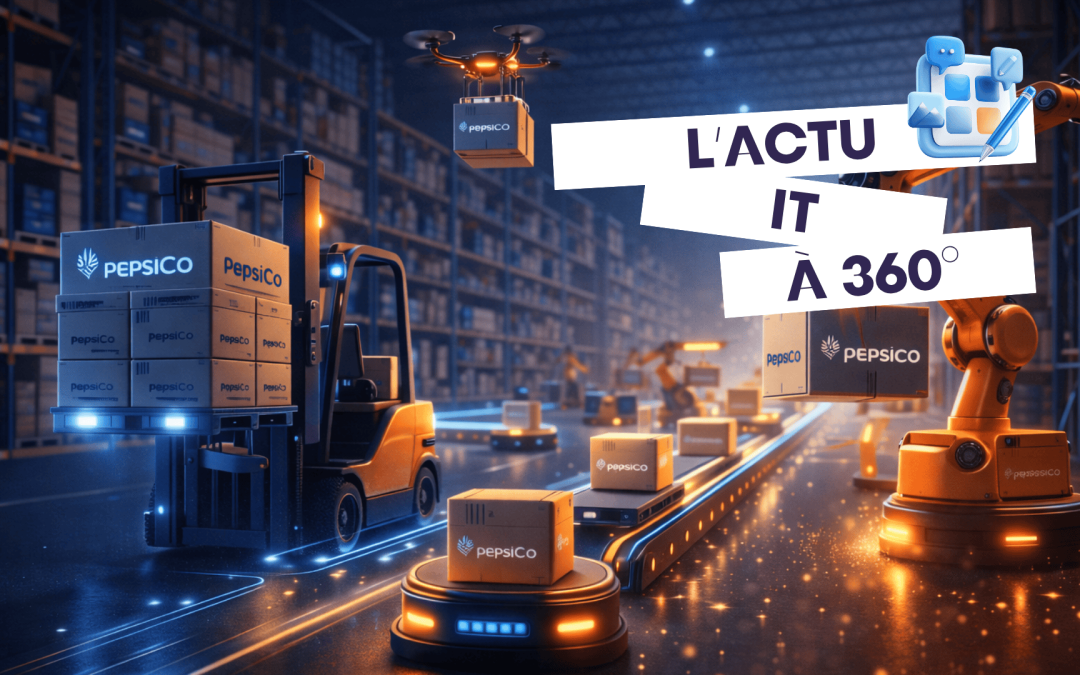
PepsiCo automates its logistics: a turning point for smart warehouses
News in brief PepsiCo France is investing in an automated, multimodal warehouse that combines robotics, digital systems and intelligent management of logistics flows. The aim is no longer simply to store and distribute products, but to turn the warehouse into a...

Windows 11: Microsoft finally relaxes forced updates
News in brief Microsoft is preparing to overhaul the way updates are managed in Windows 11, giving users greater control over their installation, notably by making it easier to postpone them or avoid certain enforced interruptions. This change responds to a...

WeChat goes autonomous AI: Tencent steps up with OpenClaw
News in brief Tencent has just integrated OpenClaw into WeChat, turning the app into far more than a simple communication tool. This development introduces agents capable of carrying out tasks directly from the interface, without going through several applications or...