


Data centres are becoming the heart of the global digital economy
Legrand is stepping up its investments in China and the United Kingdom to strengthen its presence in the data centre sector, which has become critical infrastructure for the digital economy. This strategy comes against a backdrop of massive market growth, estimated at more than 300 billion dollars by 2030, driven by the explosion of cloud, artificial intelligence and data1. Today, every application, every digital service and every business tool relies on this infrastructure, which is becoming the invisible foundation of digital transformation.
An international strategy to capture cloud growth
By targeting key markets such as China and the United Kingdom, Legrand is seeking to position itself as close as possible to areas of strong technological growth. China is a strategic market with huge demand for digital infrastructure, while the United Kingdom is establishing itself as a major European hub for data centres. This expansion enables Legrand to meet companies’ growing needs for connectivity, storage and data processing, while strengthening its position in the cloud value chain.
Infrastructure under pressure as usage soars
Demand for data centres is soaring under the effect of several trends: migration to the cloud, adoption of artificial intelligence, the growth of streaming and the proliferation of connected devices. According to some estimates, the global volume of data was expected to reach more than 180 zettabytes by 2025, requiring ever greater processing capacity2. This growth is putting infrastructure under pressure, requiring massive investment to guarantee performance, availability and security.
Performance, energy, security: the new challenges for data centres
Data centres are no longer simple storage spaces; they are becoming highly optimised environments. The challenges are many: improving performance, reducing energy consumption and ensuring service continuity. Today, this infrastructure consumes around 1 to 2% of the world’s electricity, which is pushing players in the sector to innovate to limit their environmental impact3. The solutions developed by companies such as Legrand aim to optimise energy management, cooling and the security of facilities.
A strategic lever for companies and SMEs
For SMEs, these investments have a direct impact. Access to high-performance data centres makes it possible to use cloud services, manage data in real time and deploy artificial intelligence solutions without investing in costly in-house infrastructure. This democratises access to advanced technologies and accelerates companies’ digital transformation. Data centres are thus becoming a lever for competitiveness, enabling organisations to become more agile and efficient.
Understanding infrastructure is becoming a key skill
This development highlights a strategic skill: cloud computing, which is closely linked to physical infrastructure. IT professionals need to understand how data centres work, their architecture and their role in the digital ecosystem. It is no longer just about using cloud services, but about understanding the infrastructure that makes them possible. This skill is becoming essential for designing, managing and securing complex digital environments.
A global battle to control digital infrastructure
With this strategy, Legrand is part of a global movement in which companies are positioning themselves on critical digital infrastructure. Data centres are becoming a major geopolitical and economic issue, at the heart of digital sovereignty and corporate competitiveness. For students and future IT professionals, understanding these issues is essential, as they define the foundations on which all digital innovation rests, from the cloud to artificial intelligence.
360° IT News — decoding technology to understand the jobs of tomorrow.
References
1. Statista. (2024). Data center market size worldwide.
https://www.statista.com
2. IDC. (2023). Global DataSphere Forecast.
https://www.idc.com
3. International Energy Agency. (2024). Data centres and energy consumption.
https://www.iea.org
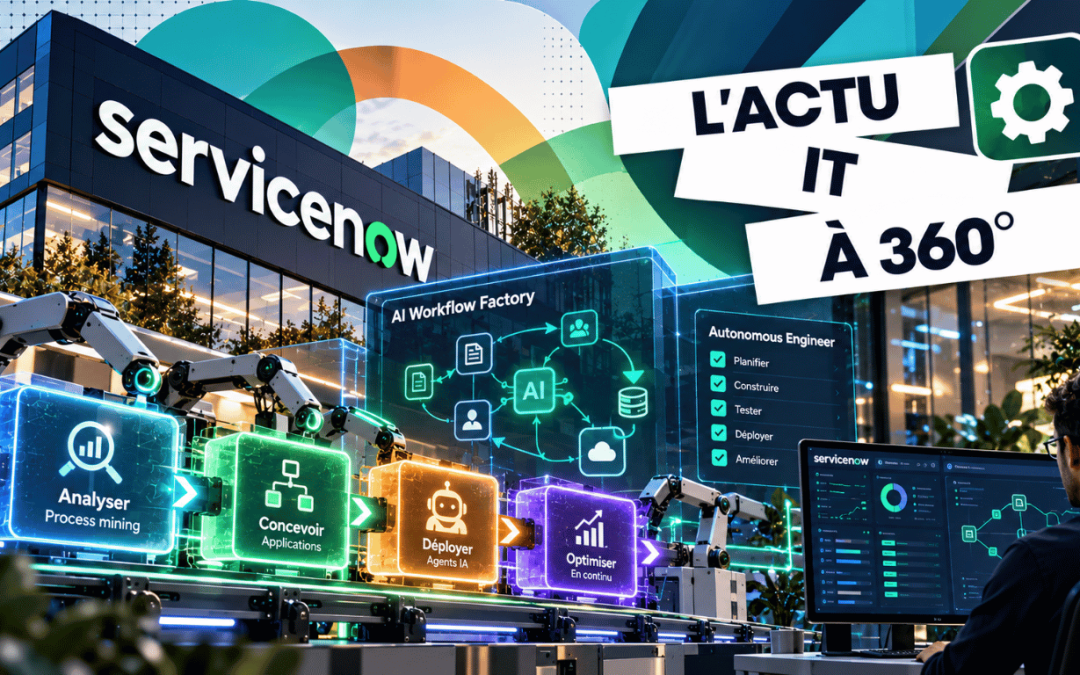
ServiceNow wants to turn process improvement into a continuous AI-driven loop
With AI Workflow Factory, ServiceNow aims to link the identification of inefficient processes with building and running their improvements. The announcement notably includes Autonomous Engineer, a tool designed to automate more of the implementation work.[1] For...

Mistral Large 4: what its trillion-parameter model could change for businesses
Mistral has opened the public preview of Mistral Large 4, nicknamed “Le Chonk”, and plans to release its weights by the end of the month.[1] This European model targets agentic use cases in particular, as well as cybersecurity, finance and industry. For businesses,...
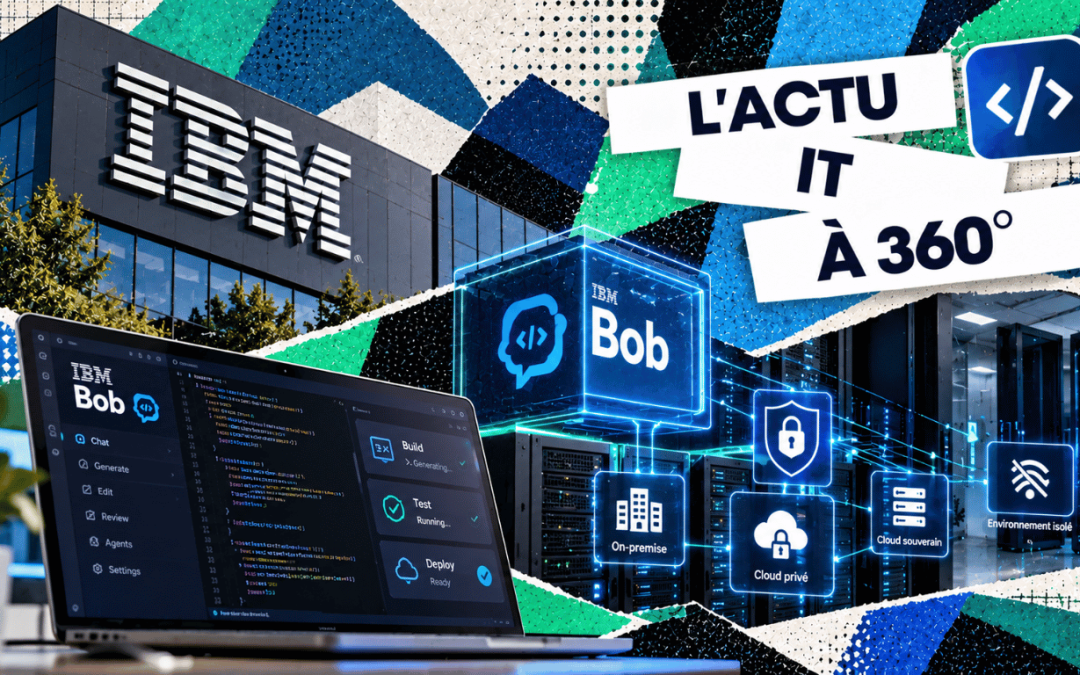
IBM Bob: developing with AI without your code leaving the company
IIBM has announced a self-hosted version of Bob, its agentic development platform, for internal infrastructure, private or sovereign clouds and environments isolated from the internet.[1] This option addresses a concrete obstacle: some applications contain code, data...

HPE is preparing a network that anticipates incidents and automates certain interventions
HPE plans to deploy a Self-Driving Network for the 2027 Ryder Cup, with Wi-Fi 7 and an operations centre bringing together data and AI tools.[1] The stated aim is to monitor usage, adapt the network and move towards autonomous interventions. For businesses, the...
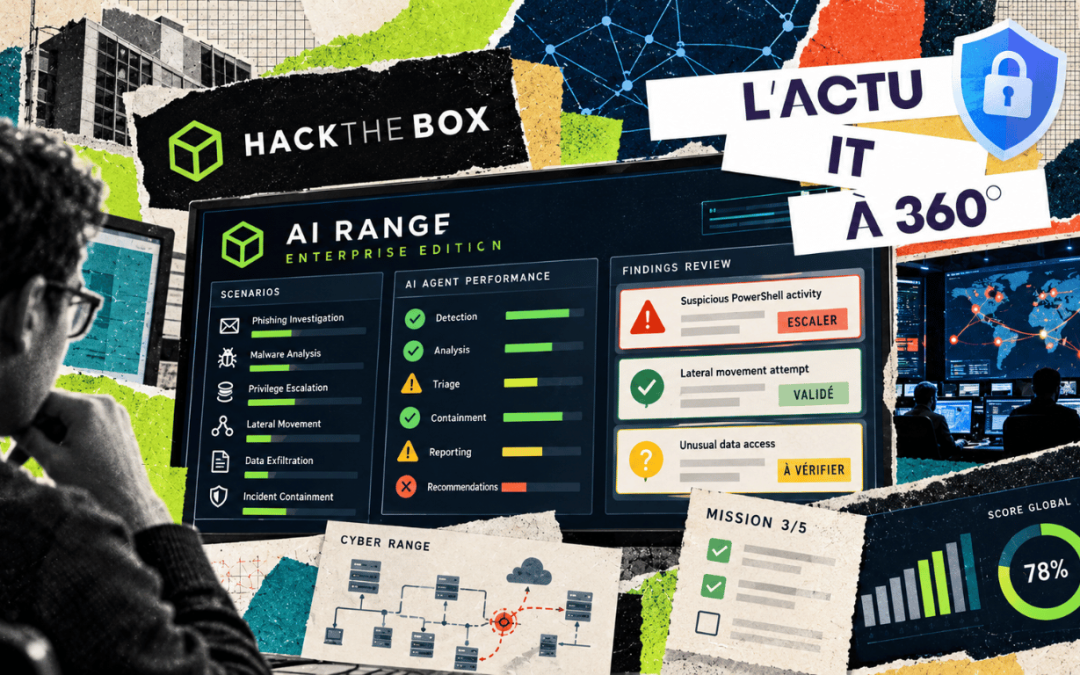
Can your AI agent really defend your company? Hack The Box puts its skills to the test
Hack The Box is launching AI Range Enterprise Edition to let security teams assess their own AI agents on the roles assigned to them.[1] For businesses, the stakes are concrete: having evidence before delegating a task, then checking that this evidence remains valid...

VAST Data wants AI to work with sensitive data in a protected environment
VAST Data has unveiled DataEnclave, a confidential execution capability designed to bring artificial intelligence models closer to companies’ sensitive data. Presented as a preview, it is due to go on sale in the first quarter of 2027.[1] The aim is to make certain...
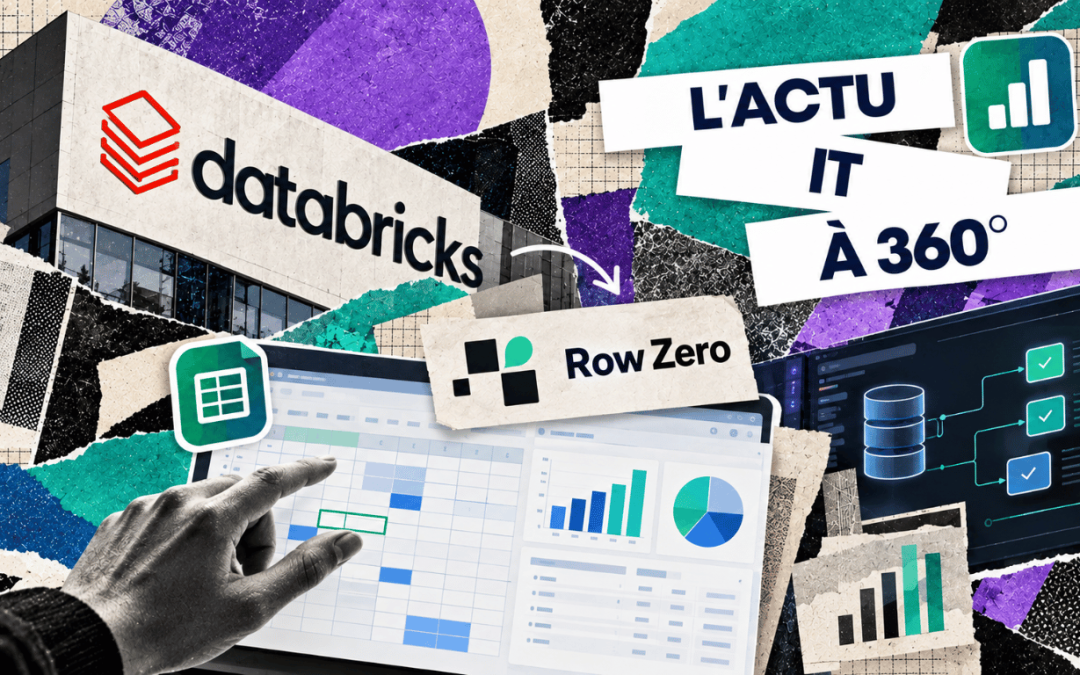
Databricks buys Row Zero to bring spreadsheets closer to governed data
Databricks has announced the acquisition of Row Zero and plans to integrate its spreadsheet experience into Genie.[1] The aim is to let business teams explore data in a familiar interface, with greater control over access and usage. For companies, the challenge is to...

Google Cloud takes its X5 instances to 48 TB for large SAP databases
Google Cloud has announced the general availability of the X5 series, which raises the maximum advertised memory capacity on a single node to 48 TB, compared with 32 TB for X4.[1] Aimed in particular at very large SAP HANA databases, the offering is based on bare...
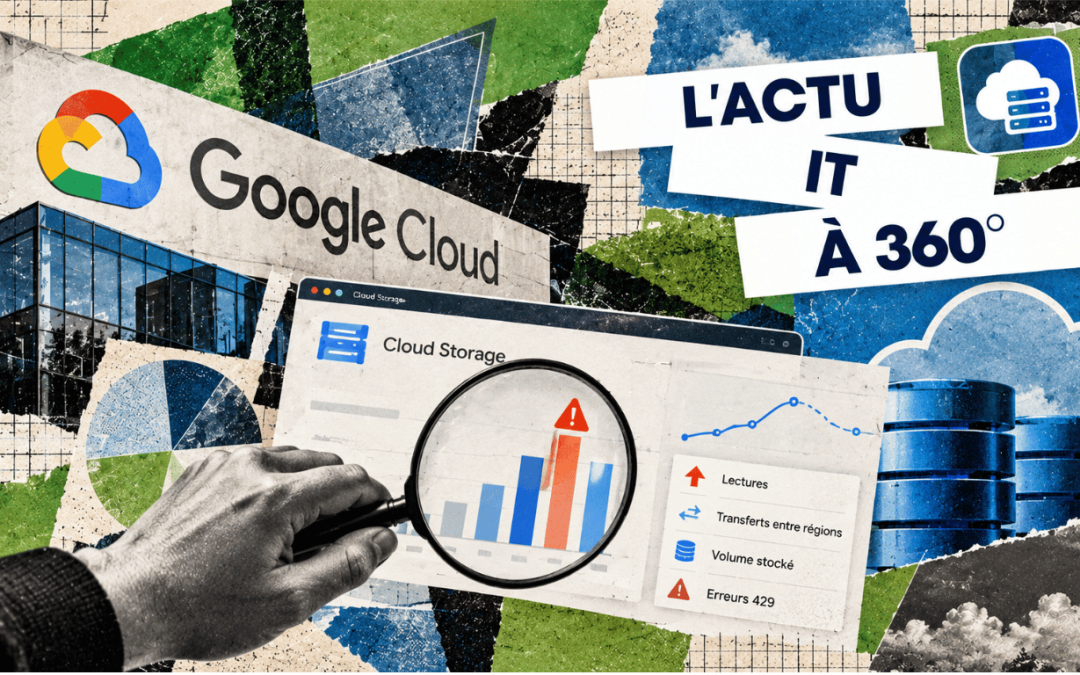
Cloud Storage: Google automates the detection of anomalies
A rise in reads, cross-region transfers or stored volume can inflate the cloud bill and disrupt applications. With Storage Intelligence advisor, Google offers a view of unusual changes in Cloud Storage, along with leads for investigating them. For businesses, the...

AI voice agents: Oracle details a LiveKit architecture on OCI
Oracle has described an architecture that pairs the LiveKit Agents framework with Oracle Cloud Infrastructure to automate real-time voice calls. The design links telephony, AI models and business services, while placing internal components in private subnets. For...