


News in brief
Microsoft is preparing to overhaul the way updates are managed in Windows 11, giving users greater control over their installation, notably by making it easier to postpone them or avoid certain enforced interruptions. This change responds to a frustration widely shared for years, with automatic updates liable to interrupt work or restart a computer without warning. But behind this improvement lies a broader issue: adapting operating systems to users’ real-world practices and to business needs, in a context of digital transformation where business continuity is becoming essential.¹
When security clashes with user experience
Automatic updates were designed to strengthen cybersecurity by quickly fixing vulnerabilities and keeping systems up to date. However, this approach often conflicts with user experience, particularly in professional environments where an interruption can affect productivity. By relaxing these mechanisms, Microsoft is seeking to strike a balance between security and flexibility. This development shows that software vendors must now design systems capable of adapting to users’ constraints, rather than imposing uniform rules.
Working without interruption becomes a priority for businesses
For SMEs, start-ups and freelancers, this change could have a tangible impact. Update-related interruptions can slow teams down, disrupt meetings or halt critical tasks. By allowing better management of these updates, Windows 11 offers greater continuity of work, which is essential in environments where every minute counts. This development is part of a broader trend in which IT tools must be both secure and suited to the operational realities of businesses.
A new approach to IT systems management
This announcement reflects a wider transformation in IT systems management. Businesses now expect tools to be flexible, configurable and aligned with their business needs. Update management is thus becoming a strategic matter, to be built into an overall approach that includes the cloud, cybersecurity and infrastructure management. Operating systems are no longer just technical tools, but essential components of organisations’ performance and productivity.
Administering systems without holding up the business
This development highlights a key skill: systems and network administration. IT professionals must be able to manage updates, secure systems and guarantee their availability, while minimising interruptions for users. This means understanding update mechanisms, planning deployments and tailoring configurations to the company’s needs. As infrastructure becomes ever more complex, this ability to reconcile security and business continuity is becoming essential.
A long-awaited change that redefines the relationship between IT and users
With this change, Microsoft shows that it is taking user and business expectations into account. Operating systems must now adapt to how people work, rather than impose technical constraints. This transformation heralds a new generation of IT tools that are more flexible, smarter and better integrated into professional environments. For students and future IT professionals, it underlines the importance of understanding not only technologies, but also users’ practices and expectations in a constantly evolving digital world.
360° IT News — decoding technology to understand the jobs of tomorrow.
References
1. Microsoft. Windows 11 update management improvements.
https://support.microsoft.com/windows/manage-updates-in-windows-11-3c92c4c1-92d0-4c50-b5d4-9f3c7f1f7c2e
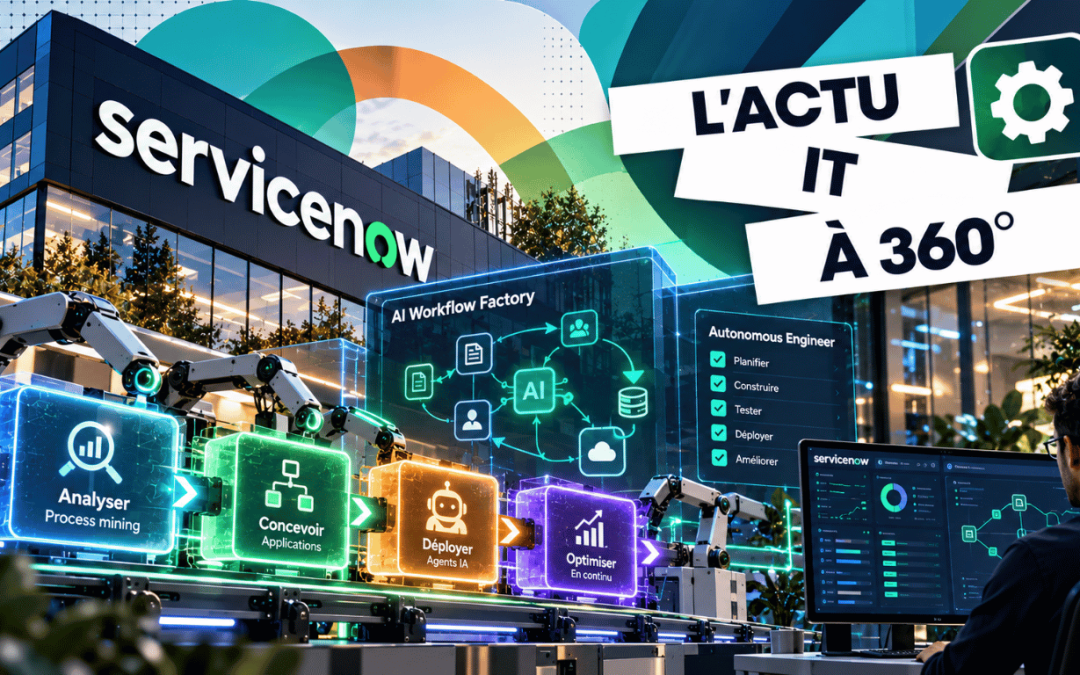
ServiceNow wants to turn process improvement into a continuous AI-driven loop
With AI Workflow Factory, ServiceNow aims to link the identification of inefficient processes with building and running their improvements. The announcement notably includes Autonomous Engineer, a tool designed to automate more of the implementation work.[1] For...

Mistral Large 4: what its trillion-parameter model could change for businesses
Mistral has opened the public preview of Mistral Large 4, nicknamed “Le Chonk”, and plans to release its weights by the end of the month.[1] This European model targets agentic use cases in particular, as well as cybersecurity, finance and industry. For businesses,...
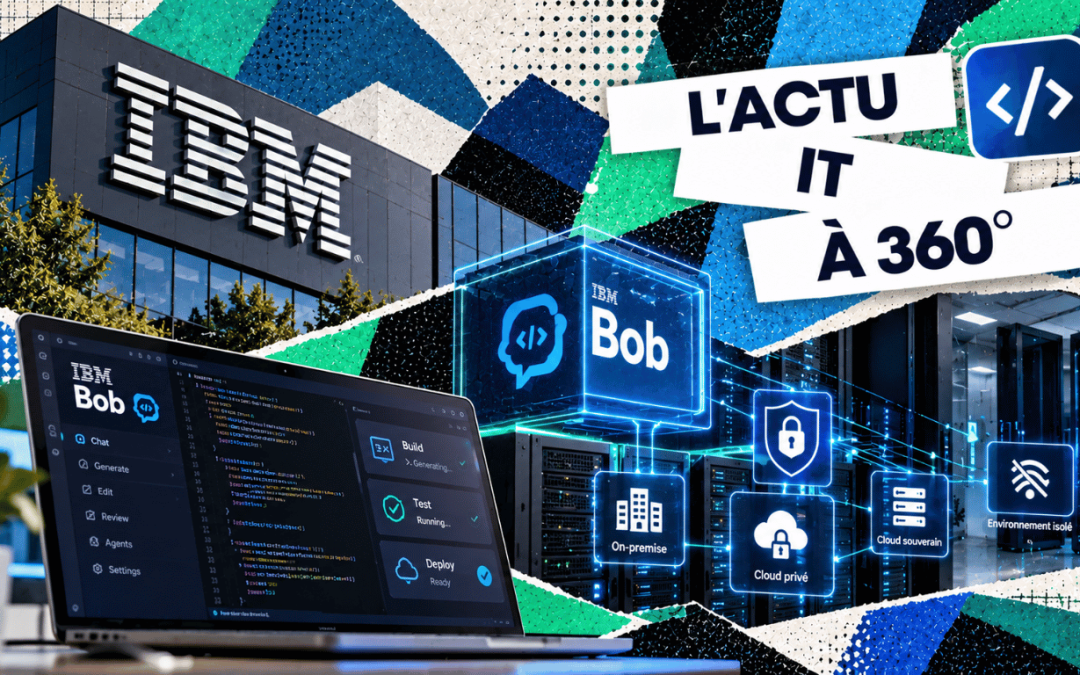
IBM Bob: developing with AI without your code leaving the company
IIBM has announced a self-hosted version of Bob, its agentic development platform, for internal infrastructure, private or sovereign clouds and environments isolated from the internet.[1] This option addresses a concrete obstacle: some applications contain code, data...

HPE is preparing a network that anticipates incidents and automates certain interventions
HPE plans to deploy a Self-Driving Network for the 2027 Ryder Cup, with Wi-Fi 7 and an operations centre bringing together data and AI tools.[1] The stated aim is to monitor usage, adapt the network and move towards autonomous interventions. For businesses, the...
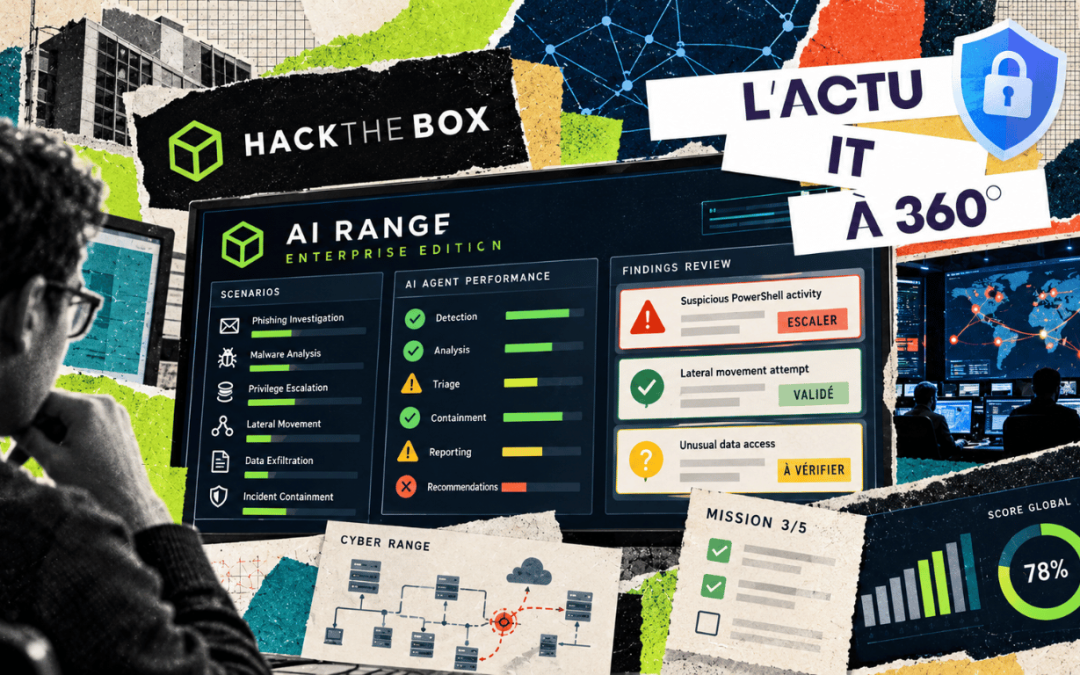
Can your AI agent really defend your company? Hack The Box puts its skills to the test
Hack The Box is launching AI Range Enterprise Edition to let security teams assess their own AI agents on the roles assigned to them.[1] For businesses, the stakes are concrete: having evidence before delegating a task, then checking that this evidence remains valid...
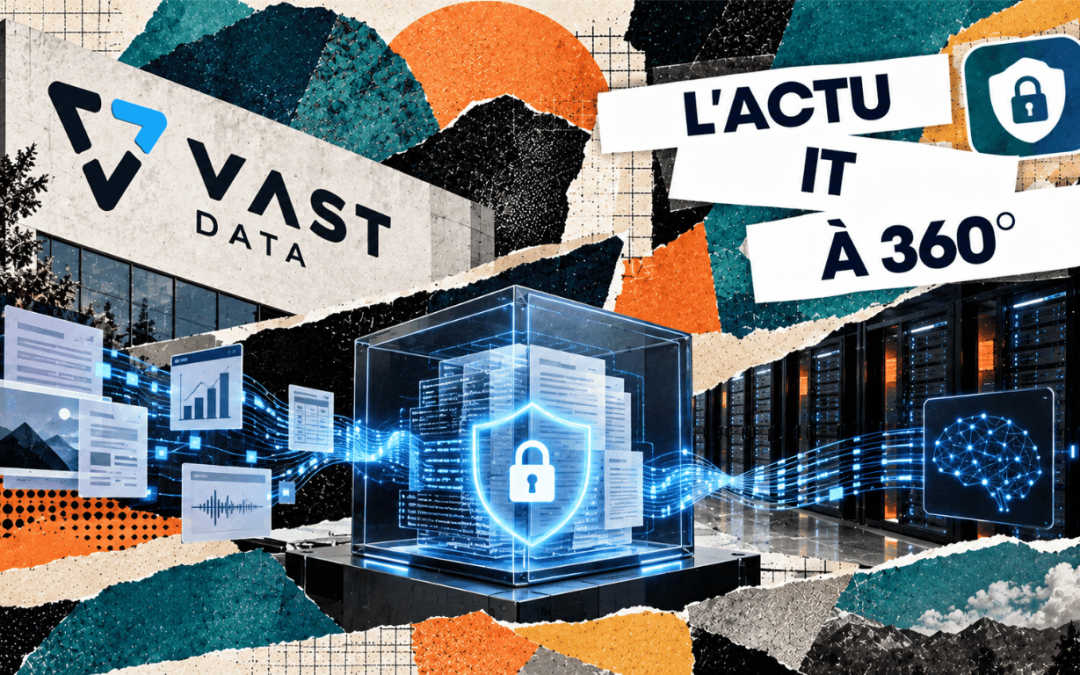
VAST Data wants AI to work with sensitive data in a protected environment
VAST Data has unveiled DataEnclave, a confidential execution capability designed to bring artificial intelligence models closer to companies’ sensitive data. Presented as a preview, it is due to go on sale in the first quarter of 2027.[1] The aim is to make certain...
Databricks buys Row Zero to bring spreadsheets closer to governed data
Databricks has announced the acquisition of Row Zero and plans to integrate its spreadsheet experience into Genie.[1] The aim is to let business teams explore data in a familiar interface, with greater control over access and usage. For companies, the challenge is to...
Google Cloud takes its X5 instances to 48 TB for large SAP databases
Google Cloud has announced the general availability of the X5 series, which raises the maximum advertised memory capacity on a single node to 48 TB, compared with 32 TB for X4.[1] Aimed in particular at very large SAP HANA databases, the offering is based on bare...
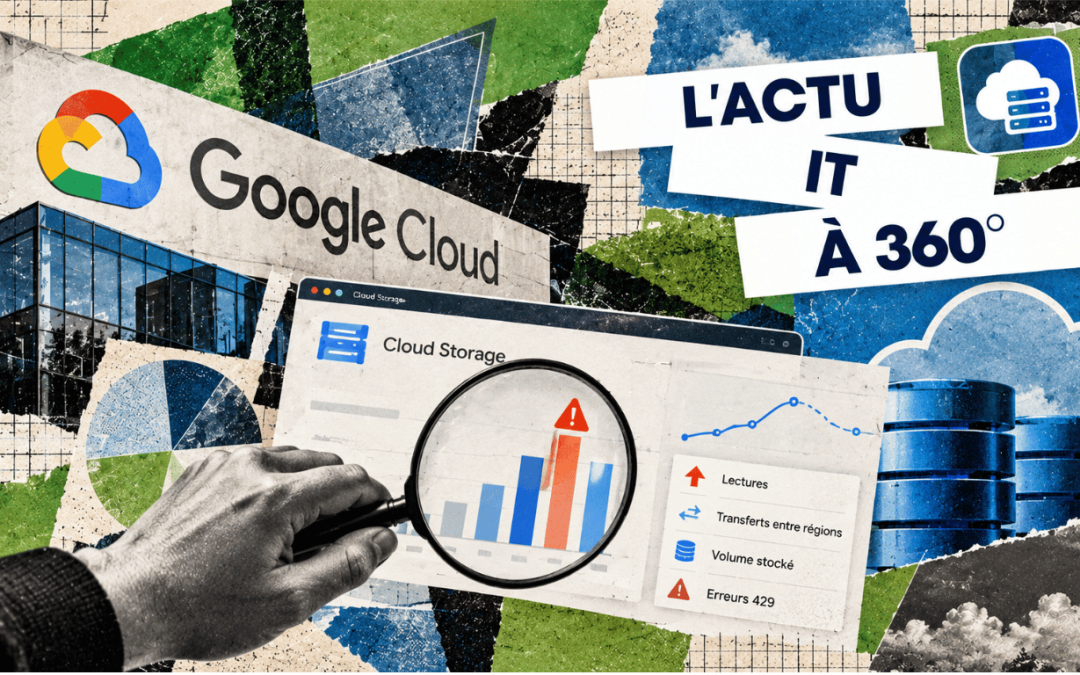
Cloud Storage: Google automates the detection of anomalies
A rise in reads, cross-region transfers or stored volume can inflate the cloud bill and disrupt applications. With Storage Intelligence advisor, Google offers a view of unusual changes in Cloud Storage, along with leads for investigating them. For businesses, the...
AI voice agents: Oracle details a LiveKit architecture on OCI
Oracle has described an architecture that pairs the LiveKit Agents framework with Oracle Cloud Infrastructure to automate real-time voice calls. The design links telephony, AI models and business services, while placing internal components in private subnets. For...