


News in brief
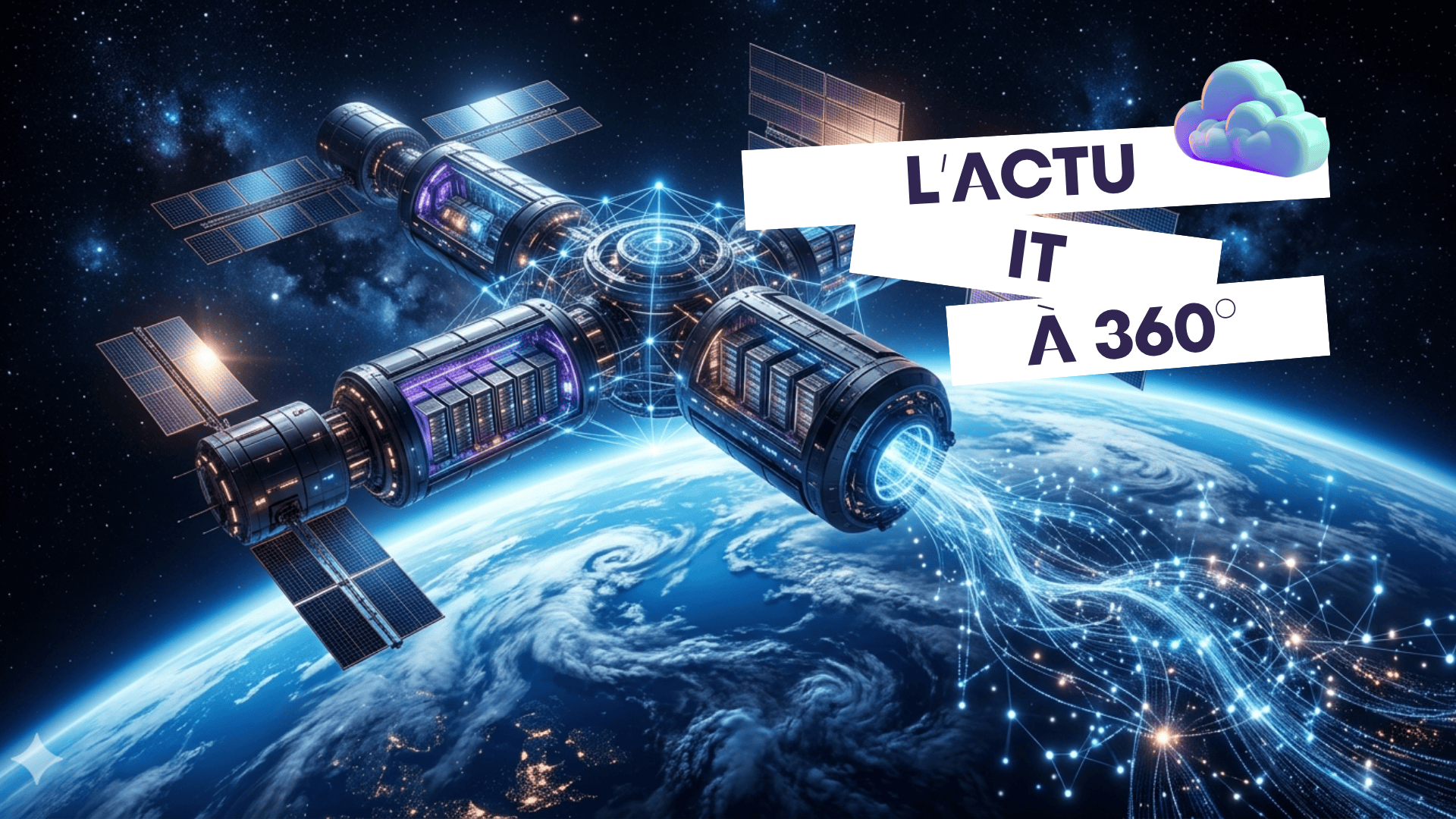
At the GTC 2026 conference, Nvidia announced its intention to accelerate the development of artificial intelligence in space, joining an emerging movement around orbital data centres. The company is no longer content to supply chips for satellites; it is now targeting complete infrastructures capable of processing data directly in orbit. Behind this announcement, the stakes go far beyond technological innovation: the aim is to respond to the explosion in computing needs linked to artificial intelligence and the cloud, while exploring new ways of overcoming the current limits of terrestrial infrastructure.¹
Why the cloud is reaching its limits today
Data centres are at the heart of the digital economy, but they face increasingly severe constraints: massive energy consumption, high infrastructure costs and capacity saturation as artificial intelligence ramps up. By sending part of the computing into space, Nvidia is exploring a radical alternative, where solar energy is abundant and cooling is more natural. The idea is not just to relocate infrastructure, but to transform the way data is processed, in particular by bringing computing closer to data sources such as satellites. This approach would, for example, make it possible to analyse images or data directly in orbit, without going via Earth, reducing delays and improving the overall efficiency of systems.²
Concrete uses that redefine data processing
This development paves the way for new uses, particularly in Earth observation, weather forecasting and disaster management. Today, satellites often send raw data back to Earth for analysis, which can take time and tie up significant resources. With on-board computing capabilities, these systems can directly deliver actionable information, such as detecting an incident or analysing a situation in real time. This shift from “raw data” to “real-time intelligence” profoundly changes the value of data and creates new business models in which information becomes immediately actionable.
Unprecedented computing capacity, without complicating SMEs’ IT
Even though space data centres may seem far removed from SMEs’ concerns, they are part of a broader transformation of the cloud and IT. In the long run, these infrastructures could improve the performance of cloud services, reduce data processing costs and speed up access to critical information. For SMEs and start-ups, this means access to more powerful technologies without having to invest in heavy infrastructure. But it also brings new challenges, particularly in terms of cybersecurity, data management and cloud service integration. Companies will need to understand these developments to take advantage of the opportunities offered by these new architectures.
Mastering tomorrow’s cloud becomes strategic
This news highlights a key skill: cloud computing. As infrastructure evolves, IT professionals need to be able to understand increasingly complex environments, ranging from traditional data centres to distributed, and even space-based, architectures. It is no longer just about managing servers, but about running hybrid systems combining cloud, edge computing and artificial intelligence. This ability to orchestrate infrastructure is becoming essential to support companies’ digital transformation and make full use of new technologies.
A spectacular innovation… but still debated
While space data centres are generating a great deal of interest, they also raise questions. Some experts believe these projects are still a long way from practical large-scale use, particularly because of costs and technical constraints. But beyond their immediate adoption, these initiatives above all show one thing: cloud and artificial intelligence continue to evolve towards ever more distributed and innovative models. For students and future IT professionals, understanding these trends is essential, as they herald the next transformations in digital jobs and skills.
360° IT News — decoding technology to understand the jobs of tomorrow.
References
1. Nvidia. GTC 2026 keynote and AI infrastructure announcements.
https://www.nvidia.com
2. Network World. Nvidia explores AI computing in space and orbital datacenters.
https://www.networkworld.com

WeChat goes autonomous AI: Tencent steps up with OpenClaw
News in brief Tencent has just integrated OpenClaw into WeChat, turning the app into far more than a simple communication tool. This development introduces agents capable of carrying out tasks directly from the interface, without going through several applications or...

Claude Marketplace: what Anthropic’s new platform changes for businesses
News in brief Anthropic has just announced Claude Marketplace, a new platform that allows companies to access, share and use artificial intelligence agents based on its Claude model. The aim is no longer just to offer conversational AI, but to create a genuine...

Automated code review: Anthropic’s Claude now analyses developers’ code
News in brief Artificial intelligence continues to transform developers’ work. Anthropic, the company behind the Claude AI model, has just announced new capabilities that allow its assistant to analyse computer code and help developers with their code review...

Memerist: the free Linux app for creating memes in seconds
News in brief Creating a meme has become an everyday activity on the internet. Humorous images circulate daily on social networks, forums and messaging apps, often used to comment on the news, share an idea or simply make people laugh. Yet producing a meme quickly is...

Microsoft unveils Microsoft 365 E7: Copilot and AI agents at the heart of its enterprise strategy
News in brief Microsoft recently announced Microsoft 365 E7, a new offering for businesses that places artificial intelligence at the heart of the working environment. This development is part of Microsoft’s overall strategy to transform traditional productivity tools...

Global cyber-espionage: the Salt Typhoon affair shows why cybersecurity is becoming crucial
News in brief A vast cyber-espionage operation called Salt Typhoon has reportedly infiltrated several telecom operators around the world. Hacker groups linked to China are believed to be behind these attacks, which can access sensitive communication infrastructure....

CCCLX wins Bronze Trophy at IT Night 2025!
CCCLX, the 360° IT school, was honored at IT Night 2025 - La Nuit de l'Entreprise Numérique, winning the Bronze Trophy in the Schools / Training category. A fine accolade in the context of this emblematic event for the French digital ecosystem, organized annually...

A revolution in higher education financing by aivancity/CCCLX and Umanity
A concrete solution to democratize access to education for the professions of tomorrow This scheme, the only one of its kind in France, complements a series of measures put in place by aivancity to promote diversity and equitable access to its programs (tuition-free...

White paper: How generative AI is transforming SMEs
White paper: How generative AI is transforming SMEs In a world where technological innovation is redefining the rules of the game, small and medium-sized businesses have never had so much to gain... or lose. Against this ever-changing backdrop, CCCLX unveils its new...

CCCLX: A new IT school dedicated to SMEs and startups is born
On April 28, 2025, CCCLX was officially unveiled at the CCI Paris during a press conference packed with symbols and commitments. The launch was attended by a number of leading personalities: Soumia Malimbum, President of CCI Paris, Alain Martinez, President of CPME...