


News in brief
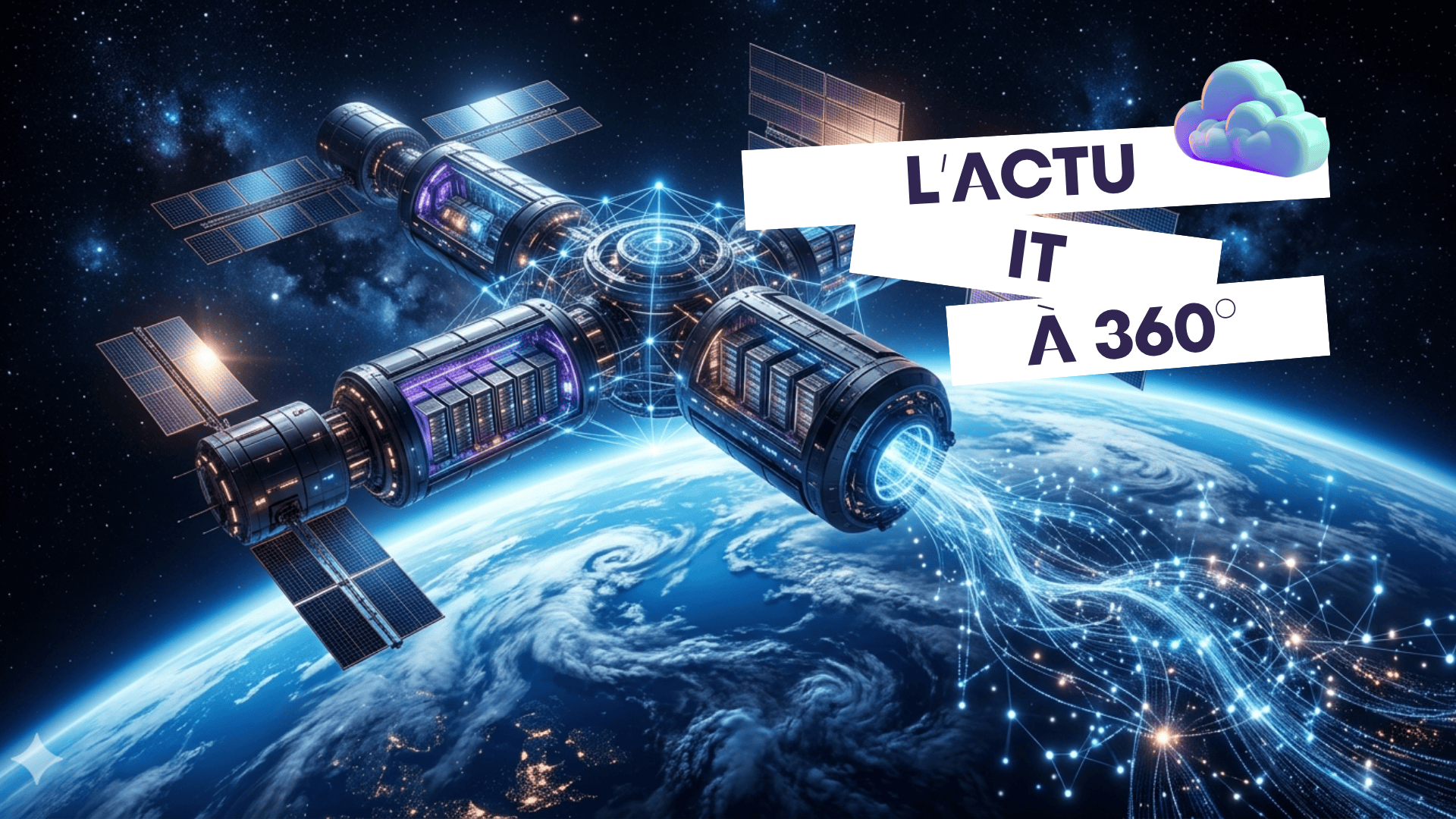
At the GTC 2026 conference, Nvidia announced its intention to accelerate the development of artificial intelligence in space, joining an emerging movement around orbital data centres. The company is no longer content to supply chips for satellites; it is now targeting complete infrastructures capable of processing data directly in orbit. Behind this announcement, the stakes go far beyond technological innovation: the aim is to respond to the explosion in computing needs linked to artificial intelligence and the cloud, while exploring new ways of overcoming the current limits of terrestrial infrastructure.¹
Why the cloud is reaching its limits today
Data centres are at the heart of the digital economy, but they face increasingly severe constraints: massive energy consumption, high infrastructure costs and capacity saturation as artificial intelligence ramps up. By sending part of the computing into space, Nvidia is exploring a radical alternative, where solar energy is abundant and cooling is more natural. The idea is not just to relocate infrastructure, but to transform the way data is processed, in particular by bringing computing closer to data sources such as satellites. This approach would, for example, make it possible to analyse images or data directly in orbit, without going via Earth, reducing delays and improving the overall efficiency of systems.²
Concrete uses that redefine data processing
This development paves the way for new uses, particularly in Earth observation, weather forecasting and disaster management. Today, satellites often send raw data back to Earth for analysis, which can take time and tie up significant resources. With on-board computing capabilities, these systems can directly deliver actionable information, such as detecting an incident or analysing a situation in real time. This shift from “raw data” to “real-time intelligence” profoundly changes the value of data and creates new business models in which information becomes immediately actionable.
Unprecedented computing capacity, without complicating SMEs’ IT
Even though space data centres may seem far removed from SMEs’ concerns, they are part of a broader transformation of the cloud and IT. In the long run, these infrastructures could improve the performance of cloud services, reduce data processing costs and speed up access to critical information. For SMEs and start-ups, this means access to more powerful technologies without having to invest in heavy infrastructure. But it also brings new challenges, particularly in terms of cybersecurity, data management and cloud service integration. Companies will need to understand these developments to take advantage of the opportunities offered by these new architectures.
Mastering tomorrow’s cloud becomes strategic
This news highlights a key skill: cloud computing. As infrastructure evolves, IT professionals need to be able to understand increasingly complex environments, ranging from traditional data centres to distributed, and even space-based, architectures. It is no longer just about managing servers, but about running hybrid systems combining cloud, edge computing and artificial intelligence. This ability to orchestrate infrastructure is becoming essential to support companies’ digital transformation and make full use of new technologies.
A spectacular innovation… but still debated
While space data centres are generating a great deal of interest, they also raise questions. Some experts believe these projects are still a long way from practical large-scale use, particularly because of costs and technical constraints. But beyond their immediate adoption, these initiatives above all show one thing: cloud and artificial intelligence continue to evolve towards ever more distributed and innovative models. For students and future IT professionals, understanding these trends is essential, as they herald the next transformations in digital jobs and skills.
360° IT News — decoding technology to understand the jobs of tomorrow.
References
1. Nvidia. GTC 2026 keynote and AI infrastructure announcements.
https://www.nvidia.com
2. Network World. Nvidia explores AI computing in space and orbital datacenters.
https://www.networkworld.com

$32 billion: Google launches a cyber army of AI agents
Cybersecurity enters a new dimension Google has made a major move by announcing an investment of $32 billion in developing a “cyber army” of artificial intelligence agents. Behind this term lies a technological reality: systems capable of automatically detecting,...

Data centre boom: Legrand goes on the offensive in China and the UK
Data centres are becoming the heart of the global digital economy Legrand is stepping up its investments in China and the United Kingdom to strengthen its presence in the data centre sector, which has become critical infrastructure for the digital economy. This...

GPT-5.4-Cyber: OpenAI responds to Claude Mythos in the AI cybersecurity battle
A new front line in the artificial intelligence war On 14 April 2026, OpenAI launched GPT-5.4-Cyber, a model specialising in cybersecurity, just days after Anthropic announced Claude Mythos. This timing is no coincidence: it marks an acceleration in the competition...

Claude Mythos: beyond the buzz, what are the real stakes for IT security?
An AI that promises to transform cybersecurity With Claude Mythos, Anthropic is showcasing a new generation of artificial intelligence able to analyse, detect and anticipate cybersecurity threats. At a time when cyberattacks are soaring, with more than 2,200 attacks a...

Microsoft reinvents development with AI agents in VS Code
Software development enters the age of agents Microsoft is taking a new step by integrating artificial intelligence agents into Visual Studio Code, with a beta version available via the Insiders channel. This development comes at a time when VS Code is used by more...

In the cloud era, enterprise networks are changing standards
The network is no longer just support: it is becoming a driver of performance For a long time, the enterprise network was regarded as a simple technical infrastructure, often invisible as long as it worked. But with the explosion of the cloud, SaaS applications and...
Windows 11: Microsoft wants to speed up user testing with Insider
Software testing becomes a lever for innovation Microsoft is overhauling its Windows Insider programme, which now brings together more than 10 million testers worldwide, to simplify access to experimental versions of Windows 11 and speed up user feedback. In an...
51,600 satellites: Jeff Bezos steps up the battle for the global internet
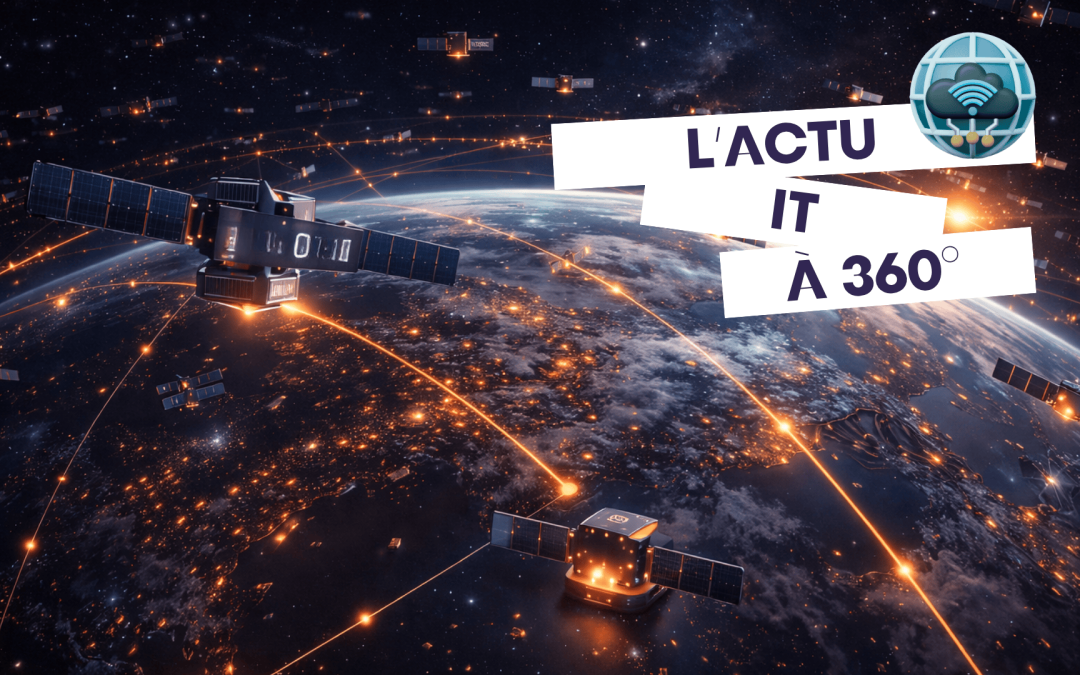
News in brief With Project Kuiper, Jeff Bezos is committing Amazon to a major transformation of the world’s internet infrastructure by deploying tens of thousands of satellites in low Earth orbit. The goal is not limited to connecting isolated areas, but to building a...

PepsiCo automates its logistics: a turning point for smart warehouses
News in brief PepsiCo France is investing in an automated, multimodal warehouse that combines robotics, digital systems and intelligent management of logistics flows. The aim is no longer simply to store and distribute products, but to turn the warehouse into a...

Windows 11: Microsoft finally relaxes forced updates
News in brief Microsoft is preparing to overhaul the way updates are managed in Windows 11, giving users greater control over their installation, notably by making it easier to postpone them or avoid certain enforced interruptions. This change responds to a...