


News in brief
Artificial intelligence continues to transform developers’ work. Anthropic, the company behind the Claude AI model, has just announced new capabilities that allow its assistant to analyse computer code and help developers with their code review processes.
Code review is an essential stage of software development. It involves rereading code written by a developer in order to detect errors, improve the quality of the program or check that good practice has been followed. With Claude’s new features, this task can now be assisted by artificial intelligence. The tool can examine a program, identify potential problems and suggest improvements. This development illustrates a profound transformation in the world of software development, in which AI tools are gradually becoming assistants capable of working alongside developers. ¹
What is really happening
To understand the significance of this development, one has to look at how code review works in technical teams. In most IT projects, the code produced by a developer must be checked by other team members before being integrated into a piece of software. This step makes it possible to spot bugs, improve code readability and avoid certain security flaws.
However, this process can be long and costly, especially in complex projects. Developers have to analyse hundreds or sometimes thousands of lines of code. This is where artificial intelligence tools are starting to play an important role.
Thanks to advanced language models, Claude is able to understand the structure of a computer program, identify logic errors or suggest optimisations. The AI can, for example, spot inefficient portions of code, flag security issues or propose fixes. It thus acts as an assistant capable of speeding up certain verification tasks.
This approach is part of a wider trend in the technology sector. Many developer tools now incorporate artificial intelligence to automate certain technical tasks. Assistants such as GitHub Copilot and other AI models are already able to help write code. With the arrival of code analysis and review features, these systems are gradually becoming working partners for developers. ²
Why it matters for SMEs
This development does not only concern large technology companies. SMEs and start-ups are also directly affected by these new tools.
Today, digital transformation is pushing many organisations to develop their own applications, websites and digital services. Yet small organisations often have limited resources to maintain the quality and security of their software.
Integrating artificial intelligence tools into development processes can help SMEs improve the quality of their IT projects. An assistant capable of automatically analysing code can detect errors before they become problems in production. This helps reduce maintenance costs and improve the reliability of applications.
These technologies can also speed up the work of technical teams. In a start-up or an SME, developers often have to manage several projects at once. Automating certain tasks such as code review can save them time and allow them to focus on the most creative aspects of development.
But the use of these tools also raises new challenges. Companies must learn to integrate artificial intelligence into their technical processes while keeping human control over important decisions. Code quality, system security and data protection remain key issues in software development.
The IT skill behind this news: Programming and web management
Behind every application, every website and every digital service lies code written by developers. The quality of this code is essential to guarantee the reliability and security of IT systems. Developers must not only know how to program, but also understand good development practice, version control and collaborative methods in software projects.
The integration of artificial intelligence into these processes is gradually changing the way developers work. AI tools can help detect errors, suggest improvements or analyse complex projects. But they do not replace human expertise. IT professionals must still understand how the code works, validate the AI’s recommendations and take the final technical decisions.
For businesses, these skills are becoming strategic. Organisations need developers capable of designing software, maintaining digital infrastructure and working with increasingly advanced technology tools.
At a time when software is at the heart of digital transformation, jobs related to programming, web development and software engineering play a key role in the digital economy.
Why this news matters
The arrival of new code analysis capabilities in Claude shows that artificial intelligence is increasingly being built into the tools developers use. Intelligent assistants no longer simply help write code; they are now starting to take part in the processes of verifying and improving software.
For businesses and developers alike, these technologies represent a significant opportunity. They can improve project quality, speed up development and facilitate collaboration within technical teams.
But this development also underlines the importance of IT skills. Understanding how software works, mastering programming and knowing how to use artificial intelligence tools are becoming essential in digital jobs.
In the years ahead, professionals able to combine technical expertise with an understanding of new technologies will play a key role in the digital transformation of businesses.
360° IT News — decoding technology to understand the jobs of tomorrow.
References
1. Anthropic. Claude AI documentation.
https://www.anthropic.com
2. GitHub. Copilot and AI coding assistants.
https://github.com/features/copilot
$32 billion: Google launches a cyber army of AI agents
Cybersecurity enters a new dimension Google has made a major move by announcing an investment of $32 billion in developing a “cyber army” of artificial intelligence agents. Behind this term lies a technological reality: systems capable of automatically detecting,...

Data centre boom: Legrand goes on the offensive in China and the UK
Data centres are becoming the heart of the global digital economy Legrand is stepping up its investments in China and the United Kingdom to strengthen its presence in the data centre sector, which has become critical infrastructure for the digital economy. This...
GPT-5.4-Cyber: OpenAI responds to Claude Mythos in the AI cybersecurity battle
A new front line in the artificial intelligence war On 14 April 2026, OpenAI launched GPT-5.4-Cyber, a model specialising in cybersecurity, just days after Anthropic announced Claude Mythos. This timing is no coincidence: it marks an acceleration in the competition...

Claude Mythos: beyond the buzz, what are the real stakes for IT security?
An AI that promises to transform cybersecurity With Claude Mythos, Anthropic is showcasing a new generation of artificial intelligence able to analyse, detect and anticipate cybersecurity threats. At a time when cyberattacks are soaring, with more than 2,200 attacks a...
Microsoft reinvents development with AI agents in VS Code
Software development enters the age of agents Microsoft is taking a new step by integrating artificial intelligence agents into Visual Studio Code, with a beta version available via the Insiders channel. This development comes at a time when VS Code is used by more...

In the cloud era, enterprise networks are changing standards
The network is no longer just support: it is becoming a driver of performance For a long time, the enterprise network was regarded as a simple technical infrastructure, often invisible as long as it worked. But with the explosion of the cloud, SaaS applications and...
Windows 11: Microsoft wants to speed up user testing with Insider
Software testing becomes a lever for innovation Microsoft is overhauling its Windows Insider programme, which now brings together more than 10 million testers worldwide, to simplify access to experimental versions of Windows 11 and speed up user feedback. In an...

51,600 satellites: Jeff Bezos steps up the battle for the global internet
News in brief With Project Kuiper, Jeff Bezos is committing Amazon to a major transformation of the world’s internet infrastructure by deploying tens of thousands of satellites in low Earth orbit. The goal is not limited to connecting isolated areas, but to building a...
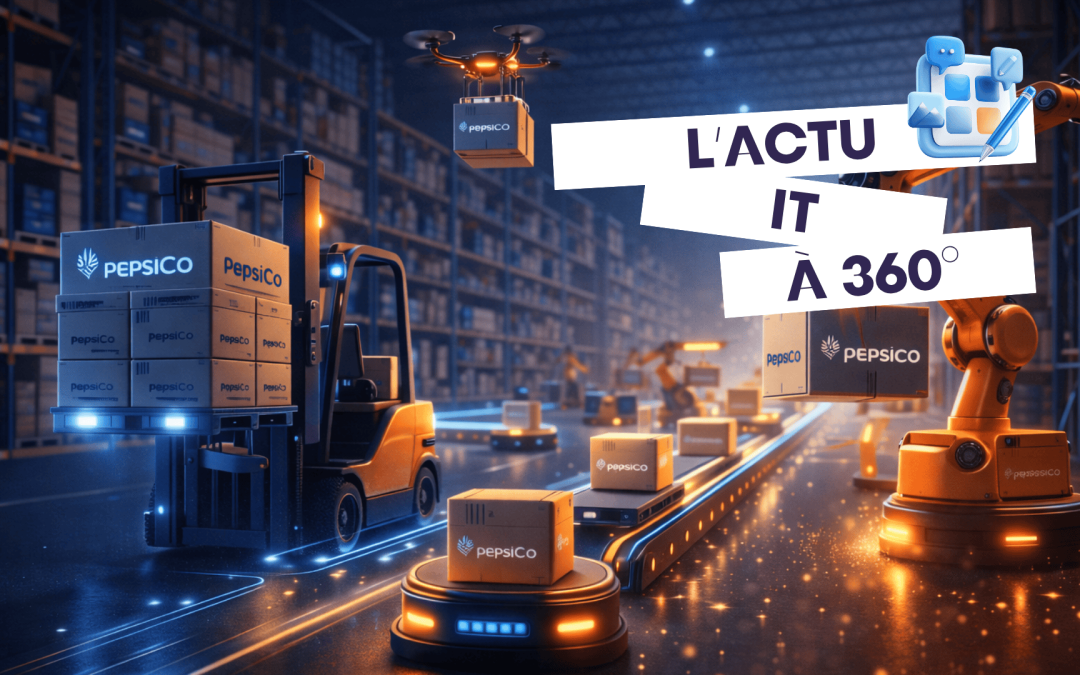
PepsiCo automates its logistics: a turning point for smart warehouses
News in brief PepsiCo France is investing in an automated, multimodal warehouse that combines robotics, digital systems and intelligent management of logistics flows. The aim is no longer simply to store and distribute products, but to turn the warehouse into a...

Windows 11: Microsoft finally relaxes forced updates
News in brief Microsoft is preparing to overhaul the way updates are managed in Windows 11, giving users greater control over their installation, notably by making it easier to postpone them or avoid certain enforced interruptions. This change responds to a...